The first hockey-equipment shop can feel like somebody handed you a small child, a large cart and a vocabulary test. Breezers are pants, socks are not really socks, and a neck guard is somehow the one item that can vanish while everyone is looking directly at it. The good news is that the list is manageable once you separate required protective gear from the little extras that simply make rink life easier.
Start with fit, not the brand wall
A beginner does not need the most expensive equipment in the store. They need equipment that covers the right places, stays in position and lets them move without fighting it. Hockey Canada's first-time guidance specifically notes that equipment can be new, used or borrowed and that beginners do not need costly gear to start.
Have the player try pieces on together when possible. Shoulder pads meet elbow pads, elbow pads meet gloves, hockey pants meet shin pads and shin pads meet the skate tongue. Those overlaps matter more than whether every piece belongs to the same product line. Ask a qualified hockey retailer or your local association to help with fitting when you are unsure.
The required gear, from helmet to skates
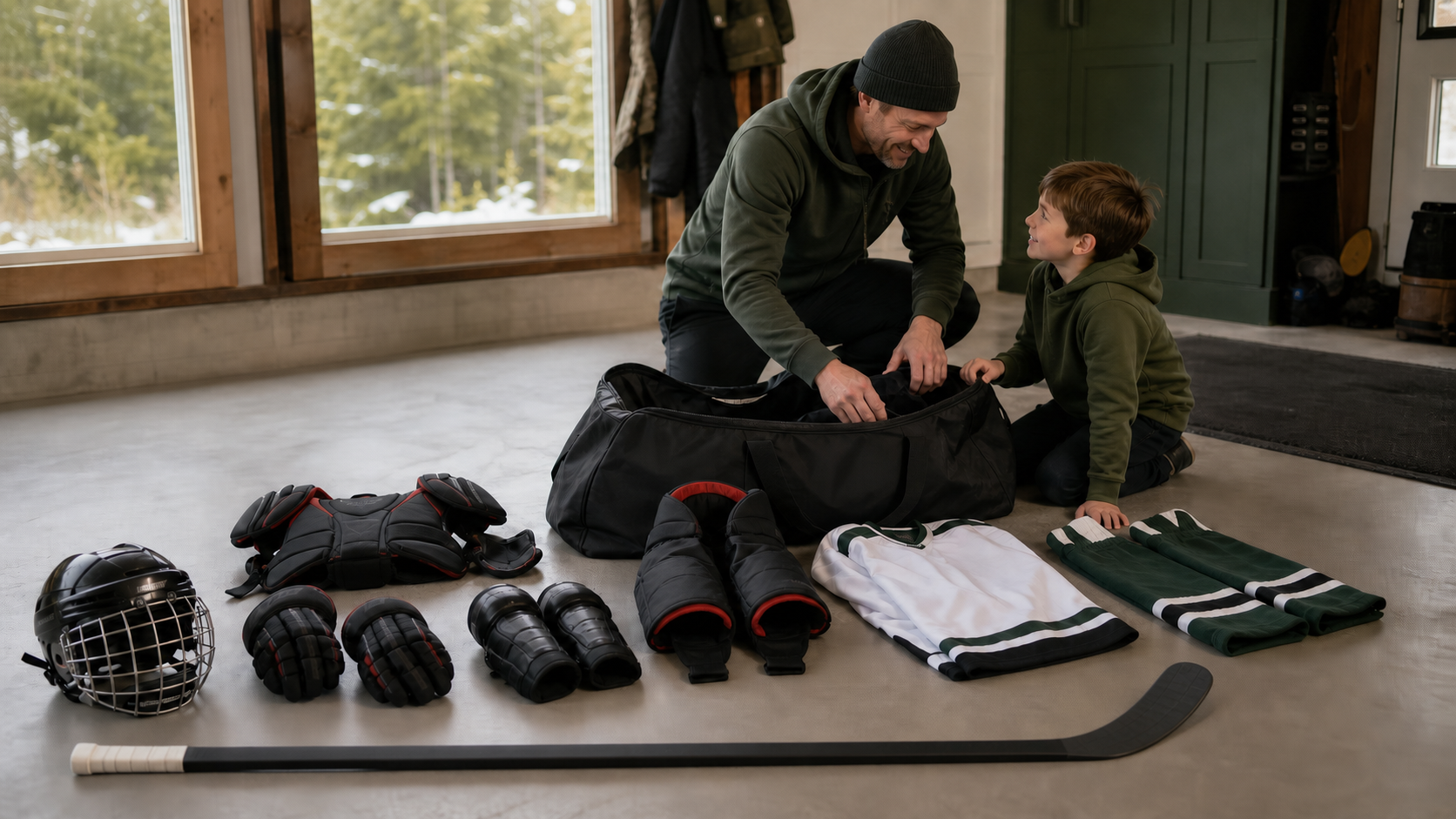
Your association is the final word on current requirements, but a typical youth player needs the following set. Keep this list open during the fitting and check each item off only after the player can move comfortably in it.
- Certified hockey helmet with properly fitted face protection
- Neck protection as required by the association
- Shoulder pads and elbow pads with no large coverage gaps
- Hockey gloves that meet the elbow pads and still allow a good grip
- Hockey pants with a protective cup or pelvic protector
- Shin pads that fit securely under hockey socks
- Properly fitted hockey skates
- Jersey and hockey socks in the team's required colours
- An appropriately sized hockey stick with the correct handedness
- Hockey bag large enough for the gear without needing a loading diagram
Used gear can be a great deal—when it still does its job
Kids grow quickly, which means the used market is full of pants, shoulder pads, elbow pads, shin pads and gloves that may have plenty of life left. Inspect every piece for cracks, broken fasteners, compressed padding, strong odour that will not wash out and anything that prevents a secure fit.
Helmets and skates deserve more caution. Check the helmet's condition and current certification, and do not use one that is cracked, altered or missing parts. Skates need to support the foot without painful pressure or excess room. If you are new to hockey, this is where an experienced fitter earns their coffee.
What can wait until the player actually wants it
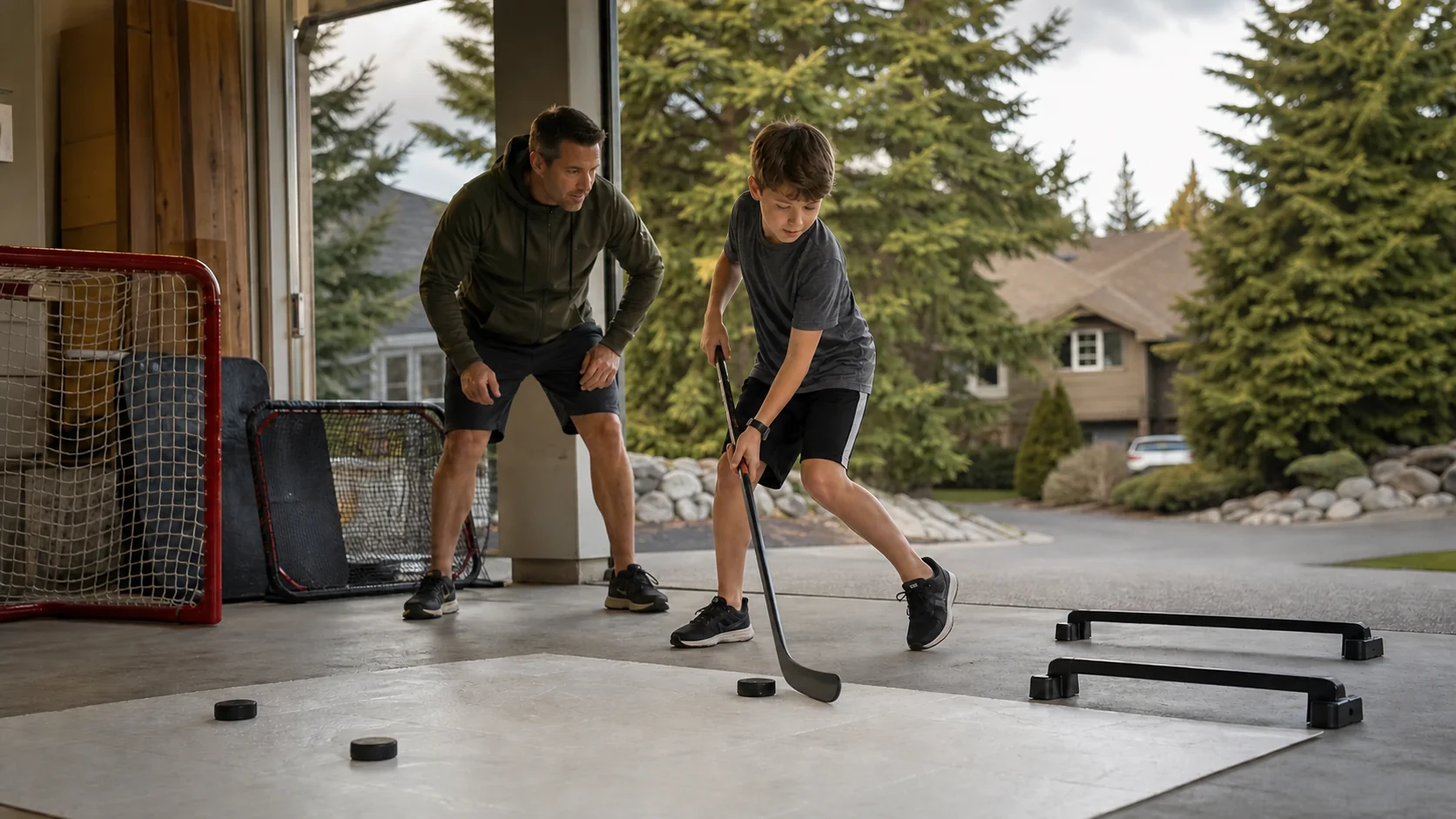
The hockey world is very good at producing things that look essential while you are standing under bright retail lights. A first-year player can usually skip the premium stick, multiple specialty bags, expensive blade-care systems, backup gloves and a home-training collection large enough to require its own room.
Let the child play for a while. They will develop preferences about gloves, sticks, laces and how they carry their bag. Spending slowly also leaves room in the budget for the things nobody puts on the first shopping list: sharpening, registration, team fees and the snack somebody announces they need four minutes before practice.
The small bag extras that save surprisingly big headaches
Once the fitted equipment is handled, a few inexpensive extras make the weekly routine easier. They are not a reason to rebuild the shopping cart; they are simply the things parents end up borrowing in the dressing room if they forget them.
- A squeeze bottle with a long spout that works through a cage
- One roll of stick tape and clear shin-pad tape
- Spare skate laces in the correct length
- Skate guards or absorbent soakers for travel
- A mesh bag for damp base layers and socks
- Name labels on every item that can walk into the wrong bag
- A small towel for blades and wet benches
- Stick wax only if the player finds it useful
Pack the bag in dressing order
A repeatable bag layout reduces the game-day equipment avalanche. Put base layers and the protective cup where they come out first. Group shin pads and hockey socks, keep skates together in their normal spot and place the helmet where the cage will not crush smaller items.
Give tape, spare laces and the towel one small pouch. The water bottle should have one permanent pocket too. The goal is not military precision; it is making the missing item obvious before the car leaves the driveway.
The ten-minute after-practice reset
Open the bag as soon as you get home. Air out the protective pieces, remove damp base layers, wipe the skate blades and let the skates dry with their soakers off. A drying rack can help, but airflow and consistency matter more than owning a complicated system.
Clean the water bottle after practice, let it dry and put it back in the hockey bag so it is not left on the counter for the next departure. Repack the gear after it is dry. This small routine is much easier than discovering a closed wet bag five minutes before the weekend game.
Questions worth asking during the first fitting
Bring the player, hockey socks and any equipment you already own. Ask the fitter to show you how each piece should sit, how to check helmet and skate fit at home and which adjustments are normal as the child grows.
Confirm what the local association supplies, what colours the team requires and whether there is an equipment-loan or exchange program. The best shopping trip is often the one that ends with fewer items than the original list.
- Does this piece cover the intended area when the child bends and reaches?
- Can the child move, grip the stick and get up from the floor comfortably?
- Is the helmet currently certified and complete?
- Are these skates the right width as well as the right length?
- Which pieces does the association provide or require?
- What should we recheck if the child grows during the season?
Save or print
Print this: first-season youth hockey equipment checklist
- Required fit: certified helmet and face protection
- Required fit: neck protection required by the association
- Required fit: shoulder pads, elbow pads and gloves
- Required fit: hockey pants and protective cup or pelvic protector
- Required fit: shin pads and properly fitted skates
- Team gear: required jersey and hockey socks
- Player gear: appropriately sized stick in the correct handedness
- Bag basics: hockey bag, base layers and clean water bottle
- Useful extras: stick tape, clear tape and spare skate laces
- Useful extras: skate guards or soakers, towel and mesh wet-gear bag
- Parent sanity: label every loose piece of equipment
- Can wait: premium stick, duplicate gear and specialty training gadgets