Seven useful ways to get hockey gear out of the bag.
We compared publicly available product listings for capacity, footprint, portability, listed materials and family use. We did not lab-test these racks, and we do not use marketplace star ratings as a substitute for judgment. Product names, prices and availability can change, so use the linked Amazon.ca results to confirm the current listing before buying.
Product images are served by Amazon.ca and may change or be removed at any time.
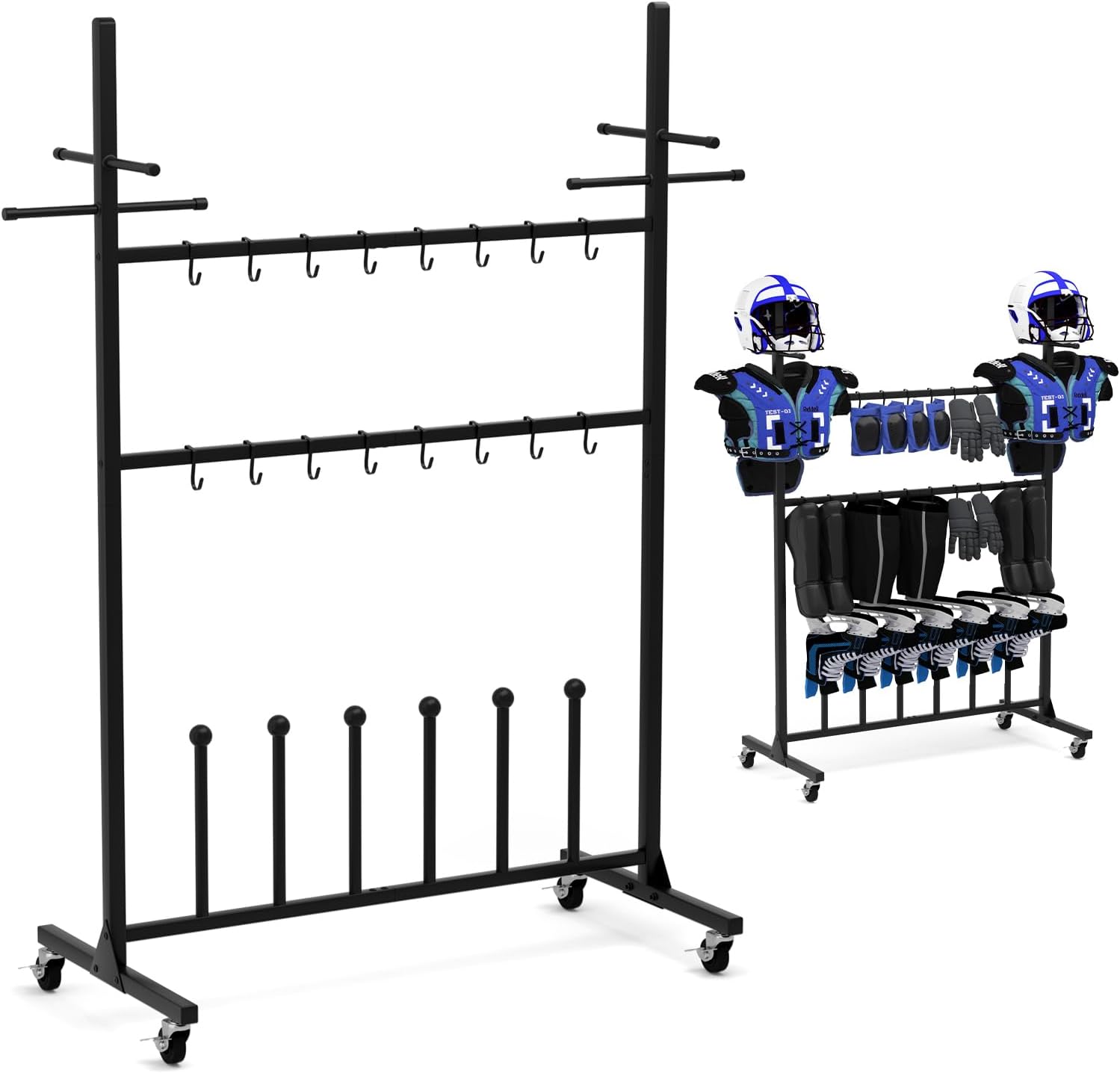
Best for: siblings, shared garages and families with back-to-back ice times
A large wheeled frame makes the most sense when two full equipment sets need separate places to hang. The listing describes removable hooks, dedicated shoe holders and locking wheels, which is a more useful family layout than piling both bags around one small stand.
Why it stands out
Room for two players' equipment on one frame
Wheels make it easier to move for cleaning or parking
Separated hooks help every item keep a repeatable home
Watch for
Needs meaningful garage or mudroom floor space
Higher cost than a hanging strap or one-player stand
Best for: a dedicated one-player setup without a complicated installation
This is the straightforward all-around format many hockey homes need: a vertical stand with places to spread out the major protective pieces. It keeps one player's gear visible and off the floor without committing an entire wall to storage.
Why it stands out
Purpose-built hockey layout
Freestanding design avoids drilling into a wall
Easy for an older player to load after practice
Watch for
One-player capacity
Still requires a permanent floor location
Compare the current listing's hook layout with your child's gear
Best for: one-player families who want a lighter rack with useful extras
The Ceaz listing describes a powder-coated metal frame, clips for smaller items and tool-free assembly. That combination can suit a family that wants more organization than a strap hanger without moving to a large two-player cart.
Why it stands out
Compact freestanding format
Clips give socks and smaller pieces a defined spot
Tool-free setup is useful for seasonal storage
Watch for
Less capacity than a two-set rack
Accessory bundles can change between listings
Check current measurements for adult-size equipment
Best for: hotels, road weekends and families short on permanent space
A hanging strap is not a complete garage system, but it solves a different problem well: giving damp gear separate hanging points when you are away from home. It packs much smaller than a stand and can live in a tournament tote.
Why it stands out
Very small packed footprint
Adjustable hooks can be spaced around bulky pieces
Useful backup even if you own a rack at home
Watch for
Needs a secure overhead support
Gear can cluster if hooks are placed too close together
Always respect the support surface and listed load limit
Best for: families who prefer a familiar hockey-brand option
Winnwell's Deluxe format is worth comparing when you want a conventional freestanding hockey rack rather than a generic sports organizer. Its strongest appeal is simplicity: one place for one set, with no wall installation.
Why it stands out
Hockey-focused design
Freestanding and easy to understand
Good comparison point against lesser-known marketplace brands
Watch for
Usually costs more than basic hanger systems
Capacity and accessories vary by model
Verify that the exact Deluxe model is the listing shown
Best for: tight utility rooms and families comparing stand-style layouts
This is a passive metal equipment tree rather than an electric dryer. The current listing describes rust-proof cold-rolled steel and a snap-together setup, making it a compact alternative when floor space matters more than maximum capacity.
Why it stands out
Compact equipment-focused format
Passive design requires no outlet
Rust-proof cold-rolled steel construction is listed
Best for: occasional use, a spare setup or a very small budget
A collapsible multi-hook hanger is the lowest-commitment way to stop leaving every piece inside the bag. It will not organize a garage like a proper stand, but it can separate smaller items and travel easily.
Why it stands out
Low purchase price
Collapses for travel or storage
Simple spare for grandparents' homes or tournaments
The best hockey gear drying rack is not automatically the biggest one. It is the system your family will actually use after a late practice, when wet equipment needs to come out of the bag and every piece needs enough room for air to move around it.
Choose the format before the brand
Start with the number of players, the available floor or wall space and whether the setup must travel. A one-player stand is easier for a child to load. A two-set wheeled rack uses more space but keeps siblings' equipment separate. A hanging strap wins on portability but depends on a safe support point.
Measure the intended space with the garage door, vehicle, furnace clearance and walking path in mind. Product dimensions do not include the elbow pads, pants and gloves that will project beyond the frame once the rack is full.
Passive rack or powered dryer?
A passive rack separates equipment and lets room air circulate. It has no motor, uses no electricity and is the simplest place to start. A powered dryer adds moving air and sometimes heat, but powered products require more attention to manufacturer instructions, electrical placement and material-care guidance.
Do not assume more heat is always better. Follow the equipment maker's care instructions and the dryer's manual, keep vents unobstructed and never improvise around a damaged cord or wet electrical area.
A practical setup by household size
One player: a compact freestanding rack with a permanent home near the laundry path
Two players: a wheeled two-set frame or two clearly labelled one-player zones
Three or more players: wall-mounted zones plus a shared boot and glove area often scale better than one overloaded rack
Tournament family: keep a collapsible hanger in the travel kit even if a full rack stays at home
Small home: prioritize a hanging system only where the support point is secure and the gear will not block a doorway
The ten-minute after-practice reset
Open the bag as soon as practical and give each protective piece its own hook or rail. Put washable base layers and hockey socks into the normal laundry path. Remove skate insoles if the manufacturer allows it, and place skates where air can circulate.
Empty and clean the water bottle after every practice or game, let it dry, then put it straight back in its dedicated hockey-bag pocket. That simple final step keeps the bottle from being left on the counter or forgotten at the next ice time.
How we chose these drying racks
We looked for products that solve distinct family problems: one-player simplicity, two-player capacity, travel portability, small-space use and budget. We compared the details available in current public listings, but we did not assign fake test scores or repeat marketplace ratings as proof of quality.
Amazon search results can combine or replace listings over time. Confirm the brand, model, measurements, included parts, return terms and current price on the product page before buying.
Save or print
Measure before you buy
Count the full equipment sets that must dry at the same time
Measure width, depth and usable height with gear hanging beyond the frame
Confirm the rack will not obstruct vehicles, doors, utilities or a walking path
Check listed dimensions, materials, included hooks and assembly requirements
Choose wheels only if the rack needs to move regularly; look for locking casters
Confirm any overhead support before choosing a hanging strap
Read the current Amazon.ca listing and return terms before purchase
Hockey gear drying FAQ
What hockey families ask before buying.
Do hockey gear drying racks really help?
A rack gives wet equipment separate hanging points and exposes more surface area to the surrounding air than leaving everything packed together. It also makes missing equipment easier to spot before the next ice time.
What is the best drying rack for two hockey players?
Look for two clearly separated equipment zones, enough hooks for both full sets and a footprint that fits when the gear extends beyond the frame. Locking wheels are useful if the rack must move for parking or cleaning.
Can hockey equipment stay in the garage all winter?
That depends on the garage temperature, moisture and the equipment maker's care instructions. A rack creates organization and airflow, but it cannot fix a persistently damp or freezing storage environment.
Are powered hockey gear dryers better than regular racks?
Powered airflow can be useful, but it costs more and adds electrical and care considerations. A passive rack is simpler and may be sufficient when the room already has good air movement. Follow all equipment and dryer instructions.
What should I do with the water bottle after practice?
Empty and clean it after every ice time, let it dry, then return it to its dedicated hockey-bag pocket so it is not left behind.

 Product image from Amazon.ca · Paid link
 Product image from Amazon.ca · Paid link
 Product image from Amazon.ca · Paid link
 Product image from Amazon.ca · Paid link
 Product image from Amazon.ca · Paid link
 Product image from Amazon.ca · Paid link
 Product image from Amazon.ca · Paid link