If you have ever watched a few hockey-training videos online, it can start to feel like your kid needs synthetic ice, six gadgets and a private development coach living in the garage. They do not. For most families, a stick, a safe corner and something to handle are enough to get started. The big thing is making it easy enough—and fun enough—that your child actually wants to do it again.
Clear one safe corner and call it good
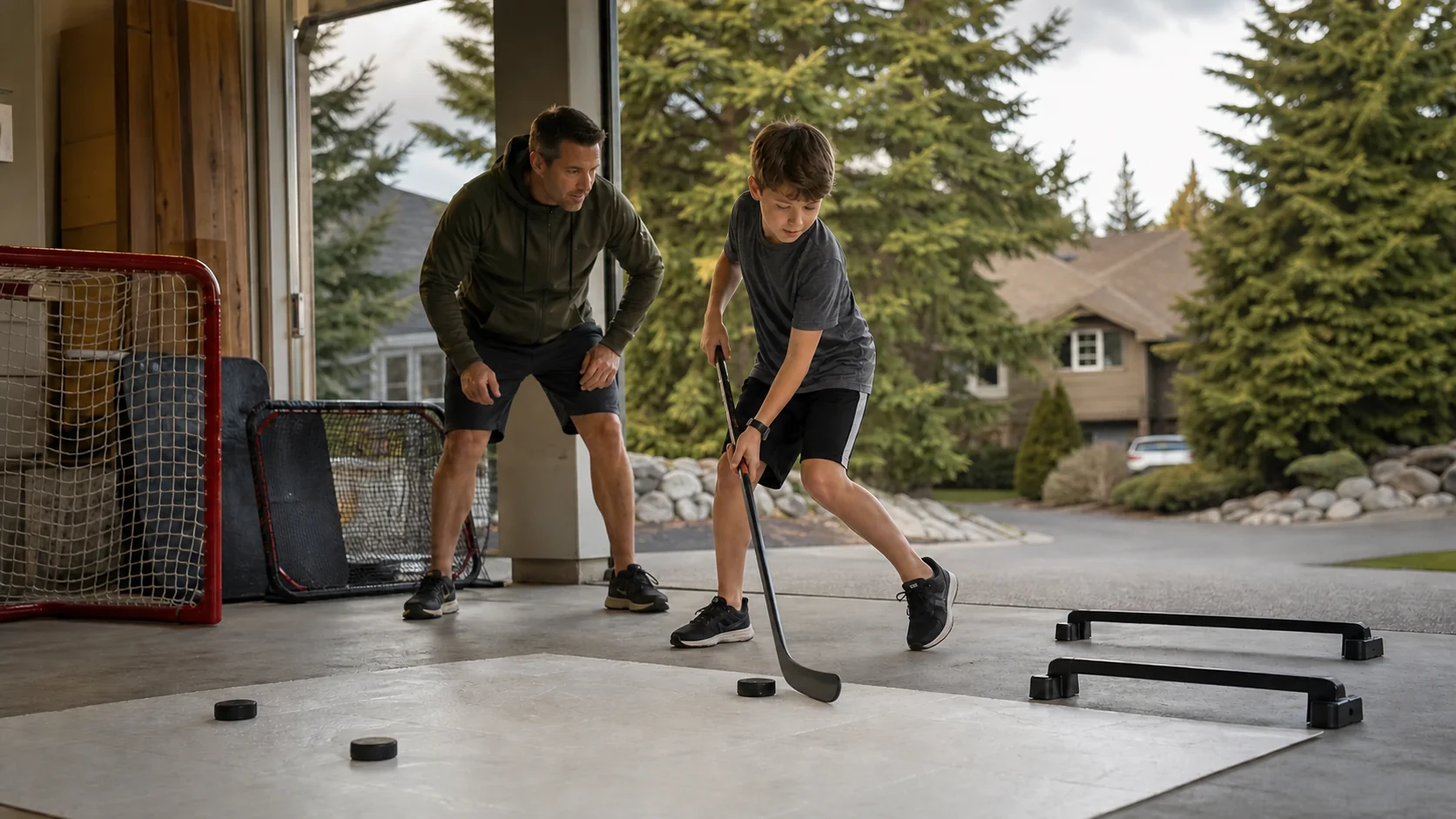
Start by clearing a small patch of the garage, basement or driveway. Move the car, bikes, glass, cords, pets and younger siblings out of the way. Make sure the floor is dry, their shoes have some grip and a missed puck cannot end up in the road or through the window nobody wanted to replace.
Stickhandling takes a lot less room than shooting. If you do not have a proper net and a backstop you trust, stick with a low-bounce ball or an off-ice puck meant for control. Save regulation pucks and real shooting for ice, a shooting pad or another setup where the misses stay contained.
You really do not need much to start
A Swedish-style wooden ball is a great little option for quiet stickhandling indoors. A weighted ball feels different and can mix things up, but it does not need to become the everyday choice. A Puck Biscuit-style puck slides better on smooth concrete or asphalt, and the shooting versions are made to take more abuse than the control-only ones.
Regular black pucks make sense on ice or a proper shooting pad. Weighted pucks are more of an occasional training tool, ideally used after checking with the coach. They are not a magic shortcut, and young players do not need to hammer away with a heavy puck every day. Sometimes heavier just means heavier.
- Low-bounce or Swedish ball: quiet hands work and small spaces
- Off-ice control puck: driveway stickhandling on a suitable smooth surface
- Off-ice shooting puck: shooting practice where the product permits it
- Regulation puck: ice or a proper shooting pad with a safe net and backstop
- Weighted ball or puck: occasional, age-appropriate work guided by a qualified coach
Five drills that should not make everyone roll their eyes
Keep the explanation short and give them something simple to chase. Two shoes or a couple of spare pucks work perfectly well as gates. Show the drill once, let them try it and resist the urge to correct every single touch from three feet away. That is usually where a perfectly good ten-minute session turns into a family meeting.
- Gate cruise: move through three gates in any order while looking up between gates
- Forehand-backhand ladder: count controlled touches for 20 seconds, rest, then try again
- Wide-narrow-wide: move the ball from outside one foot to the middle and out past the other foot
- Pass and receive: use a rebounder or a protected wall setup, cushioning each return before the next pass
- Pick a corner: take five controlled shots at one safe target, then switch sides or distance
Consistent shooting practice is where the reps really add up
Shooting is one of those skills that gets a lot easier to work on when the net and pucks are ready to go. Ten or twenty controlled shots a few times through the week can add up quickly without taking over the evening. That regular rhythm is more useful than waiting for one huge shooting session every few weeks.
Keep it simple. Pick one corner, take five shots, switch the target and repeat. On another day, change the starting spot or practise getting the puck away a little quicker. Accuracy and a clean release come before trying to fire every puck through the back of the net. Once the player's balance or technique starts getting sloppy, call it. Tired reps are not automatically good reps.
The easiest way to keep shooting consistent is to remove the setup battle. Leave the shooting pad where it can be used, keep the pucks in a bucket and make sure the net and backstop are ready. If your child can be taking shots within a minute, they are far more likely to squeeze in a few before dinner or while waiting to leave for practice.
- Start with 10 to 20 controlled shots and adjust for age and interest
- Choose one target instead of shooting everywhere
- Focus on balance, accuracy and a clean release before power
- Change the target or starting position to keep it interesting
- Finish when technique starts to fade or the player stops having fun
Buy the next thing you need, not the whole training aisle
The easiest way to avoid overspending is to buy for the next problem. Need something quiet for a small space? Try a stickhandling ball. Tired of ruining sticks on concrete? A shooting pad helps. No one is available to pass? That is when a rebounder starts to make sense. Targets, a Shooter Tutor or a dangler can add a little competition without requiring a full garage renovation.
Electronic trainers such as SuperDeker can make repetitions feel more like a game. Synthetic ice can be a great setup for the right family, but it takes real space, planning and money. The same goes for a steel net: make sure it fits the area and put a dependable backstop behind it. None of this gear replaces coaching, ice time, rest or a kid who actually wants to practise.
- $0 start: stick, safe space and household objects for gates
- Simple upgrade: suitable stickhandling ball or off-ice puck
- Shooting upgrade: shooting pad, net and dependable backstop
- Solo-practice upgrade: rebounder, dangler or targets
- Committed home setup: electronic trainer or properly installed synthetic ice
Our job as parents is to make it easy—then back off a little
Keep the stick, ball or puck and two or three obstacles together. If setup takes less than a minute, your child can squeeze in a few reps before dinner. If it takes 20 minutes to move half the garage and find an app password, the mood may be gone before the first puck moves.
It is worth asking the coach which skill would be most helpful, then letting your child choose one challenge. We can encourage them, keep the area safe and celebrate a good rep without turning ourselves into the driveway assistant coach. Home practice should help hockey feel easier, not make the child feel like tryouts never ended.
Consistency matters—but only if they want to come back
Consistency is really the whole thing. Ten focused minutes a few times during the week is easier to repeat—and probably more helpful—than the occasional 60-minute garage combine that leaves the kid tired and the parent wondering why this seemed like a good idea. Keep the setup ready, pick one small goal and let the repetitions add up.
That does not mean every session has to look the same. Race them through the gates. Invite a teammate over. Make a ridiculous obstacle course. Keep score against Dad. Let the player invent the final challenge, even if the rules make absolutely no sense to anyone over the age of twelve. If they are laughing and still handling the puck, it counts.
And if your child keeps telling you they do not enjoy it, listen. Try a shorter session, a different game, a friend or another kind of movement before adding more gear and more pressure. If hockey training still feels like a chore, maybe they need to find a sport, activity or hobby they actually look forward to. That is not failing at hockey. It is helping your kid find something that fits.
Hockey Canada's player pathways put a lot of emphasis on age-appropriate development and a positive, fun experience. That is a pretty good gut check for the driveway too. The practice should fit the child—not the other way around.
Save or print
The home hockey practice setup
- Choose a dry, flat area with safe footing
- Move cars, glass, cords, pets and bystanders out of the practice lane
- Use a suitable low-bounce ball or off-ice puck for the surface
- Keep shooting outdoors or in a purpose-built area with a net and dependable backstop
- Select one control drill and one passing or shooting drill
- Make 10 to 20 controlled shots a repeatable part of the week
- Choose a target and focus on accuracy and a clean release before power
- Keep the first session to about 15 minutes
- Ask the team coach which skill deserves extra attention
- Use weighted tools only for brief, age-appropriate, coach-guided work
- Choose a short routine the player can repeat consistently
- Change the challenge, invite a friend or add a game when practice starts feeling stale
- Listen if the child would rather explore an activity they genuinely enjoy
- Store the basic setup together so the next session starts quickly
- Stop while the player is still having fun