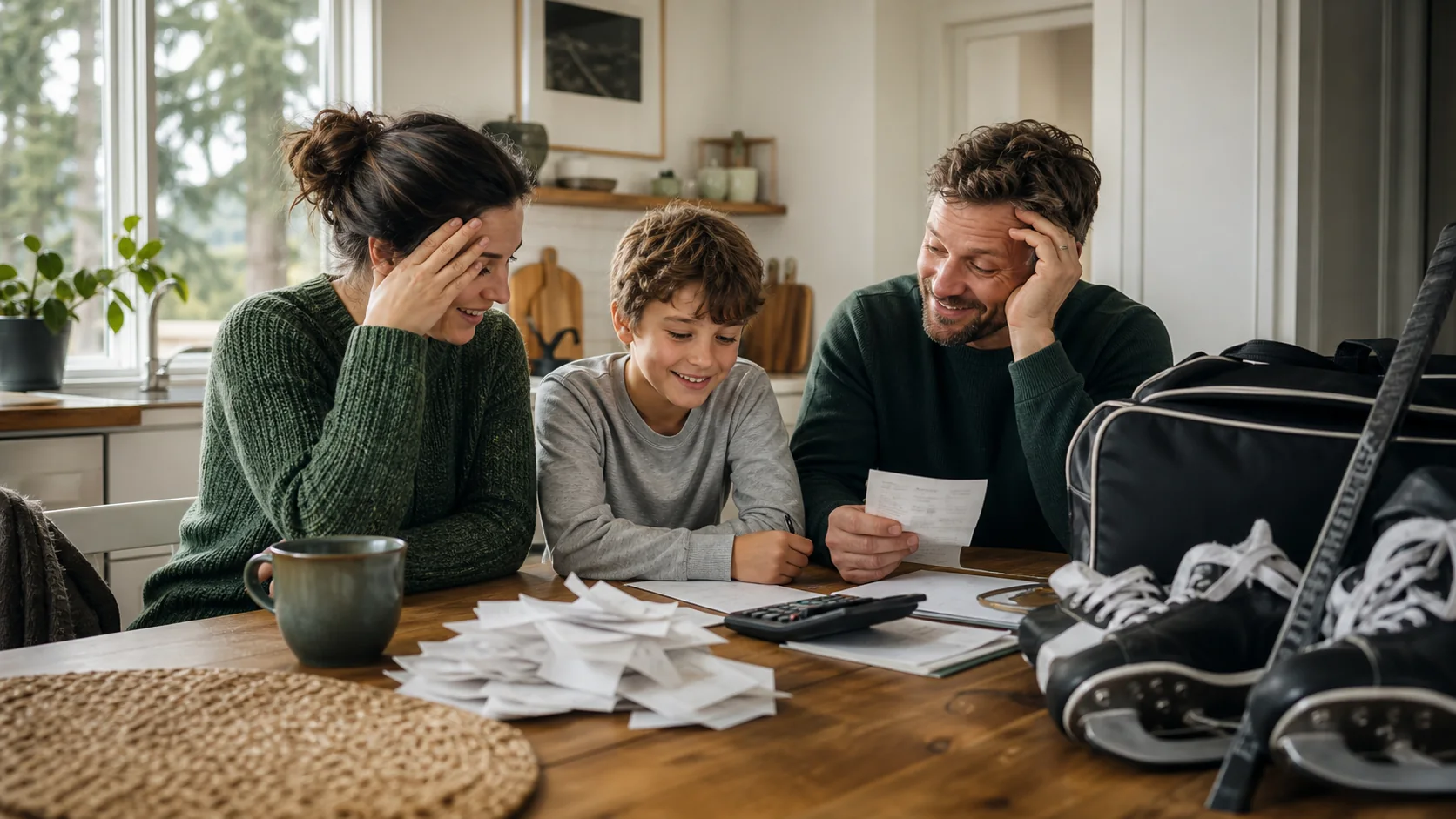
Hockey chaos rarely comes from one major failure. It comes from six small uncertainties arriving at once: Is the neck guard in the bag? Which rink? Is the water bottle back in its pocket? Where is the other glove? A good game-day system removes those questions before they become urgent.
Start with one source of truth
Choose one place for the official schedule—your team app, shared calendar or manager’s message—and make every other reminder point back to it. Screenshots become outdated. Group-chat guesses create confusion. The team’s posted arrival time is the time you plan around, not puck drop.
Work backward from that arrival time. Add normal travel, a realistic parking buffer and a small margin for the forgotten turn or slow sibling. The goal is not to arrive absurdly early; it is to avoid asking a child to absorb adult urgency before stepping onto the ice.
Make the night-before reset non-negotiable
The best time to discover wet gloves, missing socks or a broken lace is not 20 minutes before departure. Once equipment is dry, rebuild the bag in the same order after every ice time.
Hockey Canada advises that protective equipment fit properly rather than being bought oversized to grow into. Its current parent resources also identify CSA-certified helmets and BNQ-certified neck guards as core protective equipment. Use your association’s current rules and Hockey Canada’s fitting guidance when checking gear.
- Helmet and cage: certification visible, hardware present and fit rechecked as the player grows
- Neck guard, shoulder pads, elbow pads, gloves, pants, shin pads and protective cup or pelvic protector
- Base layer, hockey socks and both the light and dark jersey when team instructions require them
- Skates checked for obvious damage, usable edges and intact laces
- Stick, tape, cleaned water bottle returned to its dedicated bag pocket and any player-specific essentials
Give the bag a simple internal map
A hockey bag should not be a loose collection of 20 items. Group small clothing pieces in one ventilated packing cube or mesh bag. Keep repair items in a small zip pouch. Put the helmet in the same end of the bag every time. The exact arrangement matters less than its consistency.
As children get older, shift ownership gradually. A young player can carry the stick and, after each ice time, help return the clean, dry bottle to its bag pocket. Later, they can work through the full checklist while a parent performs the final safety check. Responsibility grows best when the system is visible and repeatable.
Keep food familiar and the bottle routine simple
Game day is not the moment for a complicated nutrition experiment. Use familiar meals and snacks your child already tolerates, and adjust timing to the player, schedule and guidance from qualified professionals. Pack a backup snack for the drive home so hunger does not become the final-period opponent.
After every practice or game, empty and clean the water bottle, let it dry, then put it straight back in its dedicated hockey-bag pocket. It stays with the equipment instead of ending up on the counter, in a lunch bag or missing when it is time to leave again.
- Choose familiar food instead of chasing a perfect pre-game meal
- Pack one easy backup snack for delays or the trip home
- Clean the bottle after every ice time and return it to the hockey bag once dry
- Keep food pressure low—game-day nerves affect appetites differently
At the rink, lower the emotional temperature
The parent’s job narrows at the rink: help the player arrive prepared, support the team environment and let coaches coach. Hockey Canada’s guidance for parents puts fun, fair play, respect, integrity and teamwork ahead of adult definitions of success.
Use one calm handoff phrase—something as simple as ‘Have fun and work hard’—instead of a last-minute list of instructions. After the game, reconnect before evaluating. ‘I loved watching you play’ leaves space for the child to decide whether they want to talk about the game.
- Do not turn the parking lot into a pre-game coaching session
- Model respect toward officials, coaches, volunteers and other families
- Let the child bring up mistakes before offering analysis
- Communicate concerns with coaches through the team’s stated process, not in the emotional minutes after a game
Finish the loop when you get home
Open the bag as soon as practical. Hang protective gear where air can circulate, remove skate insoles to help the skates dry and put laundry directly into its normal wash path. Empty and clean the water bottle, then return it to the bag once dry. Check tape and spare laces while the last ice time is still fresh in your mind.
Then stop. A useful reset should take minutes, not keep the whole family mentally inside the rink all evening. The system exists to create more room for family life, not to make hockey the household’s permanent operating mode.
Five game-day mistakes that create avoidable stress
Most stressful rink days follow predictable patterns. Removing these five habits will often help more than adding another app, bag or reminder.
- Planning from puck drop instead of the team’s requested arrival time
- Leaving the bag packed wet and hoping everything is still inside next time
- Scattering hockey items across the house instead of using one bag and one launch zone
- Giving tactical instructions during the drive or immediately before the player enters the room
- Replaying mistakes before the child has eaten, settled and chosen to talk
Save or print
The hockey-parent game-day checklist
- Confirm rink, arrival time and jersey instructions from the team’s official source
- Helmet and cage checked; certification visible; fit and hardware secure
- Neck guard, shoulder pads, elbow pads, gloves, pants, shin pads and protective undergarment packed
- Base layer, hockey socks and required jersey or jerseys packed
- Skates, stick, tape and spare laces ready
- Water bottle cleaned after the last ice time, dried and returned to its hockey-bag pocket
- Familiar meal or snack plan confirmed
- Bag, stick, keys and parent essentials placed in the launch zone
- Travel, parking and sibling buffer included
- Post-game snack available and equipment-drying space ready