
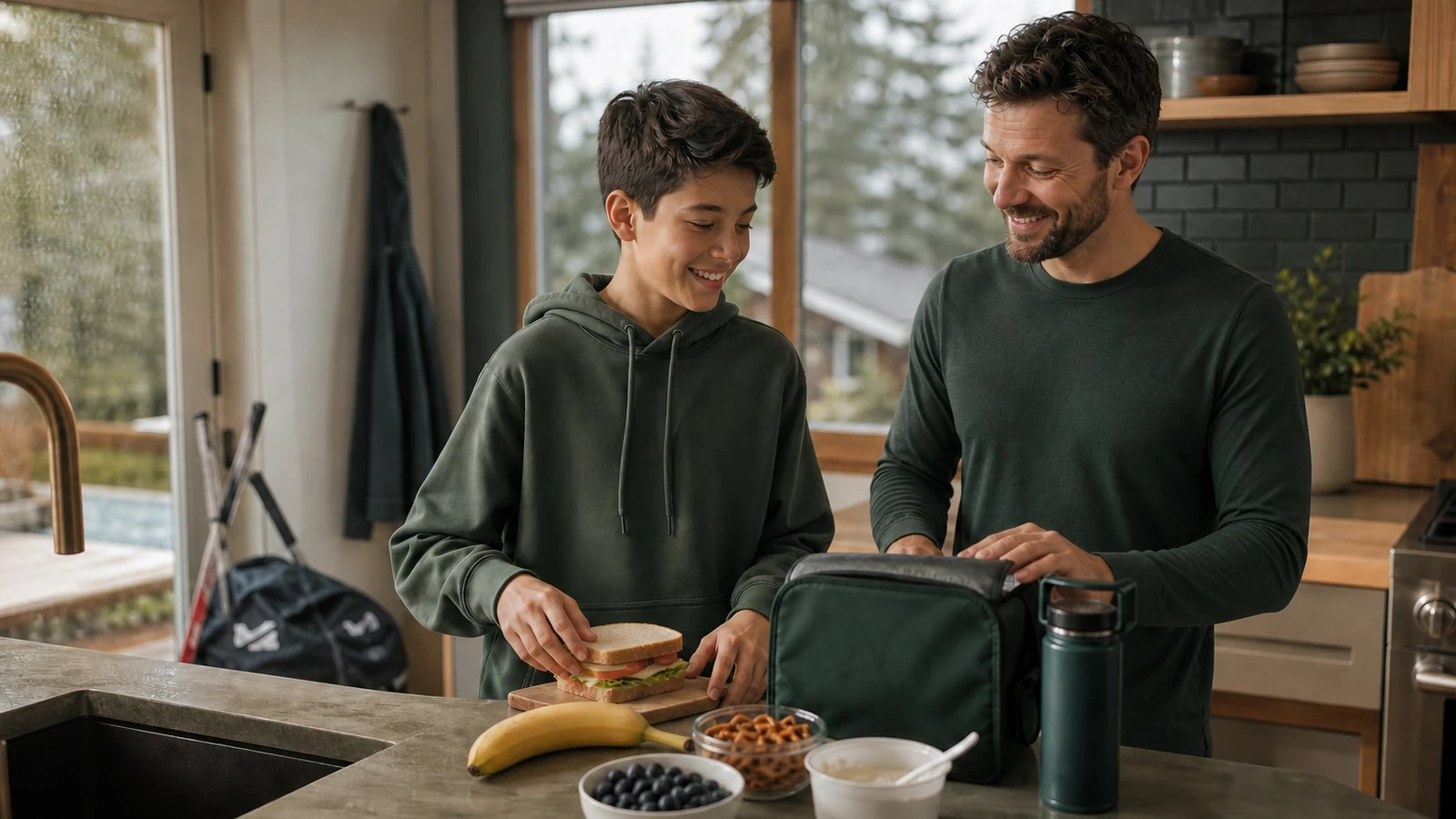
Young athletes can remember an entire power-play setup and still forget the lunch sitting beside the front door. That is why a useful fueling plan has to work for children, parents, school schedules and the mysterious five-minute window between finding the other skate guard and leaving the house. The basics matter more than perfection: enough food across the day, carbohydrates around activity, protein spread through meals and snacks, fluids within reach and no brand-new experiment ten minutes before warm-up.
The useful idea from Kelsey Poulter: fuel the work you are already doing
Sports nutrition coach Kelsey Poulter repeatedly brings athlete nutrition back to a practical point: training cannot do its best work when the athlete regularly shows up underfuelled. Her public lessons cover daily consistency, carbohydrate fuel, recovery, hydration, tournament planning and a memorable 4-2-1-0-1 game-day framework.
The number sequence is useful because it turns game day into checkpoints instead of one giant pre-game meal. North Peak Life has adapted that idea into a flexible family timeline rather than prescribing exact grams. Children differ by age, body size, growth, sport, position, intensity, duration, appetite and medical needs. A ten-year-old at a one-hour practice and a seventeen-year-old at a two-game showcase do not need matching lunch bags.
Poulter also stresses that the work starts before game day. That may be the least glamorous sports-nutrition lesson and the most helpful one. A steady week of breakfast, lunch, dinner, snacks and fluids will usually beat trying to rescue an empty tank with one enormous meal beside the arena.
Start with enough everyday food
Young athletes are fuelling growth, learning, daily life and sport at the same time. The first goal is not to calculate a perfect macro split. It is to make sure meals and snacks happen often enough and contain enough energy for the child in front of you.
Use a simple family plate as a visual guide: include a generous carbohydrate food, a protein food, colourful fruit or vegetables and some fat. Portions will change with appetite and activity. On harder training days, tournament days and during growth spurts, the athlete may need more food and more frequent snacks.
Keep the conversation focused on energy, recovery, strength, concentration and enjoyment—not weight, guilt or earning food. Canada’s dietary guidance notes that children and adolescents have important energy and nutrient needs for growth, including iron, calcium and vitamin D.
- Carbohydrate foods: rice, pasta, potatoes, bread, oats, cereal, tortillas, fruit and milk
- Protein foods: eggs, yogurt, cheese, poultry, fish, meat, beans, lentils, tofu and soy foods
- Colour and micronutrients: fruit and vegetables the family will actually eat
- Energy and flavour: avocado, nuts, seeds, nut or seed butter and cooking oils
- Fluids: a filled, clean bottle that travels with the athlete
Carbohydrates are fuel, not a character flaw
High-intensity sports repeatedly ask muscles to accelerate, stop, change direction and go again. Carbohydrate-rich foods help supply that work. Poulter describes carbohydrates as filling the athlete's energy tank, which is much easier for a child to understand than a lecture about glycogen in the parking lot.
That does not mean every meal needs to resemble a pasta fundraiser. It means the athlete should not arrive at practice after eating only a small protein snack and then wonder why the third drill feels like the final kilometre of a mountain climb.
Closer to activity, familiar lower-fat and lower-fibre carbohydrate foods may feel more comfortable because large, rich meals can sit heavily. Test the plan at practice before relying on it for a tournament or important game.
Build the pre-game meal around the clock you actually have
When there are roughly three to four hours before activity, serve a familiar meal with plenty of carbohydrate, moderate protein and foods the athlete digests comfortably. A turkey sandwich with fruit and pretzels, rice with chicken and vegetables, oatmeal with banana and yogurt, or pasta with a simple sauce can all fit.
When only one to two hours remain, make the choice smaller and easier to digest. Try toast and fruit, applesauce with crackers, a banana and pretzels, cereal with milk if it sits well, or a familiar granola bar. Very rich, greasy or unusually high-fibre choices can wait until another day.
For early-morning games, do not force a restaurant-sized breakfast onto a nervous child at 5:30 a.m. Use a smaller familiar option before leaving, pack a top-up snack and plan a fuller meal afterward. The best schedule is the one the athlete can eat consistently without feeling sick.
- Turkey sandwich, apple and pretzels
- Oatmeal, banana and yogurt
- Rice, chicken and cooked vegetables
- Pasta with tomato sauce and lean meat or lentils
- Toast, fruit and a small serving of nut or seed butter
- Cereal, milk and a banana when that is familiar and tolerated
Water first; sports drinks are not the same as energy drinks
Health Canada identifies water as the drink of choice for regular exercise, before, during and after activity. Put the bottle where the child can reach it, bring it to practice filled and clean it afterward. A hydration strategy that stays on the kitchen counter is mostly interior decorating.
The Canadian Paediatric Society says sports drinks are generally unnecessary for routine or play-based activity, though they can have a role during prolonged, vigorous exercise, repeated bouts of activity or extreme heat. That decision depends on the athlete and conditions—not on the colour of the bottle at the convenience store.
Caffeinated energy drinks are a different category and are not a youth-sport hydration plan. Families managing long sessions, heat, heavy sweating, medical concerns or repeated tournament games should get individualized advice from a registered dietitian or qualified healthcare professional.
Recovery food can look suspiciously like normal food
After activity, start with fluids and offer carbohydrates plus protein—especially when another practice or game is coming soon. The combination helps replace used energy and supports muscle repair. It does not need to come in a shaker bottle with lightning printed on the side.
If the next family meal is close, eat that. If dinner is an hour away or the drive home is long, pack a recovery snack. Chocolate milk and fruit, yogurt with cereal, cheese and crackers, a smoothie with toast, or half a sandwich are easy choices.
Late games are a timing puzzle. Feed the athlete enough to recover without turning bedtime into a second dinner marathon. A prepared snack in the car followed by a simple meal or breakfast plan the next morning is more useful than arriving home with no food and six tired opinions.
- Chocolate milk and a banana
- Greek yogurt, cereal and berries
- Cheese, crackers and fruit
- Turkey or hummus sandwich
- Smoothie plus toast or another carbohydrate food
- The next regular meal when it is ready soon
Tournament fueling depends on the gap between games
The question is not simply what should the athlete eat. It is what can they comfortably digest before the next warm-up. With a short break, use small, easy carbohydrate foods and fluids. With one to two hours, add a more substantial snack. With several hours, serve a familiar meal and leave time to digest.
Pack more than one option because appetite can change after a hard game. Keep cold foods safely chilled, label shared items when allergies are a concern and follow team rules. Do not introduce a new bar, gel, supplement or aggressively healthy muffin during the semifinal.
- Short break: banana, applesauce, pretzels, crackers or dry cereal with water
- One to two hours: yogurt and fruit, half a sandwich, cereal and milk, or a familiar bar with fruit
- Three or more hours: a regular meal such as rice and chicken, pasta, wraps or sandwiches with sides
- All day: refill bottles, keep perishables cold and restock before the bag contains only one crushed cracker
Know when the family needs individual advice
General articles cannot calculate the needs of an individual child. Speak with a physician and a registered dietitian with sport experience when there are concerns about growth, persistent fatigue, dizziness, repeated injuries, food allergies, gastrointestinal symptoms, restricted eating, body-image distress, menstrual changes or a medical condition affected by food or fluids.
Also get help when nutrition has become a constant fight. Young athletes should not feel that every bite is being graded. A qualified professional can help the family support performance and health without turning the kitchen table into another place the child feels evaluated.
Save or print
Pack the young-athlete fuel bag
- A clean, filled refillable water bottle
- One familiar carbohydrate snack for before activity
- One backup snack in case timing changes
- A carbohydrate-plus-protein recovery option when the next meal is delayed
- A small cooler and ice pack for yogurt, milk, cheese, meat or other perishables
- Fruit that survives the trip or an applesauce pouch
- Crackers, pretzels, dry cereal or another easy pantry option
- Allergy-safe choices that follow team and facility rules
- Napkins, a spoon and a bag for wrappers
- The next meal plan, so recovery does not end with the snack
 Product image from Amazon.ca · Paid link
 Product image from Amazon.ca · Paid link
 Product image from Amazon.ca · Paid link
 Product image from Amazon.ca · Paid link
 Product image from Amazon.ca · Paid link