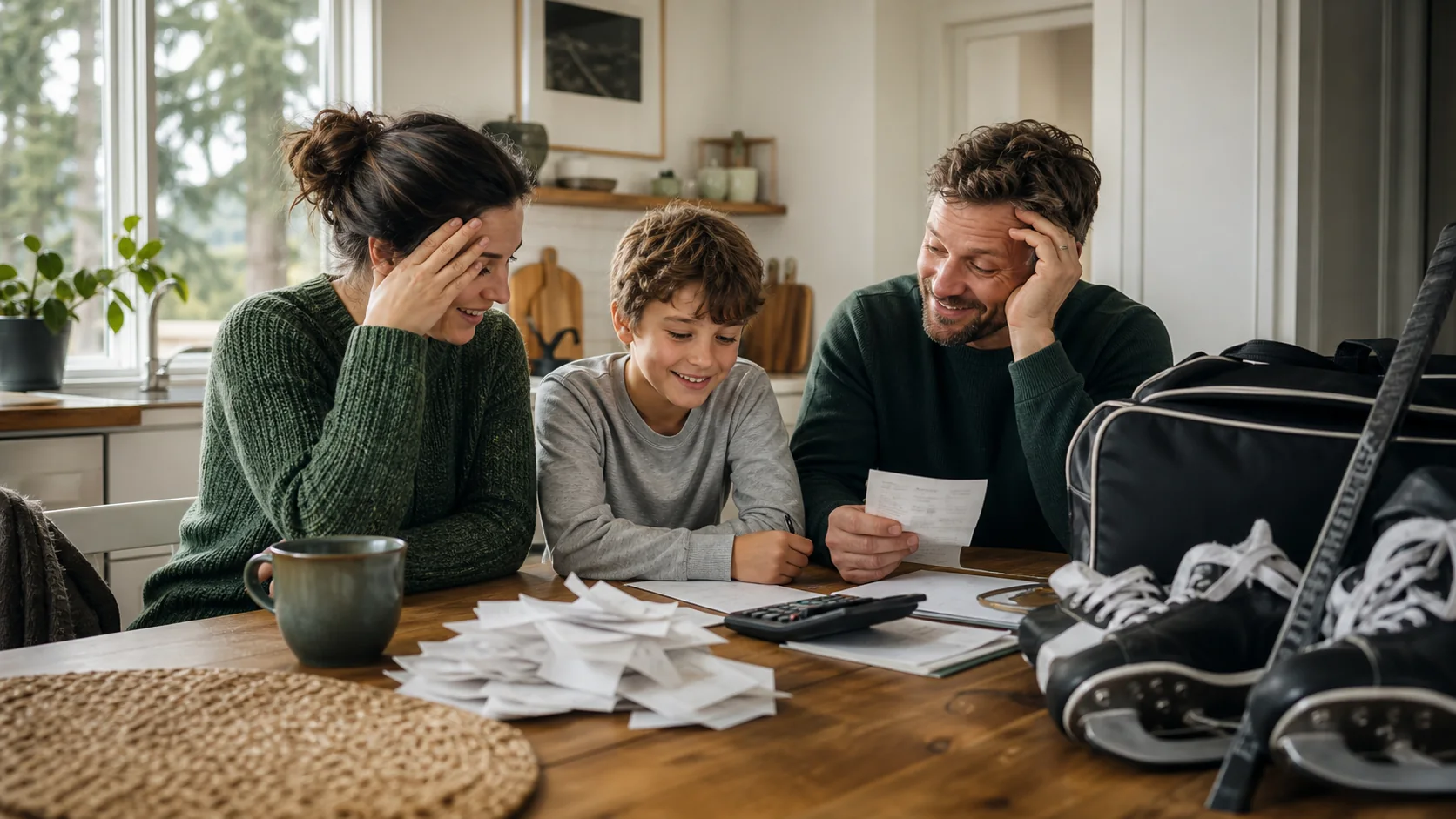

A hockey tournament is part competition, part family trip and part travelling equipment-management exercise. The kids want games, teammates, the pool and a hotel hallway that feels like their own private arena. The parents want coffee, a clear schedule and one pair of dry socks. Everyone can have a good weekend, but only if the fun does not use up every bit of energy before the next puck drop.
Accept that this is not a normal hotel weekend
The schedule belongs to the tournament. Meals happen at strange times, the lobby becomes team headquarters and your room may smell like an equipment bag with curtains. Fighting that reality makes the weekend harder. Build a simple routine around the games and leave everything else flexible.
Use one official schedule, know the team's requested arrival time and check rink locations carefully. A city with three arenas can produce three very different mornings. Keep the next game, departure time and jersey colour visible to both adults instead of relying on one exhausted parent to remember everything.
Parents need a survival plan too
Parents often spend the weekend driving, carrying, organizing, volunteering, finding food and standing in cold arenas. Pack for your own comfort: layers, decent shoes, a refillable bottle, easy snacks, chargers and whatever helps you sit through four games without becoming the most tired person on the team.
Split the jobs when two adults are travelling. One handles the hockey schedule and equipment checks; the other covers food, siblings, hotel details and navigation. The jobs can switch, but the important thing is that both adults are not assuming the other one packed the neck guard.
- Save the rink addresses before leaving the hotel
- Keep keys, wallet and room cards in one repeatable place
- Bring your own water and an emergency parent snack
- Divide morning jobs before everyone is standing at the door
- Build ten quiet minutes into the day whenever the schedule allows
Keep adult drinks modest and planned
Tournament hotels can become social very quickly, and there is nothing wrong with parents enjoying some team time. Just remember that the children still need supervision, somebody may need to drive and tomorrow's first arrival time can be painfully early.
If adults choose to drink, keep it modest and decide in advance who is fully sober and responsible. Alcohol does not mix with driving, pool supervision or being the only adult responsible for a group of children. Respect the hotel and team rules, and do not make the morning harder for yourself than the schedule already will.
Sleep is the most useful tournament upgrade
Kids can have fun and still go to bed. The trick is setting the boundary before the hallway mini-stick game reaches overtime. Work backward from the next day's team arrival, include breakfast and travel, and set a calm return-to-room time before everyone is overtired.
Canadian guidance recommends 9 to 11 hours of sleep per night for children ages 5 to 13 and 8 to 10 hours for youth ages 14 to 17. A tournament may not produce a perfect night, but protecting a reasonable sleep window is more useful than squeezing another hour out of the hotel.
- Check the next arrival time before agreeing to the evening plan
- Give younger players enough time to settle after team activity
- Charge devices away from the bed when they keep the room awake
- Use a quiet-hour rule that applies to parents too
- Save the biggest team celebration for after the final game
Respect the pool rule—and the dreaded pool legs
For many kids, the hotel pool is the true tournament championship. On recreational teams, a short swim may be part of what makes the weekend memorable. On competitive teams, the pool is often off limits before games and sometimes off limits for the entire tournament. Follow the coach's rule without turning the hotel hallway into a courtroom.
‘Pool legs’ is hockey-parent shorthand for a player arriving at the rink flat after spending the break swimming hard, racing, jumping, roughhousing and staying up too late. The pool is not magic, but extra activity still uses energy. If swimming is allowed, keep it short and easy, get the kids out when agreed and leave enough time for food, dry clothing and quiet rest.
Between games, lower the volume
The gap between games can look like unlimited free time, but it disappears quickly once travel, food, showers and equipment are handled. Start with the boring things that keep everyone steady: water, familiar food, dry clothes and a chance to sit down.
Not every child will nap, and forcing one can become its own event. Quiet time still counts. A movie, cards, reading, a short walk or relaxed team time lets the nervous system come down without demanding that a wired ten-year-old suddenly fall asleep at noon.
- Refill and clean bottles as needed
- Choose food the player already knows and tolerates
- Change out of damp base layers and socks
- Keep extra running, swimming and hallway games inside the team's plan
- Leave enough time to get to the next rink without a family sprint
The team did not rent the whole hotel
Tournament energy can make one hotel floor feel like a private clubhouse. It is not. Other guests may be working, travelling with babies or simply hoping the ceiling stops sounding like a breakaway drill.
Set clear boundaries for hallways, elevators, breakfast areas and quiet hours. Keep mini sticks in an approved space, supervise younger children and clean up the team area. Good hotel behaviour protects the team's reputation and makes properties more willing to welcome hockey groups back.
Turn the room into a temporary gear station
Open the equipment bag after every game. Hang protective pieces where air can circulate without blocking heaters, sprinklers, doors or walkways. Remove skate insoles, send wet clothing into the laundry plan and keep all equipment away from hotel bedding and furniture as much as possible.
Empty and clean the water bottle after each game, let it dry and return it to its normal hockey-bag pocket. Pack a small repair pouch with tape and spare laces. Before leaving the room, check the shower rod, closet, outlets and every place a well-meaning parent hung one important piece of equipment.
- Portable drying hanger or approved freestanding setup
- Mesh laundry bag for damp base layers and socks
- Tape, spare laces and basic repair items
- A few removable hooks only when the hotel allows them and they will not damage surfaces
- One final equipment count before every departure
Remember why the kids love tournaments
The games matter, especially on competitive teams, but the stories kids remember may involve breakfast with teammates, a ridiculous mini-stick save or laughing in the lobby. Leave room for those moments. A tournament should not feel like a three-day performance review.
The balance changes by age and team level. A recreational group may make the pool part of the weekend. A competitive team may protect every rest window. Both can be good experiences when expectations are clear, adults stay reasonable and the children still feel that hockey belongs to them.
Save or print
The hockey tournament family checklist
- Confirm every rink, team arrival time, jersey instruction and hotel rule
- Pack the complete equipment bag, sticks, tape and spare laces
- Bring a simple hotel drying setup and laundry bag
- Pack familiar food, refillable bottles and parent snacks
- Carry personal medication and a small family first-aid kit
- Save rink addresses and parking information before leaving home
- Set the pool rule before the children put on swimsuits
- Work backward from the morning arrival to choose lights-out
- Keep adult drinks modest and designate a sober driver and supervisor
- Respect hotel quiet hours and common spaces
- Clean and dry the bottle, then return it to the hockey bag
- Sweep outlets, drawers, closets, shower rods and under beds before checkout