
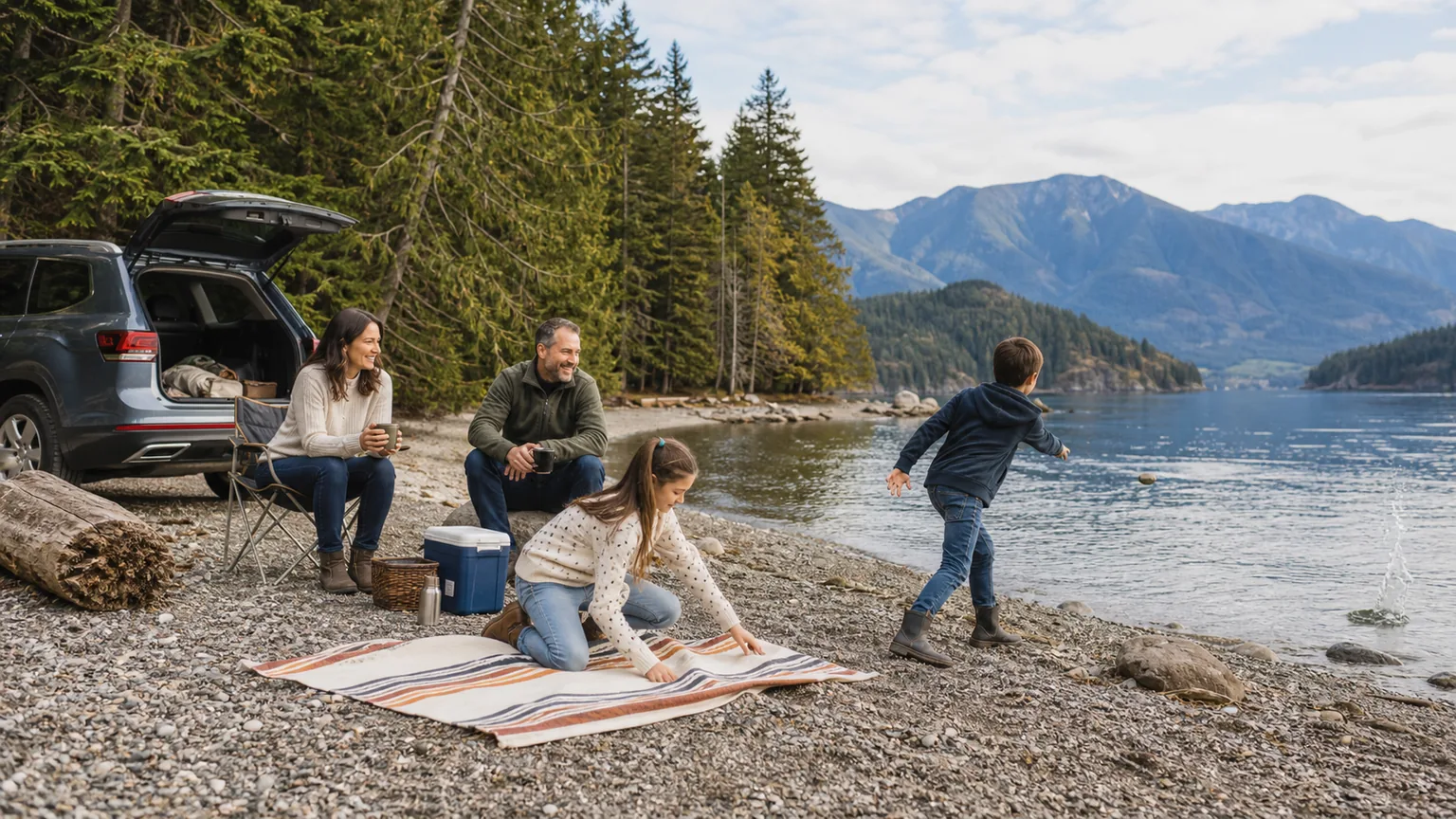
A family adventure does not have to be a hike. It can be a scenic drive, a beach stop, a park picnic, a playground in a different town or an ice-cream run with a good view. Most of the time, a successful day is simply a plan that fits the family's actual energy, enough food to prevent a snack emergency and an easy route home.
Start with the mood, not the map
Before choosing a destination, take a quick reading of the household. Did everyone sleep? Is the weather inviting or merely survivable? Do the kids want to move, explore, find a playground or sit beside the water and throw rocks for an hour? The right outing on one weekend may be completely wrong on the next.
A family adventure can be a drive along a road you have never taken, a beach afternoon, a picnic beside a lake or a two-hour park visit close to home. The goal is not to collect the most impressive destination. It is to create a day that feels different from the normal routine and leaves enough energy for the ride home.
Use the distance-to-fun equation
Travel time counts as part of the outing, especially with younger children. A beautiful destination can lose some shine after two hours of traffic, three bathroom stops and the discovery that somebody packed an empty tablet.
These are not rules; they are a useful starting point for choosing a plan that still feels fun when the return drive begins.
- A free 90 minutes: stay within roughly 15 to 20 minutes of home
- A half-day: consider destinations up to about an hour away
- A full day: drive farther only when the destination is worth making the travel part of the experience
- A tired household: choose the easiest good option and take the win
Do fifteen minutes of prep the night before
The least glamorous part of family adventure is also the most useful: a short evening check. Look at the official park, beach or municipal page for closures, reservations, parking, washrooms and any local rules. Check the weather and road conditions. If water is part of the plan, check the applicable beach, tide or safety information too.
Put the day bag near the door, gather clothing and prepare the food that will otherwise be forgotten behind the cheese drawer. Load the directions before leaving and tell someone the plan when the destination is remote or outside reliable service.
Pack for four seasons before lunch
West Coast weather enjoys changing its mind. Start with comfortable layers and bring a simple rain shell even when the forecast looks friendly. Spare socks and a dry layer for the vehicle have rescued more family moods than the best-planned afternoon.
You do not need to bring the contents of an outdoor store. Cover the predictable problems first, then add whatever suits the day: a picnic blanket, beach towels, sand toys, a ball or a couple of folding chairs.
- Water and familiar snacks
- Rain shells and an insulating layer
- Spare socks and dry clothing for younger kids
- Sun hats, sunscreen and seasonal bug protection
- A compact first-aid kit and any personal medication
- Wipes, a small garbage bag and one towel that is allowed to get dirty
Let the snacks set the pace
Family-adventure food does not need to be clever. Pack things the kids already eat, include something salty, something fresh and one morale-boosting treat, and offer food before anyone reaches the point of dramatic collapse.
Fill bottles before leaving and make one child the official snack captain if that job will not result in all the good food disappearing in the first ten minutes. A small picnic stop can be the highlight of the day, so there is no need to pretend it is merely fuel.
Give every kid a job
Children are more invested when they have some ownership. Let them choose between two realistic destinations, pick part of the driving playlist, take a few photos or decide where the first snack stop should happen.
The job should make the outing more interesting, not turn it into homework. Interesting roadside stops, excellent throwing rocks and an unexpected playground are part of the adventure, even when they were not included in the adult schedule.
- Junior navigator: watches for the next town, turn or landmark
- Road-trip DJ: chooses a few songs everyone can survive
- Photo keeper: takes three pictures that tell the story of the day
- Snack captain: helps choose the picnic or break location
- Beach or park detective: looks for birds, shells, big trees and interesting signs
Leave while the day is still fun
Choose one main stop and treat anything else as a bonus. You do not need to visit every beach, playground and roadside attraction in one day. Returning with a group that still likes one another is better than squeezing in one final stop because it was on the list.
Weather, traffic, water conditions and family energy are all good reasons to shorten the day. Leaving early is not a failed adventure; it is how families build enough good experiences that the kids are willing to come again next weekend.
Make the return home easy
Keep dry clothing and an easy vehicle snack waiting for the return. At home, empty wet towels or clothing, clean the bottles, deal with the food containers and restock the day-out bag while everyone still remembers what was used.
The faster the reset becomes part of arriving home, the easier it is to say yes when the next free Saturday appears.
Save or print
The low-stress family day-trip checklist
- Choose a destination that fits today's energy and available time
- Check the official destination page for closures, parking, reservations and washrooms
- Review the weather and road conditions
- Load the directions and tell someone the plan when the destination is remote
- Pack water and food the family already enjoys
- Bring rain shells, layers and dry socks
- Add sun protection and seasonal bug protection
- Carry a compact first-aid kit and personal medication
- Pack wipes, a small garbage bag and destination-specific extras such as towels or a blanket
- Give the kids one simple job
- Choose a leave time and make extra stops optional
- Leave dry clothing and a snack in the vehicle