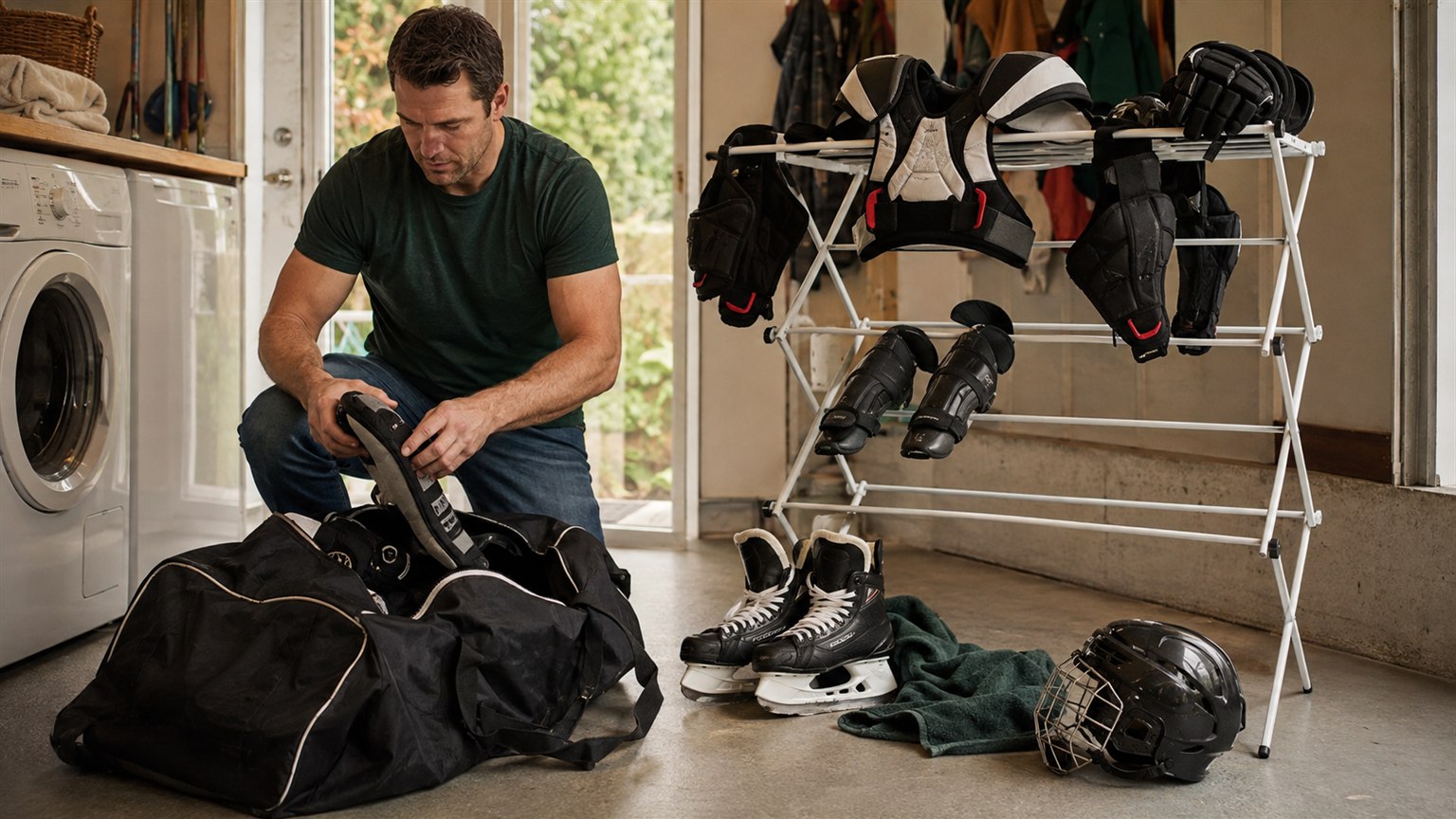


You get home from hockey, look at tomorrow’s schedule and discover there is more hockey. Wonderful. Your child needs sleep, you need the couch, and the gloves need an intervention. The good news is that tonight’s job is mostly unloading and spreading things out. Nobody needs to become a professional equipment manager at 9:47 p.m.
The bag gets opened before the couch wins
Get everything out when you arrive home. Opening the top zipper while leaving pads wedged together is a generous interpretation of airing things out. Give each piece its own space, open the straps and keep damp fabric surfaces exposed.
Try to get the base layer and socks into the laundry. Save the big protective-gear wash for when it needs it and you are feeling heroic. A late practice followed by an early game is usually a good night to focus on drying rather than start a deep-cleaning project.
Give the air a route through the mess
Hang pads separately rather than stacking them, open the hockey pants and leave room around gloves. A household fan moving air across the setup can help. Keep it stable, clear of the equipment and away from water, following its instructions.
A damp, freezing garage is not automatically a drying room just because that is where the bag lives. Choose a suitable ventilated space and check how the gear is actually drying there. A rack helps organize things; it cannot turn poor drying conditions into great ones.
Give gloves and skates the good parking spots
Open glove cuffs and separate the gloves so air can reach the palms. Check inside before declaring victory because the outside feels dry. Do the same with thick padding and removable liners, taking out only the pieces their care instructions allow.
For skates, remove the soakers, wipe the steel and holders dry, loosen the laces and open the tongues. Remove footbeds only if permitted. Let the boots air out away from direct heaters, then check inside before repacking. Dry the blades again if moisture has appeared while the cold steel warms up.
Buy the rack that solves your actual bottleneck
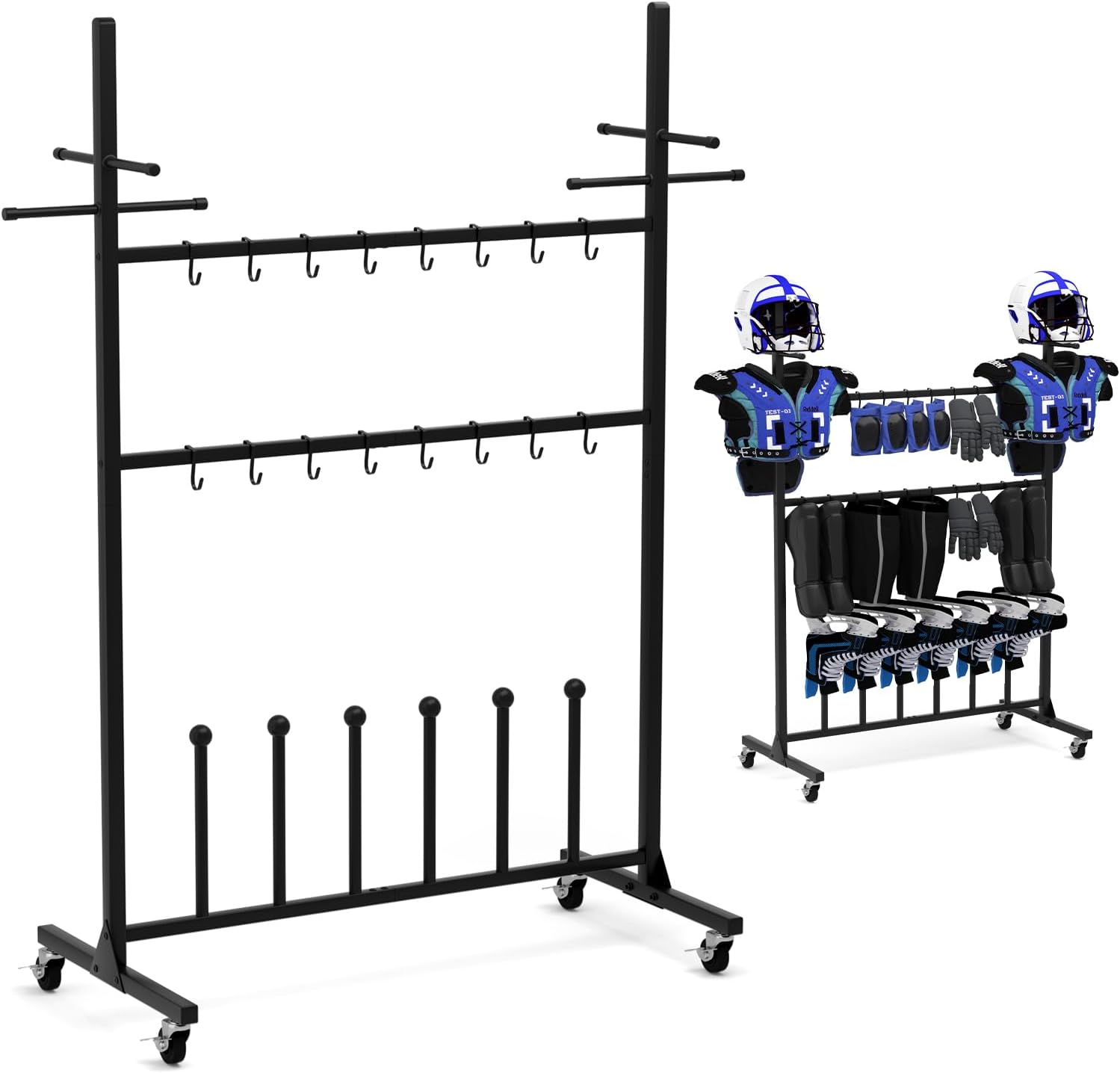
If the problem is one set scattered across the laundry room, a compact stand may be enough. If two kids play, separate zones make it easier to tell what is still damp and whose elbow pads have wandered. At a tournament, a portable hanger is easier to pack than the garage rack. Use a secure support that is allowed to carry the load.
Our hockey gear drying-rack guide compares the options by household size and space. Start there if you want the product details rather than another evening of measuring the garage.
If you are considering a powered dryer, check that it is suitable for the specific equipment and follow both sets of instructions. More heat is not automatically a better answer.
Do the inside check before repacking
Check glove palms, skate interiors and thick pads rather than judging from the outer shell. If something is still damp, it needs more drying time and better airflow. An overnight routine improves the chances; it cannot promise that soaked equipment will be ready by a particular hour.
Clean the water bottle after practice, let it dry and return it to its bag pocket so it is not still on the counter when you reach the rink. Pack the dry gear in its usual places. Ideally, the player handles this routine too; learning where the elbow pads go is part of the sport.
When the equipment needs more than airing out, use our guide to washing hockey gear at home. If you are planning a travel weekend, the hockey tournament survival guide covers the rest of the hotel operation.
Save or print
Tonight’s gear reset
- Empty the whole bag when you get home
- Put base layers and socks in the laundry
- Open straps, cuffs and skate tongues
- Dry skate blades and holders
- Separate every piece so air can reach the inside
- Use suitable airflow and keep equipment away from direct heaters
- Check the inside surfaces before repacking
- Clean, dry and return the water bottle to its bag pocket