
Hockey & Sports

Hockey Tournament Food: What to Pack

Hotel breakfast, between-game lunches and a snack box for the rink rats—without opening a travelling restaurant.

7 minute readUpdated November 3, 2026
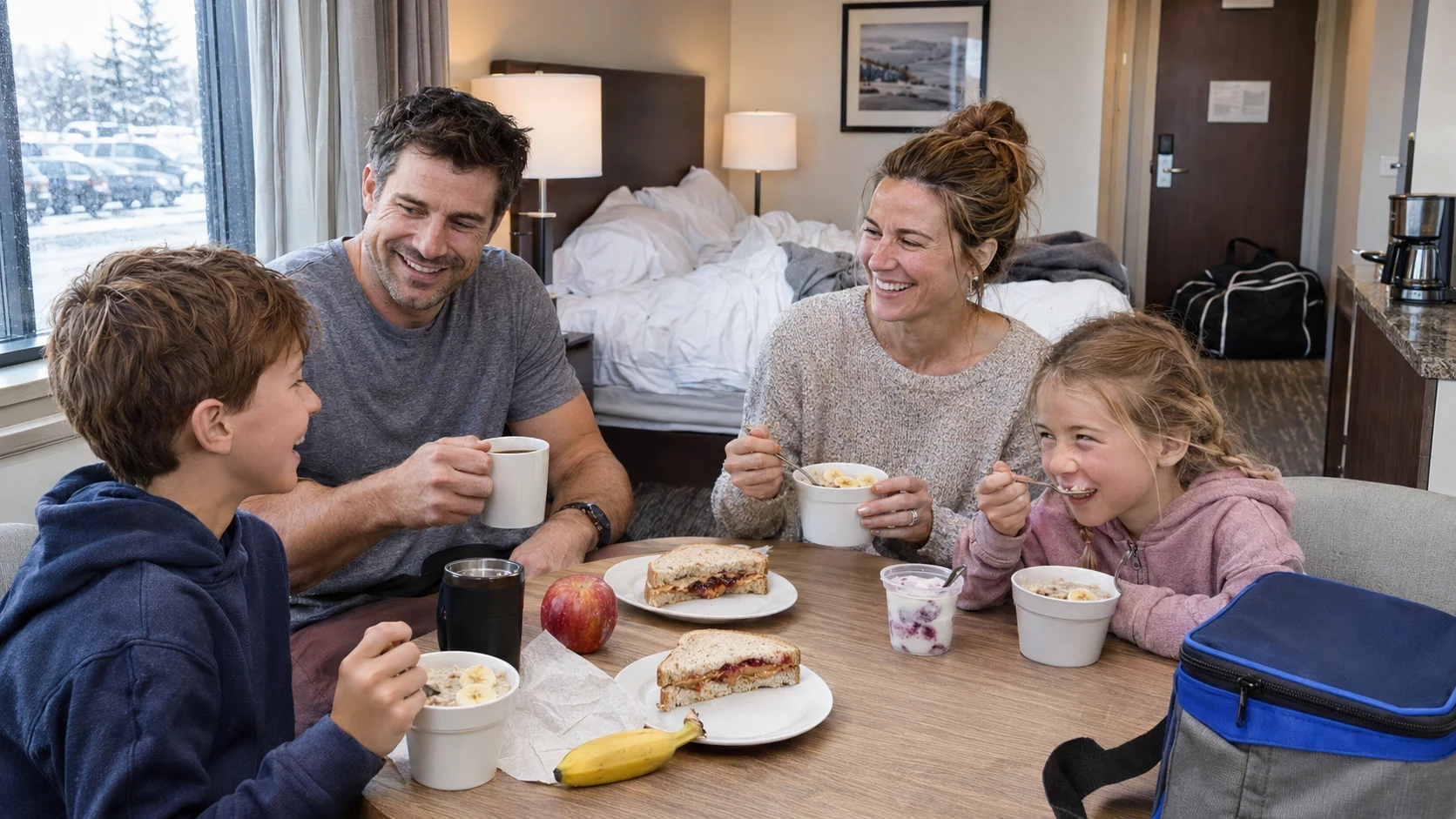
Family eating oatmeal and sandwiches in a bright hotel room before a hockey tournament

A little less rink-bag chaos

Give the food its own game plan.

Use what you already have. If something is missing, these are a few useful places to start—not a tournament shopping requirement. The family photo is editorial inspiration; the snack-box link opens options, not one pictured product.

You remembered the skates, charged the phone and found the hotel. Then your player asks what is for lunch. Apparently, the tournament fee did not include feeding them every 17 minutes. A little planning helps—but you do not need to arrive with a catering trailer.

Ask the hotel before buying half the grocery store

Check breakfast hours against the time you actually leave, not the time the first game starts. An impressive buffet opening at seven is not much use when your car is leaving at six.

Ask whether the room has a fridge, freezer space for ice packs and access to a microwave. Save a nearby grocery stop and a couple of meal options around the actual arenas. You do not need to pack the entire weekend before leaving home.

And do not stress if you forget something. Most tournament towns have a grocery store. A quick stop for bread, bananas or the yogurt still sitting in your fridge at home is not a parenting failure. You are going to a hockey tournament, not heading off-grid.

A concession lunch or takeout dinner can absolutely be part of the weekend. The problem is arriving with no other option and discovering the lineup is longer than the warm-up.

The hotel coffee maker has a second job

If breakfast is not included with your stay—or your game is early enough that the buffet might as well open at lunchtime—pack instant oatmeal or instant Cream of Wheat. Add a bowl and spoon to the bag and you have a breakfast backup that takes up almost no room. Forgot the bowl? Use a hotel cup and the spoons they provide. We are making breakfast, not auditioning for room service.

Use the drip coffee maker to heat plain water, then prepare the instant cereal in your bowl or hotel cup following the packet's directions. The cereal goes in the cup or bowl, not in the machine.

Add sliced banana, a drizzle of honey and a spoonful of yogurt. Now it is a proper little breakfast instead of another granola bar eaten while looking for the car keys. It also works as an easy between-game snack back at the hotel.

Two food zones. Fewer cooler inspections.

Put the things that need chilling in the cold bag and the grab-and-go food in a separate dry bag. Otherwise every request for three crackers becomes an expedition through the yogurt.

Pack the cooler with frozen ice packs and keep the dry snacks easy to reach. Less rummaging, fewer crushed sandwiches and a much better chance of finding the food before someone announces they are starving.

  • Cold bag: yogurt, milk, cheese, sandwiches and cut-up fruit.
  • Dry bag: peanut butter and jelly sandwiches, whole bananas or oranges, crackers, pretzels, instant cereal packets, familiar bars and applesauce pouches.
  • Easy-reach pocket: today's first snack, water, napkins and the utensils you do not want to search for in the parking lot.

Pack food they already eat. Revolutionary, we know.

Bread, rice, pasta, oats and fruit are useful fuel—not something a growing hockey player needs to earn. Add a familiar protein food to meals and keep water available through the day. This is normal family food with a tournament timetable, not an adult diet plan in a smaller container.

Our young-athlete fueling guide explains the food-and-timing basics. For actual meal swaps, start with five easy pre-game meals. Here, the useful job is making sure those meals can happen between arenas.

For the example below, imagine games at 10 a.m. and 4 p.m. Move the food with the schedule, appetite and team check-in times. The clock is a guide, not another coach.

Example: 10 a.m. and 4 p.m. games

Two games. A realistic food day.

  1. 7 a.m.

    Breakfast before the scramble

    Hotel breakfast if it works with the schedule. Otherwise, make instant oatmeal or instant Cream of Wheat and add banana, honey and yogurt. Toast or a bagel is another easy backup.

  2. 8:30 a.m.

    Small top-up if wanted

    Offer a familiar snack if they are hungry. Fill the water bottle and check the actual rink departure time.

  3. After game one

    Bridge the gap to lunch

    Water and a snack such as yogurt with cereal if lunch is not ready yet. A snack bridges the gap; it does not cancel lunch.

  4. 12:30 p.m.

    Sit down for actual lunch

    A peanut butter and jelly sandwich, fruit and pretzels is one easy option. Eat somewhere you can sit down instead of negotiating bites while carrying three sticks.

  5. 2:30 p.m.

    Check hunger and the next departure

    Applesauce and crackers are an easy smaller option if wanted. Keep it familiar and manageable before heading back to the rink.

  6. After game two

    Dinner is still a thing

    Have a snack ready if dinner is delayed, then a normal family meal. Parents and siblings get to eat too. Restock the cold bag for the next morning.

The printed schedule will look beautifully organized. Real life may introduce overtime, a different arena and a child who has suddenly retired from sandwiches. Pack a little flexibility alongside the lunch.

When the game moves, move the food

If the break shrinks, offer a smaller familiar snack rather than forcing the planned full lunch into the final minutes before skating. If a delay stretches the afternoon, bring the meal forward. One bar should not be asked to cover the entire tournament.

Give the reluctant eater two familiar choices and a manageable portion, then leave another chance to eat without turning every bite into a performance review. For early mornings, the split-breakfast plan keeps the first food manageable and leaves another chance after the skate.

Open the snack box. Summon the rat pack.

Give the siblings a box of little things: soft cut-up fruit, crackers, small sandwich pieces and whatever familiar bites travel well for your family. A few treat-sized extras can join the party. When that lid opens, the rink rats will come running, so pack extra for the rat pack.

It also does not hurt to pack the bigger sandwich, wrap or muffin. Cute compartments can vanish in about nine seconds. They are not lunch for everyone who happens to be standing nearby.

Keep the box for your own family's needs, serve with clean hands or utensils and choose sizes and textures for each child's age. Younger siblings need seated, supervised eating and foods prepared for their stage—not whole nuts or hard little treats handed out on the move.

And pack your own lunch. You are allowed to eat something other than three abandoned crusts and the emergency muffin nobody wanted.

Five minutes tonight saves tomorrow's snack crisis

Empty and wash the containers, check what actually got eaten and restock what you need for tomorrow. Clean and refill the water bottles, refreeze the packs if the hotel has freezer space, and put the first breakfast or snack where you will find it.

Then leave the rest of the weekend to the hockey tournament survival guide. You have enough to organize without discovering at six in the morning that the only food left is the mint beside the hotel receipt.

The parking-lot questions

A few things parents actually ask

What food should I pack for a hockey tournament?

Pack familiar meals, easy snacks, water and enough food for siblings and parents. Separate food that needs refrigeration from dry, shelf-stable options, then plan around the actual game and travel times.

What can we make if the hotel breakfast is not included or opens too late?

Pack instant oatmeal or instant Cream of Wheat and prepare it with water heated to the packet's directions. Add banana, honey and yogurt. A peanut butter and jelly sandwich, fruit or a bagel is another easy backup.

Does a divided snack box replace lunch between games?

Not automatically. It is an easy way to organize small snacks, but the amount and type of food still have to suit the child and the day. Pack a bigger sandwich, wrap or other familiar meal as well.