This is it. The breakfast that determines everything. If your eight-year-old does not eat exactly the correct blend of carbohydrates, protein and healthy fats at 5:47 a.m., the growth spurt is cancelled, the scouts will stop calling and the Hall of Fame jacket will be given to another family. Or—and stay with me here—everything will probably be fine.
First, lower the breakfast drama
A lot of kids are simply not hungry the minute they wake up, especially when the alarm went off at a time normally reserved for snowplow drivers and airport staff. Presenting a giant plate can make the whole thing worse. Now the kid is tired, the parent is anxious and the eggs have become a referendum on commitment to the team.
The realistic goal is not a magazine-cover breakfast. The goal is some familiar energy, a comfortable stomach and a child who does not start game day by arguing with the person driving them to the rink.
One light breakfast does not decide how a child grows or performs. The normal pattern across the whole day and week matters far more than whether one early meal looked social-media-worthy.
Start with toast—and stop apologizing for it
Toast is simple, predictable and usually negotiable. Butter gives it more staying power. Jam makes it appealing and adds quick carbohydrate. Peanut butter adds calories, fat and protein. Put two of them on. Put all three on. The breakfast police are not coming.
It may not fill the entire plate or look especially impressive on Instagram, but it contains exactly the things worried hockey parents keep trying to engineer: carbohydrates, calories and a little protein and fat. More importantly, the kid may actually eat it.
If one slice feels manageable, start there. Cut it into toast fingers if that somehow makes breakfast more interesting. Hand them the second slice for the drive if mornings at your house operate on rolling departures.
The peanut-butter banana is almost unfairly easy
A banana with peanut butter is the breakfast version of finding the missing glove before anyone has started yelling. It is easy to hold, quick to eat and does not require a fork, a bowl or a family meeting.
Serve the peanut butter on toast, spread it directly on banana pieces or put both into a small wrap. If the whole thing feels too big before early ice, offer half and pack the rest.
When chewing feels impossible, use the blender
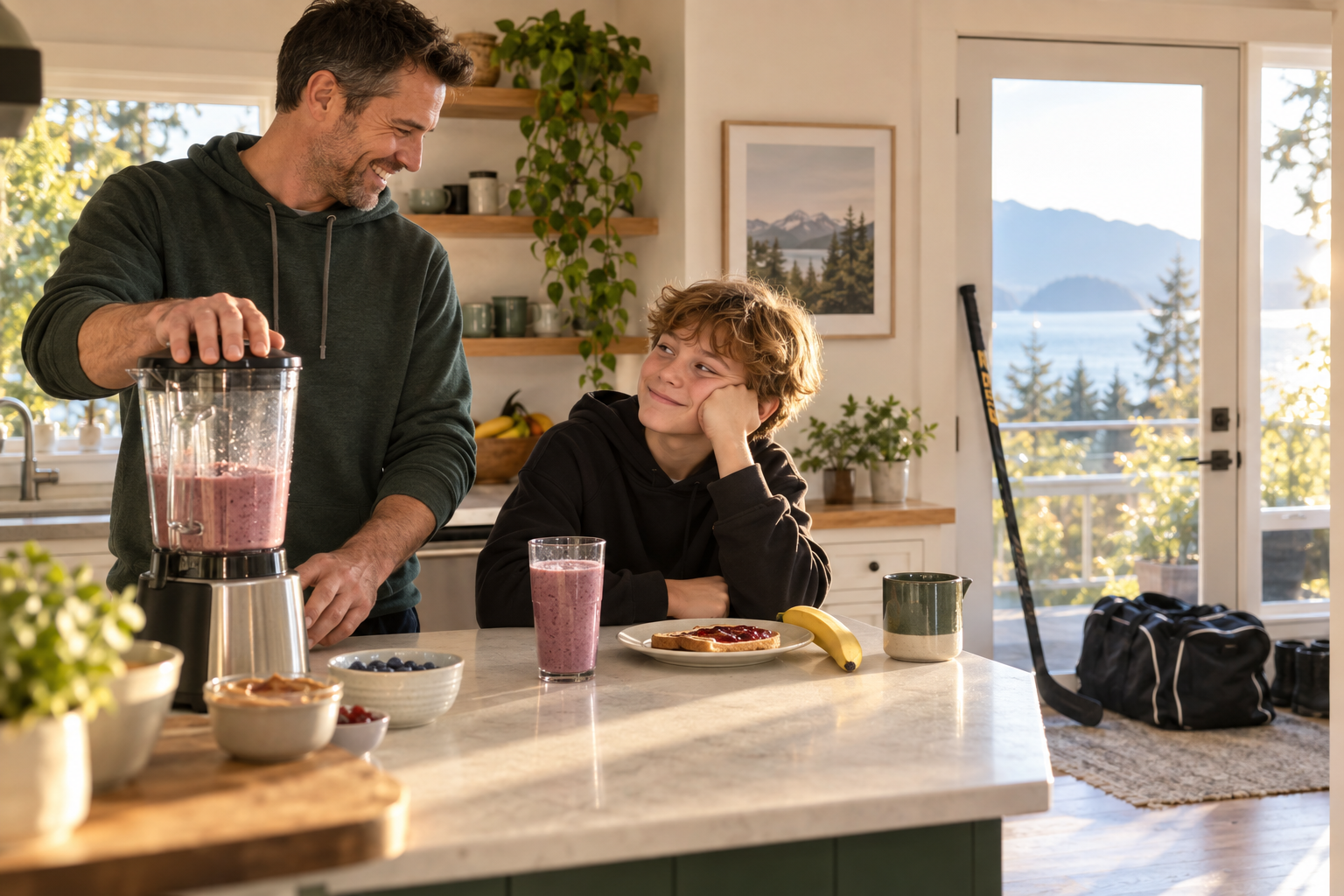
Some kids will drink breakfast long before they will eat it. A banana, milk or yogurt, peanut butter and a spoonful of oats can become a small breakfast that goes down without the child staring suspiciously at four separate foods.
Frozen berries, cocoa, honey or cinnamon can make it taste like something they chose rather than something built by a committee. Keep the serving reasonable. A giant blender bottle can feel just as impossible as the giant plate it replaced.
And yes, this is where I go full old-school hockey dad: I grab a fresh egg straight from the coop and throw it in the blender. Health Canada does not recommend eating raw eggs—there, I had to put that in here. That is what I do at our house; decide what works at yours.
Most importantly, tell your kid what is in the smoothie. The fastest way to retire a useful breakfast forever is to announce afterward that you secretly put something in it.
Five more small breakfasts that do not look like a training-camp buffet
Try half a bagel with cream cheese or peanut butter; a waffle with butter and jam; yogurt with a small handful of cereal; a muffin with milk; or dry cereal, a banana and a drink for the car. None of these needs a garnish, a macro calculator or its own social-media reveal.
A scrambled egg folded into a small tortilla also works for the kid who prefers savoury food. So does last night's rice, pasta or sandwich. Breakfast food is mostly a marketing category. If they will eat familiar leftovers at six in the morning, congratulations: breakfast is handled.
For truly early ice, split breakfast in two
When practice starts shortly after waking, a full meal may not be realistic or comfortable. Give them something small before leaving—toast, half a banana, applesauce, a few crackers or a small smoothie—then pack the real breakfast for afterward.
The second breakfast can be a bagel sandwich, yogurt and granola, oatmeal in a thermos, eggs and toast at home or whatever normal meal fits the rest of the morning. This takes the pressure off the first five bites without pretending food no longer matters.
The night before helps too. A normal dinner, water bottle ready, breakfast choice already made and bag by the door are more useful than trying to invent the perfect meal while looking for that missing glove that got shot over the net in the garage.
Give two choices, not seventeen
Ask, ‘Toast or smoothie?’ rather than, ‘What do you want for breakfast?’ The first question can be answered by a half-awake child. The second can become a hostage negotiation with the refrigerator open.
Keep two or three dependable breakfasts in rotation and stop trying to win with novelty. Familiarity is a feature on game morning. If the kid reliably eats the same peanut-butter toast before every early skate, that is not a nutritional failure. That is a system.
Pack the backup before you need the backup
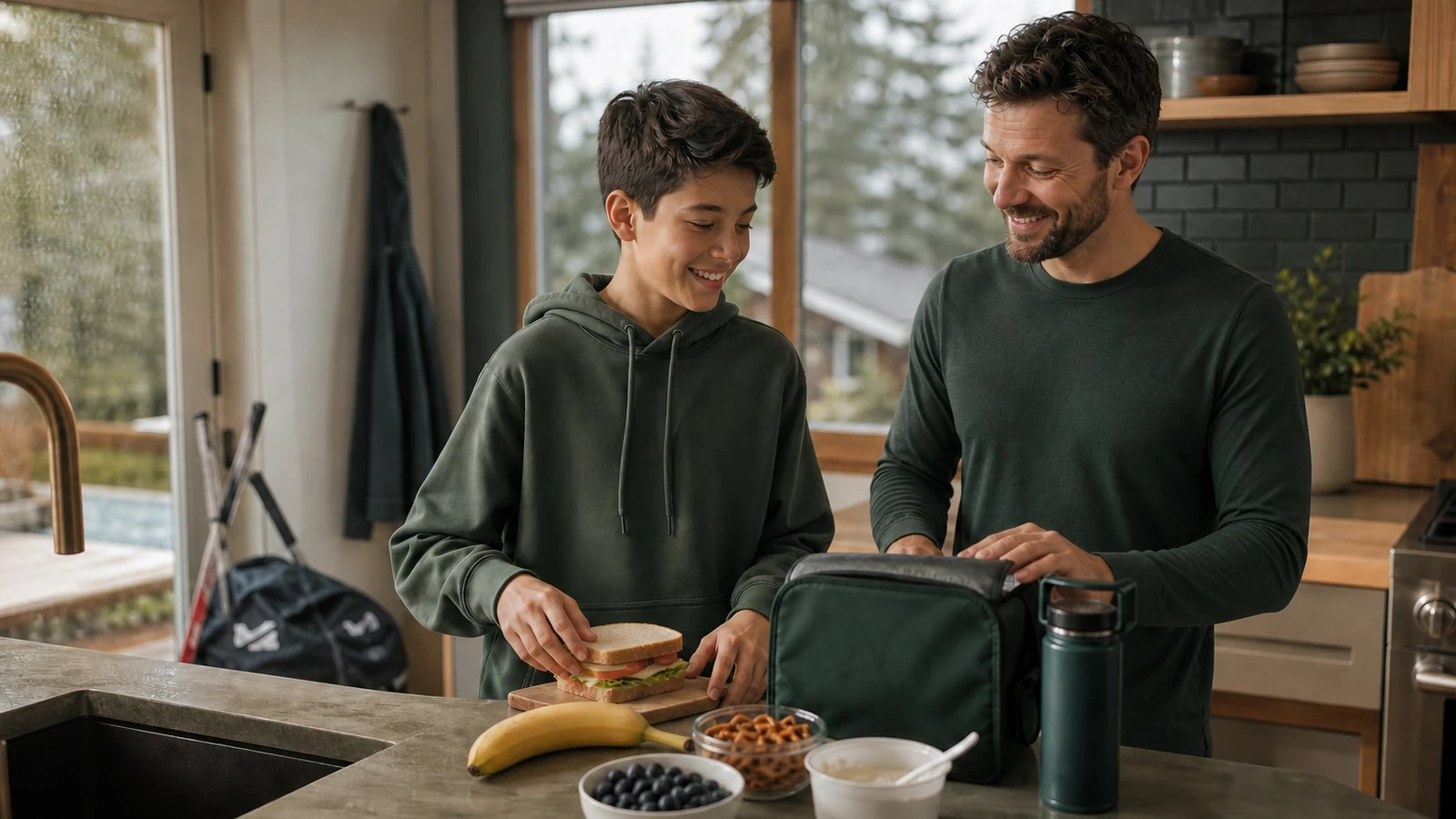
Bring a banana, half sandwich, muffin, yogurt drink, applesauce pouch or familiar bar. Appetite sometimes arrives ten minutes after the family has left the house, which is inconvenient but not surprising.
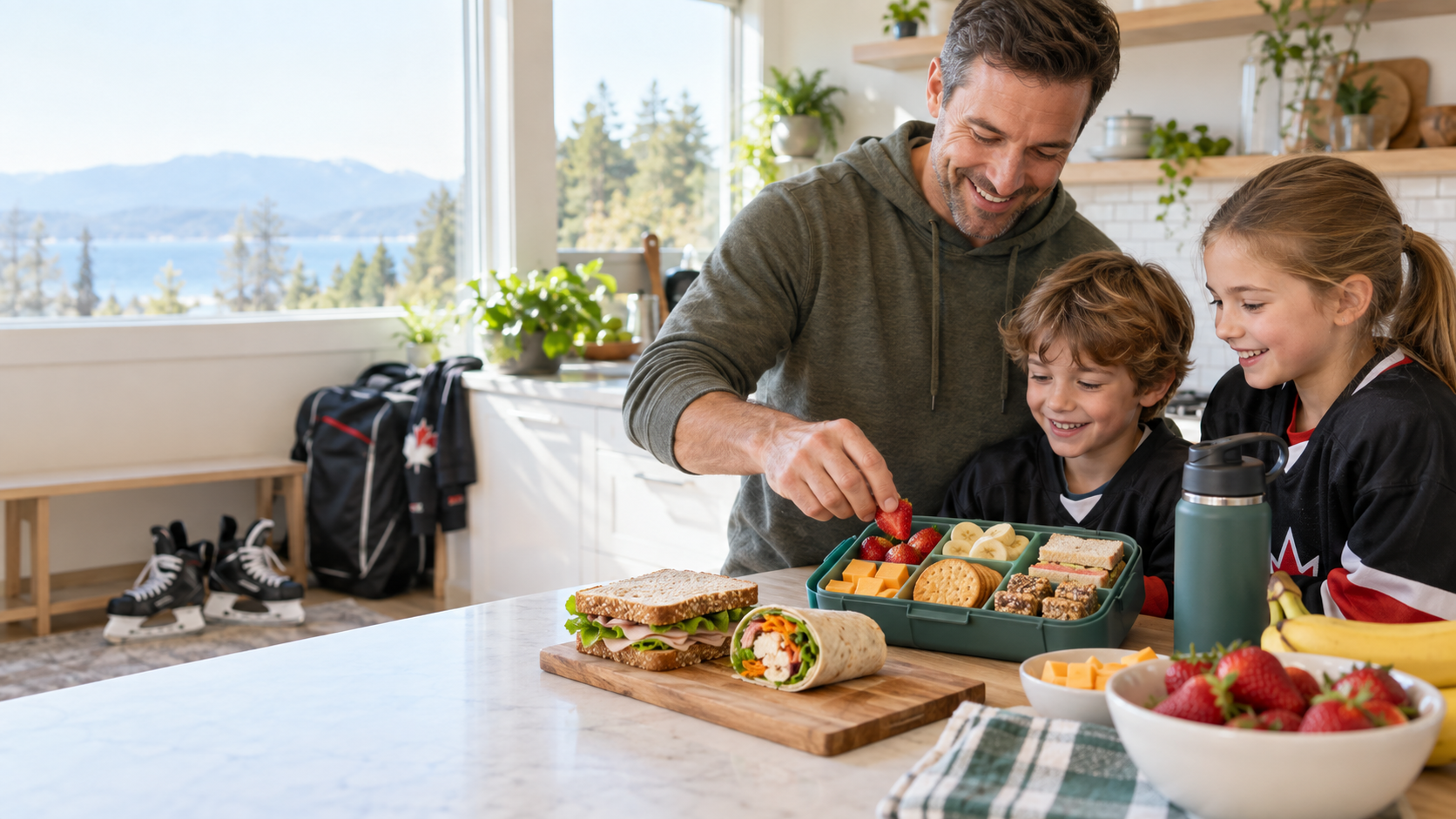
For longer mornings, bring the divided snack box too. Once it opens, siblings and rink rats will circle, so pack more than the future Hall of Famer technically needs. Our <a href='/blog/5-healthy-pre-game-meals-young-hockey-players/'>five practical pre-game meals</a> and <a href='/blog/how-to-fuel-a-young-athlete-game-day/'>young-athlete fueling guide</a> cover the rest of the game-day food plan.
The kid is not doomed. Neither is breakfast.
Keep offering normal food. Keep the portions realistic. Make the easy choices easy to reach. Do not turn one skipped slice of toast into a prediction about adult height, university scholarships or the family's entire athletic future.
Some mornings they will eat everything. Some mornings they will take four bites and insist they are full. Pack the backup, get everyone into the car and carry on. Hockey parenting already contains enough genuine problems without asking breakfast to become one of them.
Save or print
The no-drama early-hockey breakfast plan
- Offer two familiar choices
- Start with a small portion
- Use toast, banana, yogurt, cereal, a waffle or a small smoothie
- Add butter, jam or peanut butter when it helps the food get eaten
- Keep new recipes away from game morning
- Pack a backup for the car or after the skate
- Plan a larger second breakfast after very early ice
- Keep the water bottle beside the hockey bag
- Do not turn breakfast into the first competition of the day