These are practical food-storage and rink-bag helpers for families who need snacks to be easy to find, portion and share. The box does not replace normal meals; it simply keeps the little things from rolling around the bottom of the hockey bag.
Product images are served by Amazon.ca and may change or be removed at any time.
Best for: cut-up fruit, nuts, crackers, cheese cubes and one odd treat
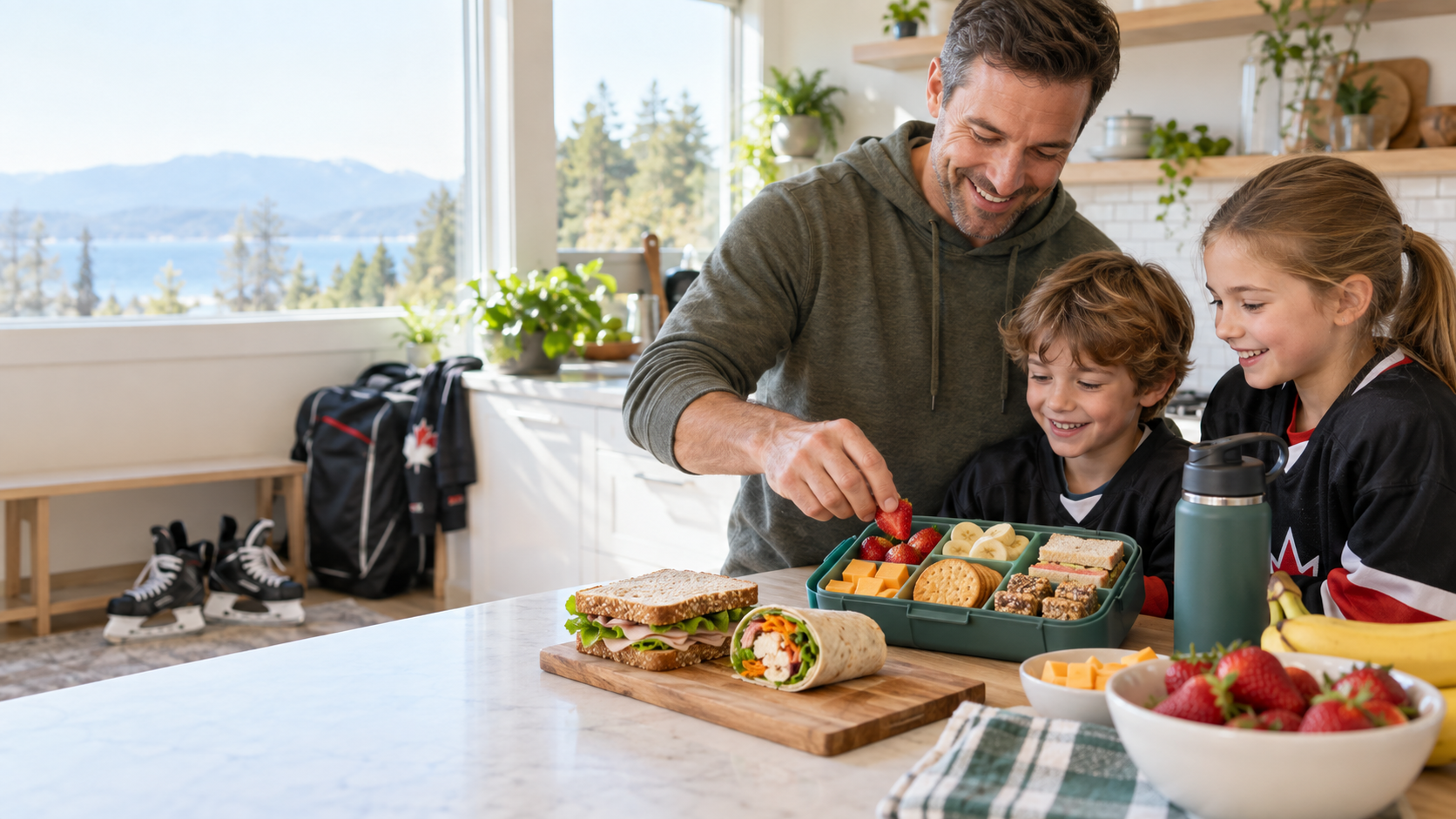
A roomy divided box gives every small snack its own lane: strawberries, banana pieces, crackers, nuts, cheese cubes and, yes, a few Smarties if that is what makes the box exciting. When it comes out at the rink, the rat pack will notice, so pack extra.
Why it stands out
Multiple compartments keep small foods separate
Easy to see what is left before leaving home
Makes a mix of everyday food and one fun extra feel intentional
Watch for
A fuller box takes more room than a single snack bag
Check the current dimensions and closure before ordering
Pack chilled foods in an insulated bag with an ice pack
Best for: yogurt, cheese, sandwiches and the larger items that save a long tournament day
The snack box handles the little pieces; an insulated lunch bag handles the bigger sandwich, wrap, muffin or extra fruit that keeps one small snack from becoming three emergency purchases.
Why it stands out
Separates cold food from the hockey bag
Gives siblings their own food space
Works for practices, tournaments and road trips
Watch for
Needs an ice pack for perishable food
A larger bag is easier to pack than to forget in the car
Best for: keeping water cold and easy to reach between games
A bottle that is easy to open, refill and identify saves a surprising amount of rink-day fuss. Put it beside the snack box so it comes home instead of staying under the car seat.
The goal is not to feed a young hockey player like a professional athlete in a commercial. It is to get familiar food into them early enough that they have useful energy for skating, school, growth and the game. Carbs matter here: bread, rice, pasta, oats, potatoes, fruit and cereal are not the enemy of performance; they are some of the easiest fuel to use.
Make healthy food the normal family food
This is where parents can accidentally make things harder. We see adults trying to diet, then handing kids foods they would never eat themselves. Kids do not need a separate punishment menu. Make the everyday family meal the healthy option, then let portions and timing flex around the game.
A sandwich, bowl of pasta or plate of rice does not need a sports-science makeover. Add something with protein, add fruit or vegetables when you can, and keep the food familiar enough that game day is not also a taste-test.
1. Oatmeal, banana and yogurt
Oats and banana give the meal a useful carbohydrate base. Yogurt adds protein and makes it more filling without turning breakfast into a project. Add berries, a little nut or seed butter or whatever your family already keeps around.
This one is especially handy for an early practice because it can be made quickly and eaten well before leaving.
2. Turkey sandwich, fruit and pretzels
A sandwich is not boring when it reliably gets eaten. Add turkey, chicken or hummus, put fruit beside it and toss in pretzels for an easy carb top-up. It travels well and can be adjusted for the kid who wants the crusts removed with surgical precision.
3. Pasta with simple sauce and chicken or lentils
Pasta is a classic for a reason. Keep the sauce familiar, add chicken, meatballs, lentils or another protein and serve a comfortable portion. If the game is close, eat this earlier and use a smaller snack later rather than trying to squeeze a huge bowl into the final hour.
4. Rice bowl with chicken and vegetables
Rice, chicken and vegetables can be as plain or as colourful as your child will accept. Put sauces on the side if that prevents a dinner-room negotiation. This is a good option when there are a few hours before warm-up and the family is eating together.
5. Bagel, eggs and fruit
A bagel gives the meal a solid carb base, eggs add protein and fruit keeps the plate from feeling like a beige hockey-room buffet. It works for breakfast or an early lunch and is easy to scale up for a bigger athlete or a long day.
Use the clock, not a perfect menu
Three to four hours before the game is the time for a real meal. One to two hours before, make it smaller: banana and crackers, toast, applesauce, cereal or a familiar bar. In the final stretch, a few easy bites and water are usually more realistic than a second dinner.
Try the plan at practice first. The rink is a poor place to discover that a new meal, bar or giant smoothie does not agree with your player's stomach.
The snack box is for the siblings and rink rats too
A small compartment snack box is perfect for cut-up fruit, nuts, crackers, cheese cubes, mini sandwiches and bite-sized granola bars. When the box comes out, the rink rats will come running, so pack extra for the rat pack.
It does not hurt to pack bigger items as well. A full sandwich, larger muffin or extra wrap can save the day when one little snack turns into three hungry kids and a long drive home.
Keep the mix fun. Everyday food does most of the work, and an odd treat such as a few Smarties can make the box feel like something to look forward to instead of another parent lecture.
After the game, return to normal food
Offer water and a familiar carbohydrate-plus-protein snack if the next meal is not ready soon. Yogurt and cereal, cheese and crackers, chocolate milk and fruit or half a sandwich all work. If dinner is ready, just eat dinner. Recovery does not need its own ceremony.
Save or print
The simple pre-game packing list
A familiar meal three to four hours before
A smaller carb snack for the final one to two hours
A filled water bottle
A compartment snack box for siblings and rink rats
A bigger sandwich, wrap or muffin for the long day
An insulated bag and ice pack for cold foods
Extra portions because the snack box will attract a crowd
Pre-game food FAQ
Quick answers before you leave the house
How long before hockey should a child eat a full meal?
Aim for a familiar meal about three to four hours before the game, then use a smaller snack one to two hours before if needed.
Why are carbs useful before hockey?
Bread, rice, pasta, oats, potatoes, fruit and cereal provide familiar carbohydrate fuel for repeated skating, stops and starts.
What should go in a hockey snack box?
Try cut-up fruit, nuts, crackers, cheese cubes, mini sandwiches, bite-sized granola bars and one fun extra. Pack more than you think you need for siblings and rink rats.
Should the snack box include bigger food too?
Yes. A full sandwich, wrap or muffin is useful on long tournament days when a few small snacks will not hold everyone over.

 Product image from Amazon.ca · Paid link