

The first few weeks of hockey season are optimistic. You arrive in a hoodie, sit wherever there is room and assume every arena is roughly room temperature. Then you meet the rink with the permanent crosswind, the concrete bleachers and the coffee that becomes iced before the second drill.
First: give the parent gear its own small bag
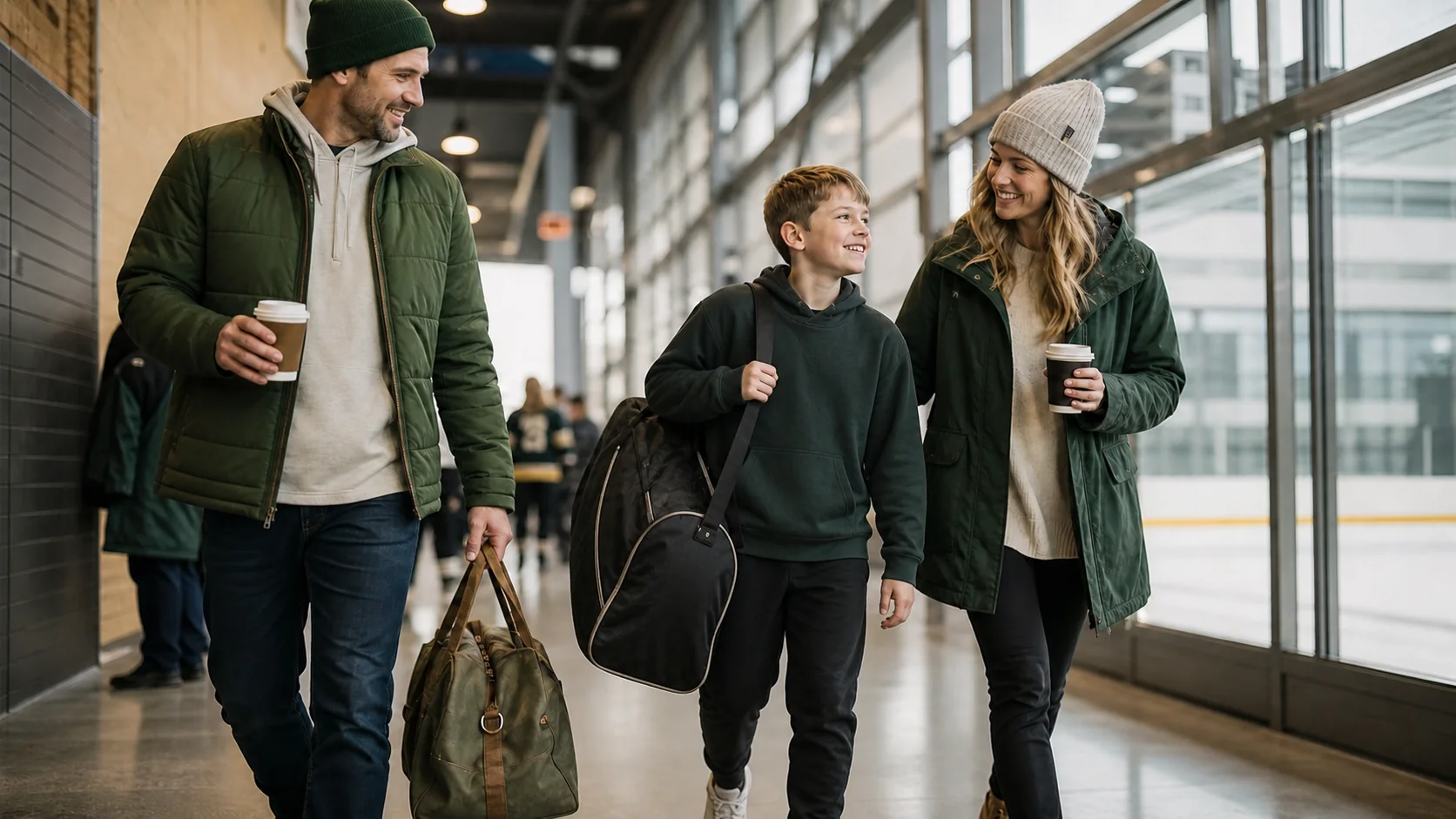
The player’s hockey bag already contains enough equipment to outfit a small medieval army. Do not bury your gloves, charging cable and snack under shoulder pads. Keep a small tote or backpack for the adult side of rink life and leave it packed between ice times.
This is not a second hockey bag. It is a controlled collection of things you are otherwise guaranteed to search for while standing beside the car with one skate already inside the arena.
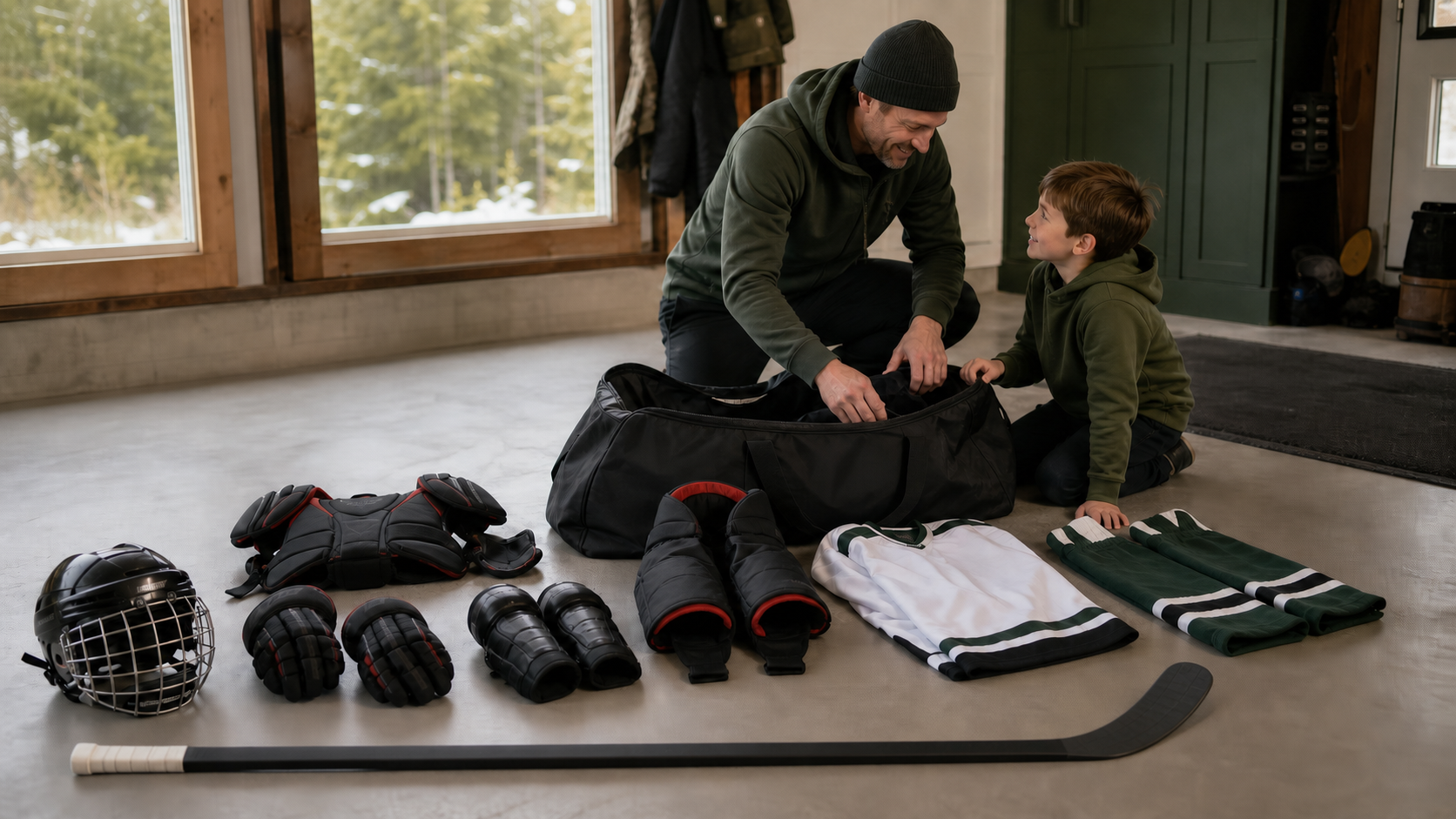
Keep the player side organized with our youth hockey equipment checklist. The parent bag should make game day easier without becoming one more thing that needs wheels.
Pack the free and boring stuff first
Before buying anything, pack the useful things you already own: a toque, thin gloves, an extra warm layer, tissues, a pen, a charging cable, dry socks and one snack that can handle living in a bag. Add a zip bag for wet mittens or the mysterious object your child hands you five seconds before puck drop.
Dress in layers rather than one heroic coat. Some arenas feel like a walk-in freezer and others have a lobby heated to tropical-houseplant standards. A layer you can remove is more useful than spending the whole game choosing between shivering and sweating.
Keep a small snack for yourself. The kids may have a carefully planned game-day meal while you realize at 2:40 p.m. that breakfast was nine hours ago. Our guide to how to fuel a young athlete can help with their side of the equation; parents are still responsible for remembering that adults also require food.
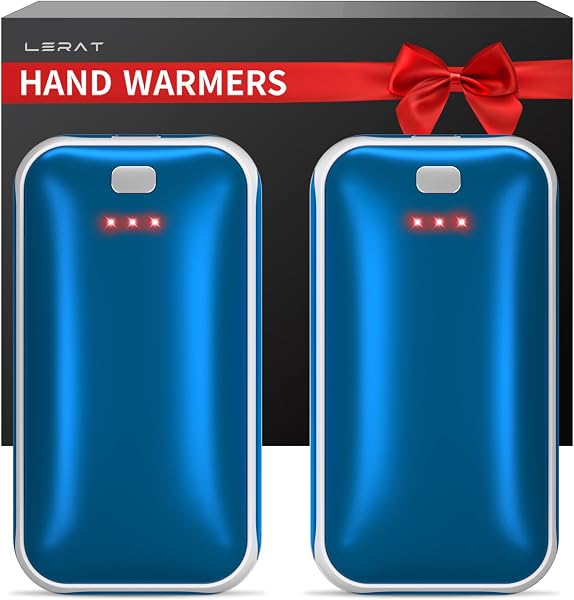
Warm hands: rechargeable warmers beat the annual pocket excavation
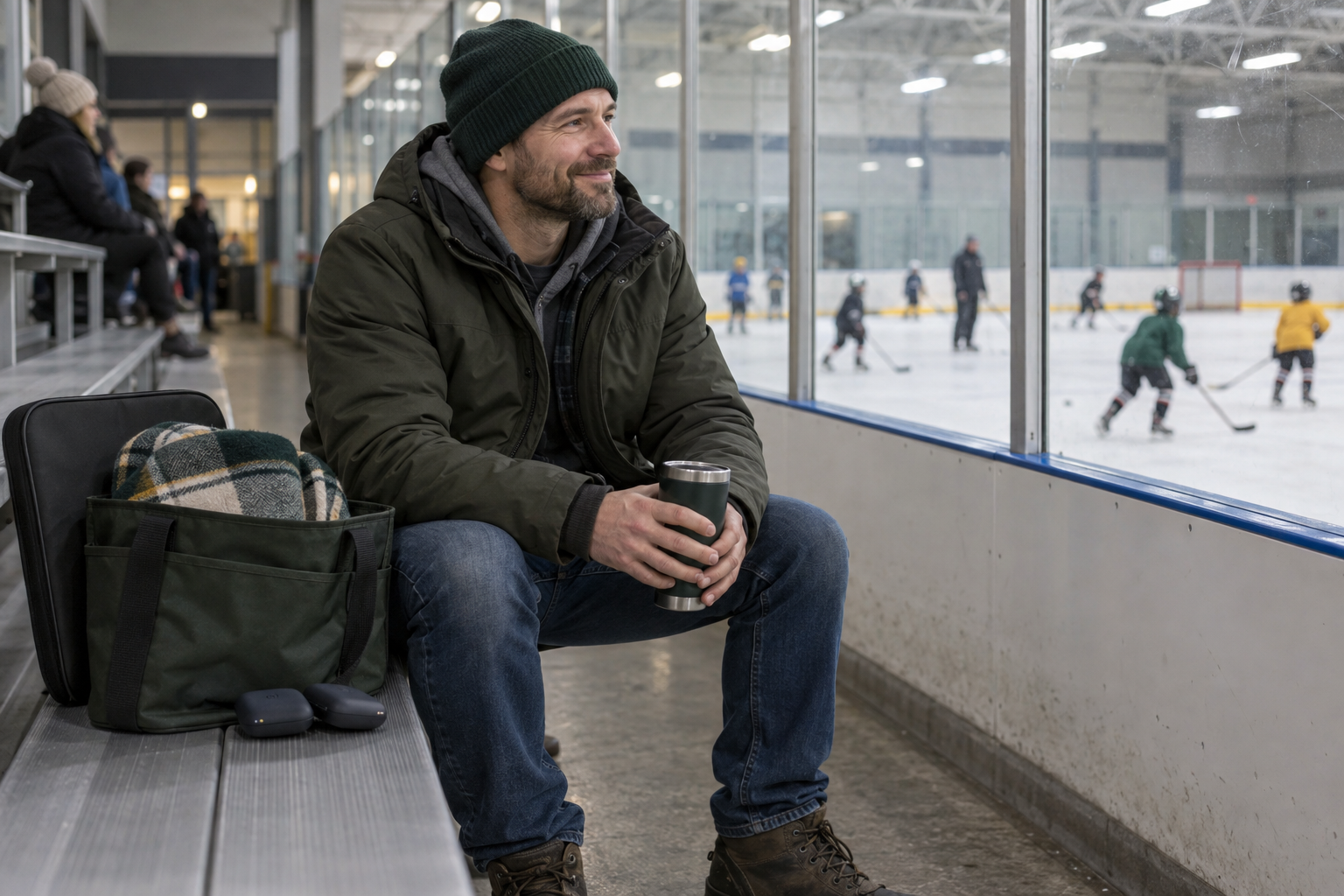
Disposable warmers work, but a rechargeable pair is easier to keep with the rink bag and use throughout the season. Two small units also mean you can keep both hands warm or pass one to the parent who said the arena would be fine and arrived in a light jacket.
Charge them during the weekly rink-bag reset and follow the current product instructions. They are for pockets and cold hands—not for turning the equipment bag into a slow cooker.
A dry seat may be the best value in the whole bag
Cold metal and damp wooden bleachers have a special ability to travel through jeans. A thin insulated seat pad takes almost no room, works in more arenas than a hooked stadium chair and gives you a clean place to sit during tournaments, outdoor games and the occasional parking-lot lunch.
If your regular arena has proper seats, skip it. If you spend three practices a week on an aluminum bench, this is exactly the kind of unexciting purchase that quietly earns its keep.
Bring a blanket when the rink is genuinely cold—not because the internet made a list
A compact fleece blanket with a water-resistant outer side makes sense for very cold arenas, outdoor games and tournament weekends. It can cover a lap, block a draft or make a damp bench usable. The carry bag matters because loose blankets have a way of taking over the trunk.
For a tournament, add it to the broader plan in our hockey tournament survival guide. For an ordinary one-hour practice in a warm rink, leave it in the car and enjoy travelling light.
Use a travel mug that closes properly
A warm drink helps, but the important feature at the rink is a lid that closes securely. Your mug will be set on concrete, carried beside a tote and balanced while you hold a helmet, keys and a conversation about why today’s practice socks are unacceptable.
Choose something easy to clean, comfortable to drink from and good-looking enough that you will actually remember to bring it. Check the arena’s current beverage rules, keep the mug upright and remember where you set it down. The rink has already collected enough travel mugs.
What comes inside and what can stay in the car
Bring the things you will use during this ice time: a warm layer, drink, small snack, tissues and whichever cold-rink upgrade fits the building. Leave bulky backup clothing, the larger first-aid kit and the emergency blanket in the vehicle unless the weather or event calls for them.
The fastest way to stop using a parent rink bag is to make it too heavy. If an item has completed six straight weeks as a passenger, move it back to the car or the house. Every product still has to earn its roster spot.
The five-minute Sunday reset
Throw out wrappers, wash the mug, dry the blanket or seat pad, restock tissues and snacks, and recharge the hand warmers and power bank. Put the bag back beside the hockey gear so it leaves with the family next time.
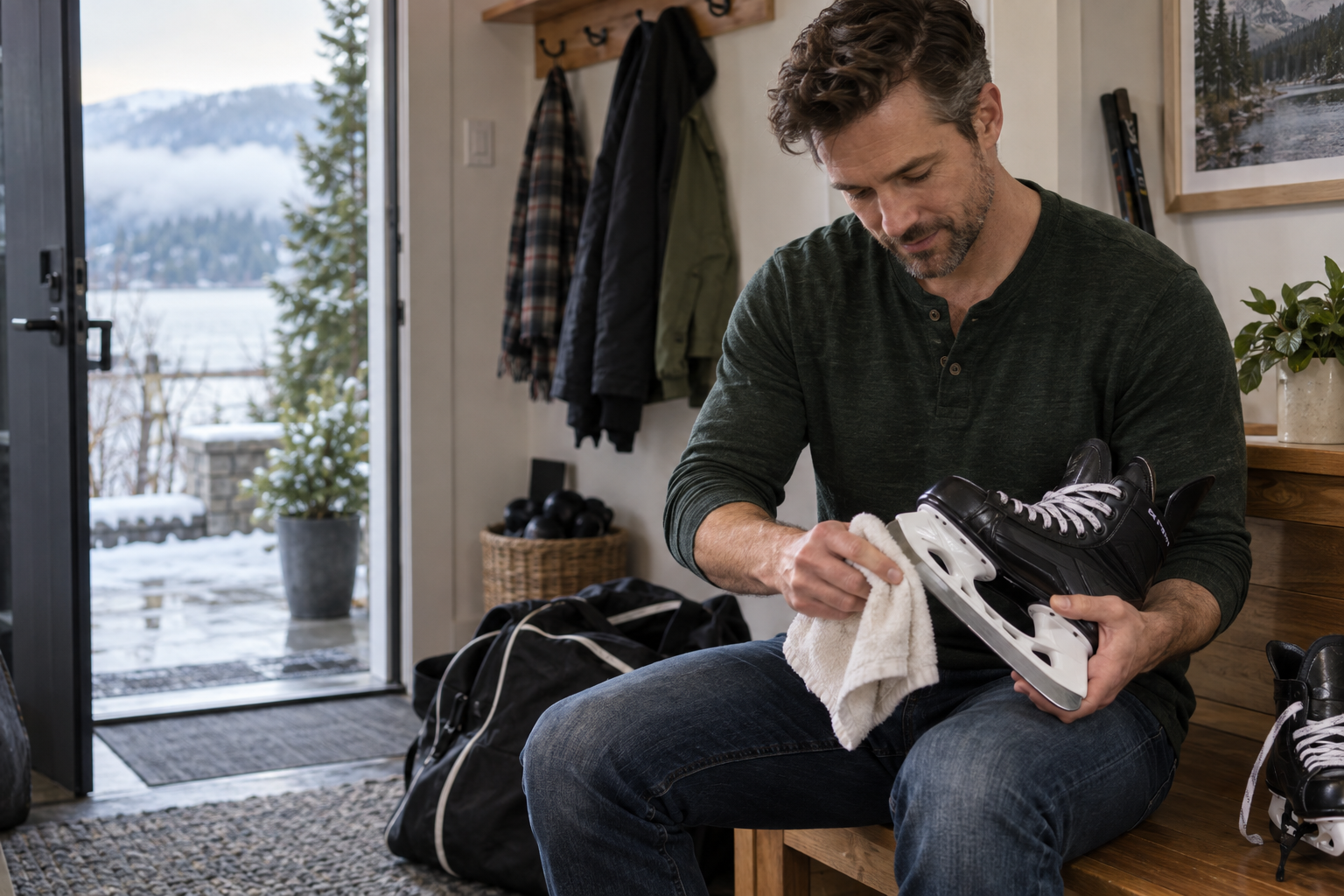
Do the same quick reset on the player’s side: dry the skates, clean the water bottle and deal with damp equipment using our hockey gear washing and drying guide. Five calm minutes now beats discovering an archaeological snack wrapper at the rink.
Save or print
The small hockey-parent rink bag
- Toque and thin gloves
- One removable warm layer
- Dry socks
- Tissues and a zip bag
- Charging cable and small power bank
- Pen and one durable snack
- Warm drink in a securely closing mug
- Optional rechargeable hand warmers
- Optional insulated seat pad
- Optional compact waterproof blanket