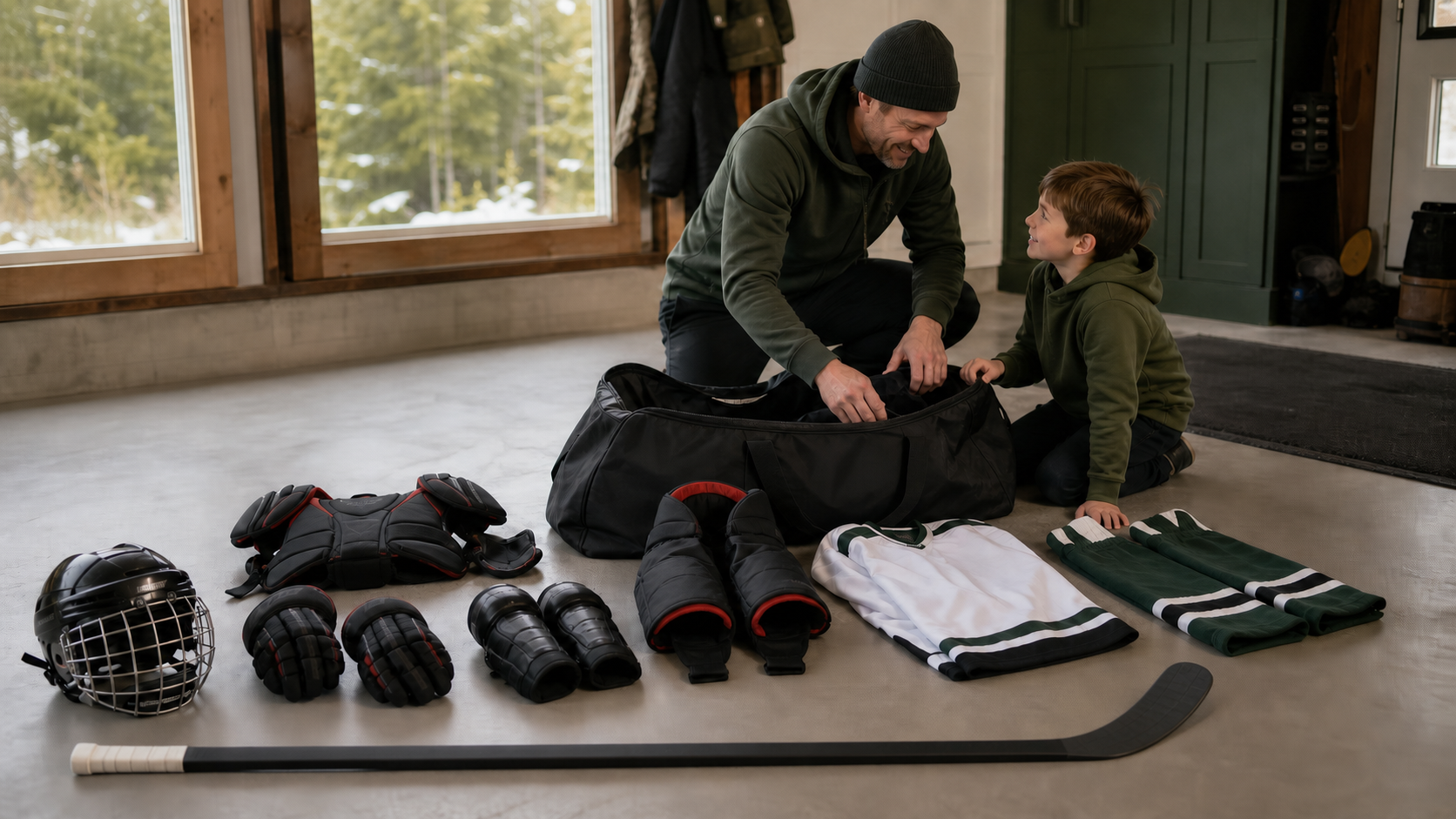


A child can spend an entire car ride explaining a questionable pass, then remember during warm-up that one skate has felt slippery since Tuesday. Skate sharpening lives in that special corner of hockey parenting where a two-minute check at home can save twenty minutes of panic at the rink.
The short answer: check every skate, sharpen every three to five
Our practical family rhythm is to dry and inspect both skate blades after every ice time, then sharpen about every three to five skates. That is frequent enough to keep the feel consistent without treating every practice like a sharpening emergency.
It is a starting point, not a law. A nicked edge, outdoor ice, an uncovered walk across concrete or a player suddenly sliding through turns can move sharpening day forward. A lighter recreational skater on clean indoor ice may comfortably go longer.
Hockey Canada’s current parent guidance keeps the main point simple: regular sharpening supports grip and glide, and blades should be wiped clean and dry after every ice session.
What to do after every ice time
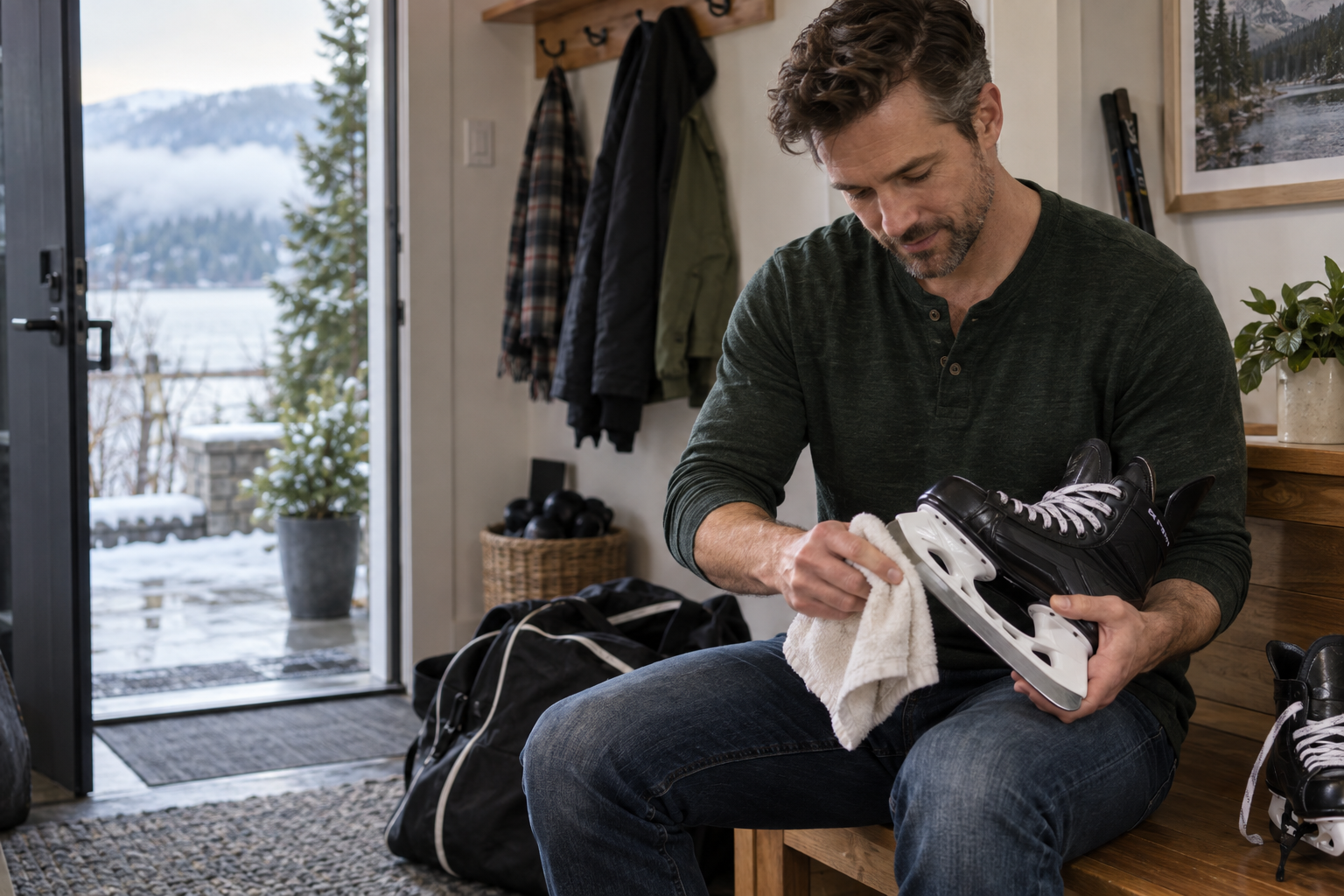
Take the soakers off, wipe the steel and holder completely dry, and look along both edges under decent light. Check for obvious nicks, rolled spots, rust or damage to the holder. Open the tongues and let the skates air-dry away from direct heat.
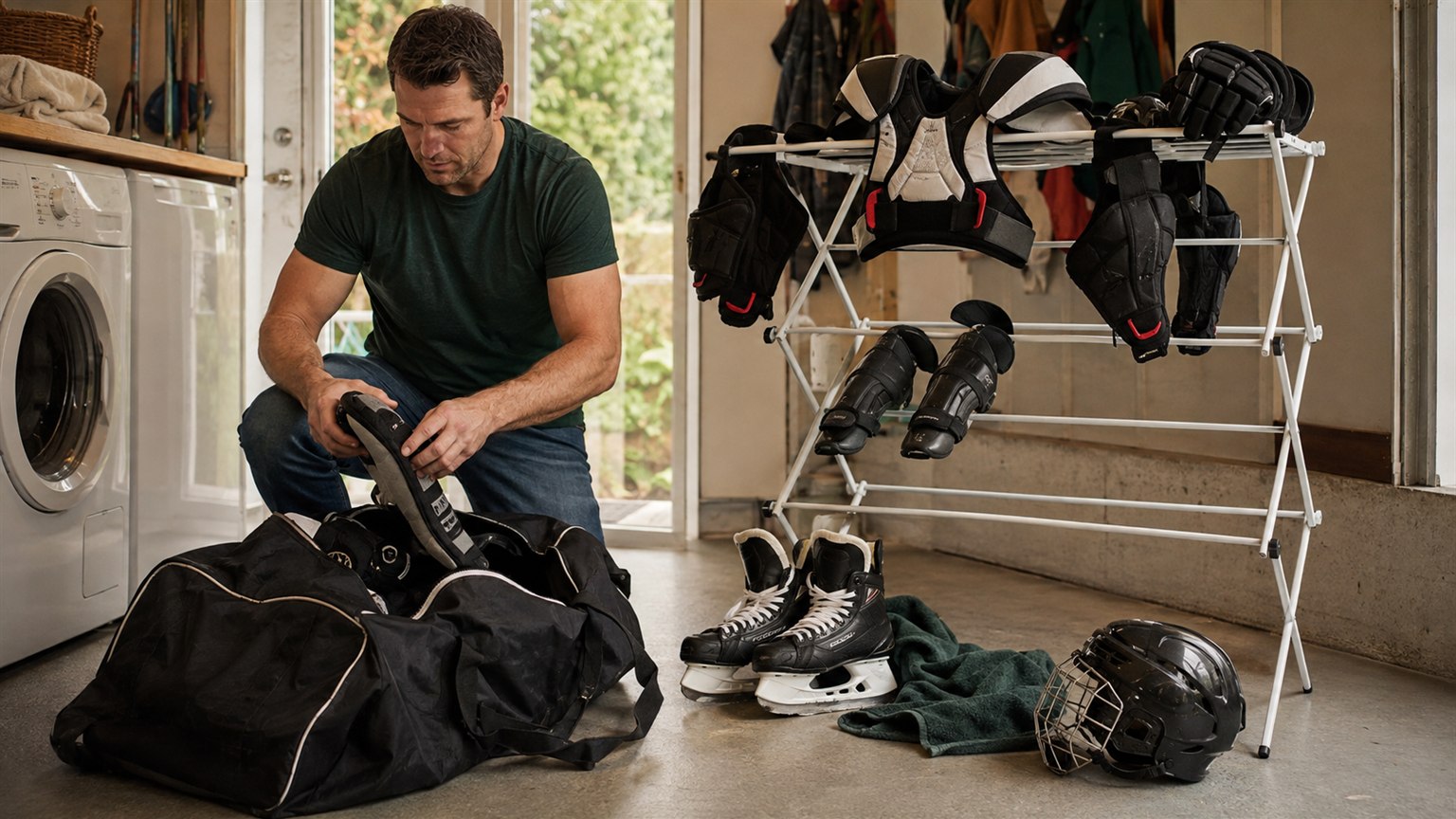
This is the skate version of the same routine in our hockey gear washing and drying guide: moisture out, airflow in, and nothing damp goes straight back into the bag.
Use hard guards only for walking. For storage and travel after the steel is dry, breathable soakers help protect the edges without trapping as much moisture. Never let a player walk on an unprotected blade unless the goal is to turn a sharpening appointment into an urgent one.
Signs the skates need sharpening before the schedule says so
Listen for a change in the player’s normal skating. Sliding out of turns, struggling to stop evenly, losing confidence on one side or saying the skates suddenly feel wrong are useful clues. Young players may not say ‘my outside edge is gone.’ They may simply say the ice is bad, the skate is weird or everything is terrible.
Compare the two blades and both edges. A single damaged spot can matter even when the rest of the steel still looks polished. If you are unsure, have a reputable hockey shop inspect it rather than dragging a finger along a sharp edge.
Do not solve every skating problem with a fresh sharpening. Loose holders, damaged steel, poor fit, uneven lacing and a growth spurt can all change how a skate feels.
Why three to five ice times works for our family
A regular three-to-five-skate rhythm makes the feel predictable. It also makes planning easier during weeks with practices, games and a tournament squeezed together. Count ice times in your phone, on a bag tag or with the highly advanced system known as a marker on masking tape.
Ice time matters more than the number of calendar days. Three skates in four days create more wear than one weekly practice. The type of ice, player weight, skating style, steel quality and how the skates are handled off the ice also change the interval.
Before a tournament, sharpen early enough for the player to use the skates once before the important game if they prefer a slightly settled feel. Tournament morning is not the ideal time to experiment with a different hollow because another parent sounded convincing beside the hotel waffle maker.
Hollow without the engineering lecture
The hollow is the groove shaped into the bottom of the blade. In a traditional radius-of-hollow sharpening, a smaller number makes a deeper groove with more bite, while a larger number makes a shallower groove with more glide. Player weight, ice conditions and preference affect what feels right.
Sparx describes a traditional 1/2-inch radius as a common starting point for smaller youth players. That does not make it the automatic answer for every child. Start with the cut they already know, write it down and change one thing at a time with help from an experienced sharpener.
Our family uses a 1/2-inch FIRE ring. FIRE is Sparx’s flat-bottom-style profile designed to combine bite with additional glide. It works for us, but this is personal experience—not a command for every kid at the rink.
Hockey shop or home sharpener? Count the trips as well as the dollars
A good local hockey shop is still the easiest answer for many families. They can inspect the steel, handle unusual damage and help when a player wants to change hollow. If the shop is close and sharpening fits naturally into the week, there is no prize for making the system more complicated.
A home sharpener becomes more interesting when several kids play, a parent plays too, ice times stack up or getting to the shop is the hardest part. We own a Sparx Sharpener 2, and the convenience is the reason it earns its space. I can keep the same routine at home instead of noticing dull skates after the store has closed.
Do the honest household math: the current machine, the required grinding ring, replacement rings, maintenance and how many pairs your family actually sharpens. Sparx says ring life depends on how the machine is used; its current FIRE Ring page estimates roughly 40 sharpenings when sharpening every five to six hours of ice, and more frequent light refreshes may produce more. Treat that as manufacturer guidance, not a guaranteed family total.
Sometimes the problem is the fit, not the edge
Skates should fit snugly with the heel held comfortably in place. Hockey Canada specifically warns against oversized skates bought with too much room to grow because poor fit can interfere with balance and control. Sharpening cannot fix a heel lifting inside the boot.
If the player is new or has grown since last season, revisit the skate fit in our youth hockey equipment checklist. For the rest of the season’s real expenses—including sharpening and surprise replacement steel—use our Canadian youth hockey cost guide.
Stop using skates with cracked holders, loose components, badly damaged steel or any condition you cannot confidently assess. A qualified hockey retailer can tell you whether the answer is sharpening, repair or replacement.
The small skate items worth keeping in the bag
Spare laces are cheap insurance, provided they are the correct length for the skates. Keep one pair in a small zip bag so they do not turn into a knot with the tape and spare mouthguard. Waxed laces tend to hold each section more firmly; regular laces are easier for some younger players to adjust. Either is fine if it fits and stays tied.
A hockey deodorizer can make the ride home friendlier, but use it after the skates and gear have been opened up and dried. Fragrance sprayed into damp skates is not a cleaning system. Breathable soakers, a small blade towel and a basic lace puller are often more useful than another complicated gadget.
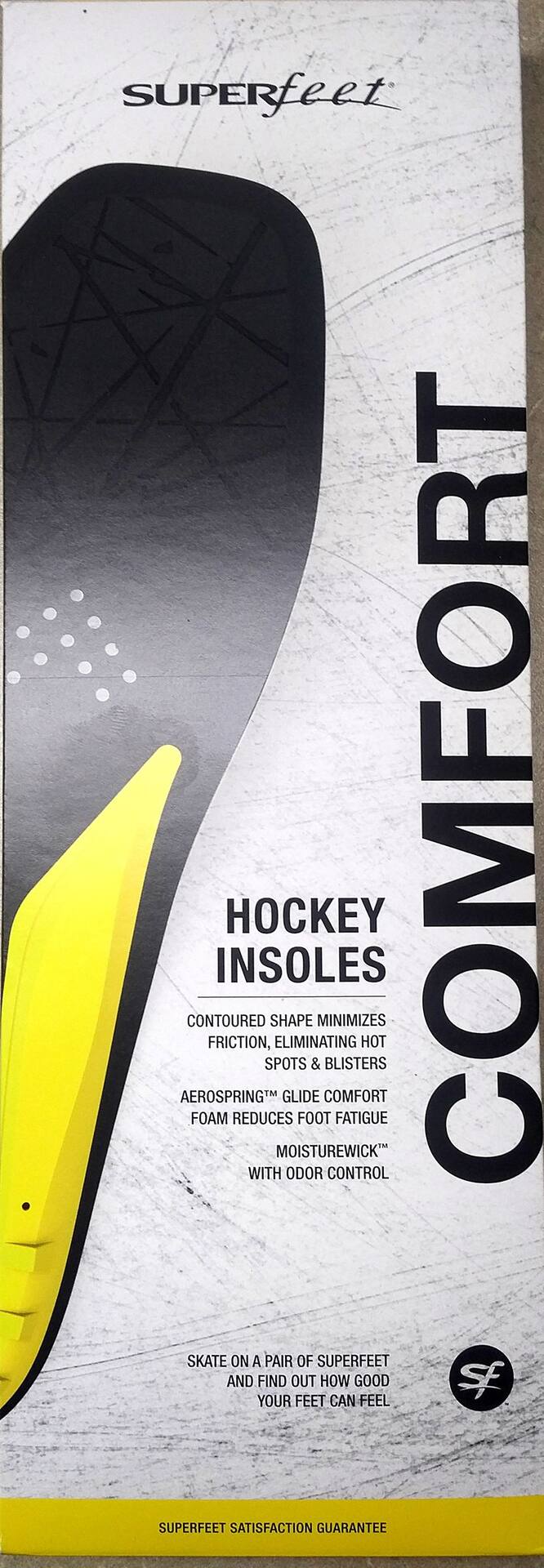
Replacement insoles can improve comfort for the right player, but they also change the space inside the boot and may lift the heel. Use a hockey-specific, low-profile insole, match the size carefully and confirm the heel still locks in place. If the skate fit was already questionable, start with a qualified fitter rather than trying to solve it from an online cart.
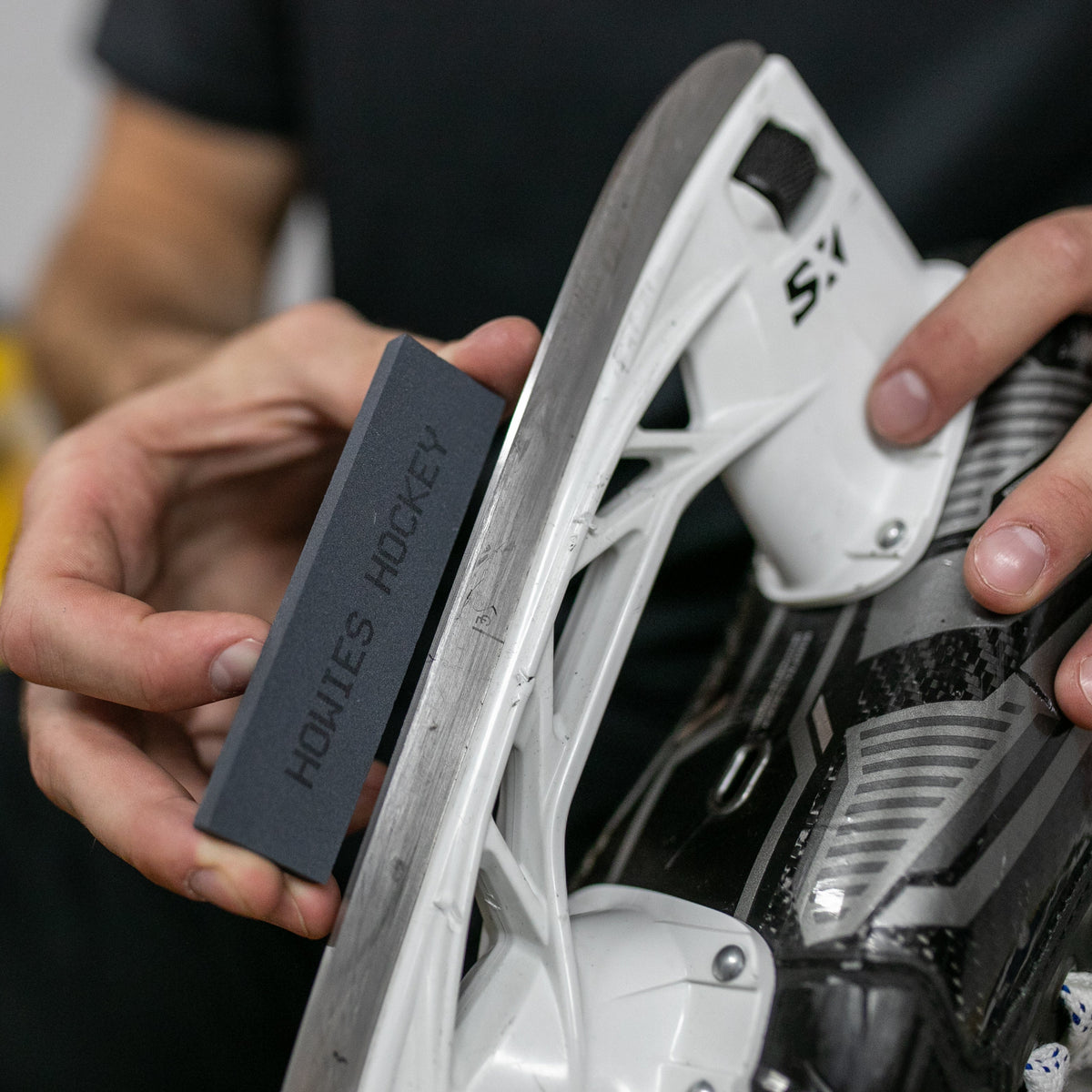
A fine honing stone is for lightly removing a burr after sharpening or handling a small compatible edge issue. It does not recreate the hollow and it does not turn dull blades into freshly sharpened ones. Follow the steel and tool instructions—especially with coated or black runners—and let the hockey shop handle damage you cannot identify.
The routine that keeps sharpening from becoming another emergency
After every ice time: remove the guards, dry the blades and inspect both edges. Every three to five skates: sharpen as your normal starting rhythm. Before tournaments: plan ahead. Any time the player reports a sudden change: inspect first and sharpen or repair as needed.
That is it. You do not need a spreadsheet, a blade microscope or a family meeting. You need one towel that actually makes it home, the hollow written down and a system simple enough to repeat when the next practice starts in forty minutes.
Save or print
The hockey-parent skate routine
- Remove hard guards or soakers after every ice time
- Wipe the steel and holder completely dry
- Inspect both edges for nicks, rolled spots and rust
- Open the tongue and air-dry the boots away from direct heat
- Store dry skates with breathable soakers
- Sharpen about every three to five ice times as a starting rhythm
- Sharpen sooner after a lost edge, visible damage or sudden slipping
- Write the player’s usual hollow on the bag tag
- Plan tournament sharpening before the morning of the first game
- Have a qualified shop inspect damaged steel or holders