A family road trip can be a coastal drive, a tournament run, a ferry-and-highway combination or six hours of answering whether you are almost there. The destination changes, but the useful packing strategy does not: keep today's problems within reach, put tomorrow's gear in the back and stop making the emergency kit compete with fourteen decorative pillows.
Give the car three packing zones
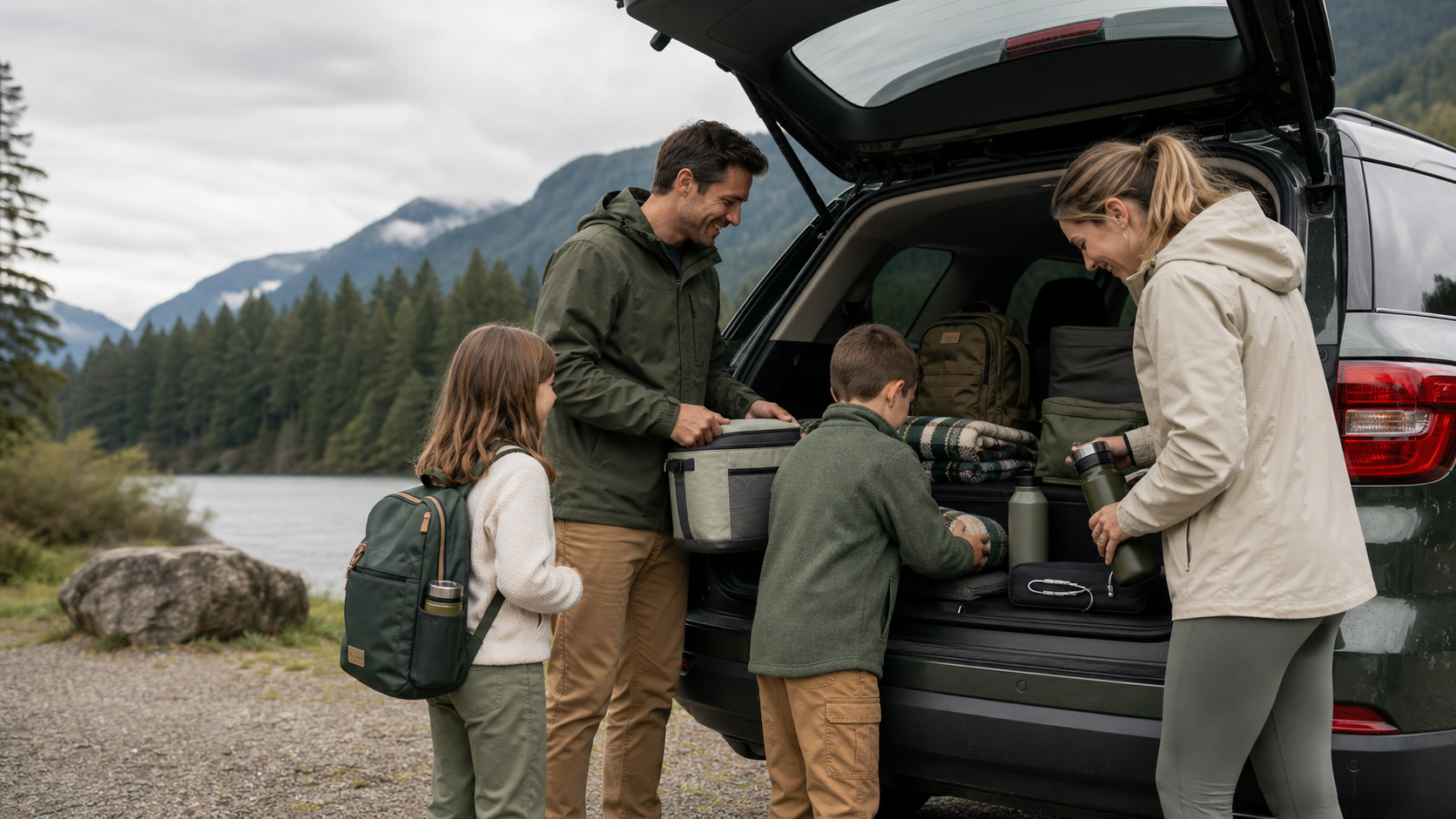
The easiest road-trip system is reach-now, destination and emergency. Reach-now items live in the cabin: water, snacks, wipes, chargers, one warm layer and small activities. Destination bags go in the rear cargo area. Emergency gear stays accessible without needing to unload the entire vehicle on the shoulder.
This is less about perfect organizers and more about preventing the question, 'Where did we put that?' When every category has a home, one parent can find the charging cable without opening three suitcases while the other circles the ferry terminal.
Get the vehicle and route ready before the snacks
Check the vehicle, tires, fuel or charging plan and current road conditions before departure. In British Columbia, ICBC recommends a pre-trip vehicle check and an emergency kit, while DriveBC provides current route information. Transport Canada also recommends checking weather and road conditions and keeping a charging cable or battery pack available.
Save the route and important stops while you have a reliable connection. On longer or remote drives, know where fuel, charging, washrooms and realistic meal breaks exist. The scenic route becomes less scenic when the fuel light has joined the conversation.
- Check tires, lights, fluids and fuel or battery range
- Review current weather, construction and road advisories
- Save the route, destination and key stops offline
- Keep roadside-assistance and accommodation details handy
- Adjust the emergency kit for the season and route
Keep the front seat useful, not buried
The front-seat zone needs navigation, a charging cable, sunglasses, tissues, a small garbage container and the next thing the family will actually use. It does not need every receipt collected since the last oil change.
Choose one adult-controlled charging pouch for cables and a power bank. Keep travel confirmations and ferry or hotel details available offline. Put important documents in the vehicle's normal secure location rather than a loose pile that migrates at every stop.
Pack a smaller cooler and better snacks
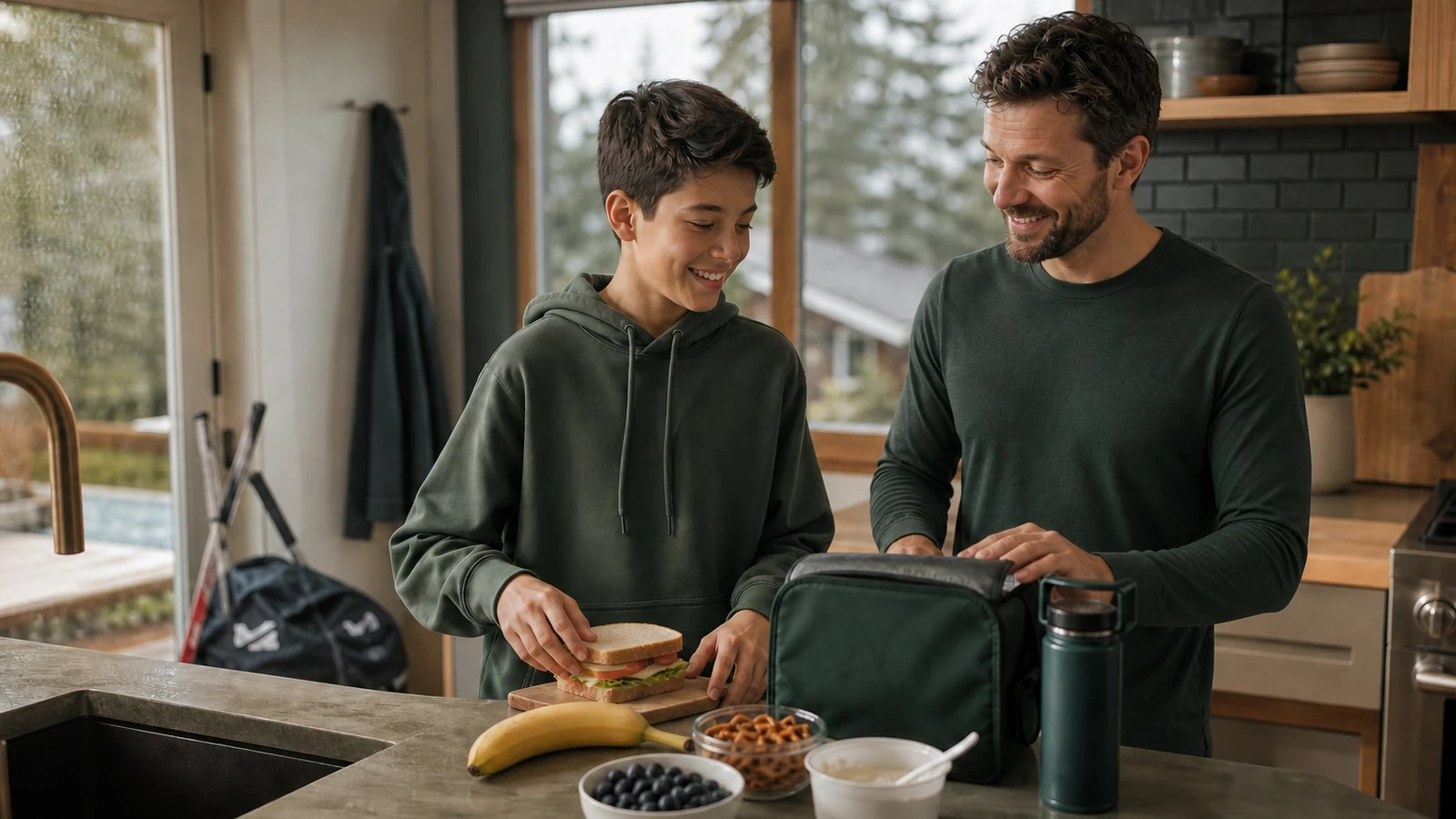
A compact cooler that opens easily will usually serve a family better than a giant one filled with ambitious groceries. Pack cold drinks, fruit, sandwiches or familiar snacks that suit the length of the drive. Use fully frozen ice packs, keep the cooler shaded and follow current food-safety guidance for anything perishable.
Put a few dry snacks in the cabin and keep the main supply in one container. This prevents every stop from becoming a full inventory search and stops the children from finishing the entire trip's snack supply before leaving the Fraser Valley.
- Refillable bottles for everyone
- A small soft cooler with slim frozen ice packs
- Familiar snacks portioned for the drive
- Napkins or reusable cloths
- One bag or bin for wrappers and peels
Give each child one seat bag—not a travelling bedroom
Let each child choose a book, small game, headphones and one comfort item that fits inside a modest seat bag. When the bag is full, the packing meeting is over. This gives them ownership without turning the back seat into an archaeological site.
Keep a few activities in reserve instead of releasing everything during the first thirty minutes. A downloaded movie, a card game at lunch or an unexpected snack stop works better when it still feels new halfway through the drive.
Plan for wet clothes and small disasters
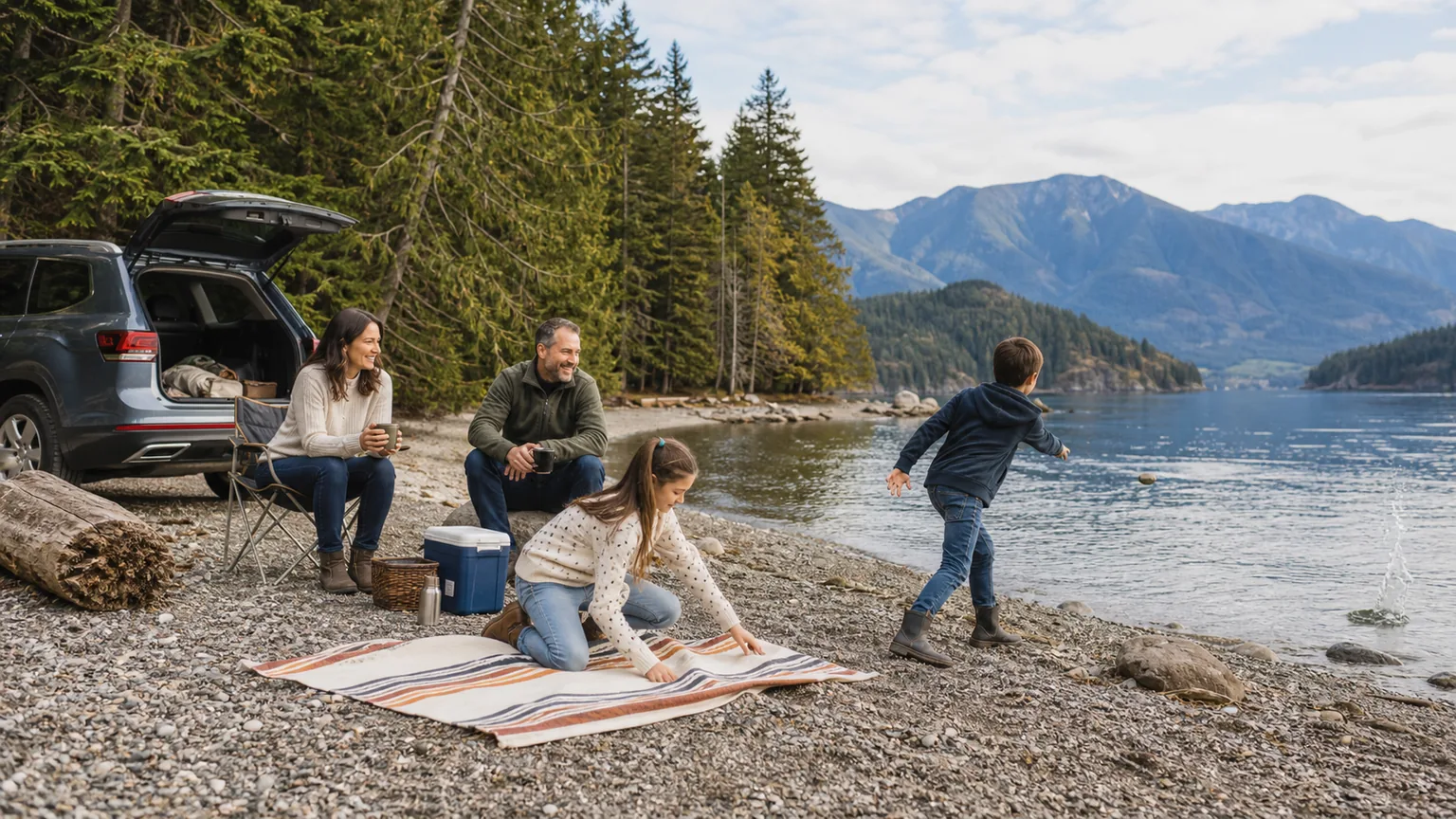
West Coast trips have a talent for producing wet shoes even when rain was not in the forecast. Pack one reusable wet bag, a change of socks and underwear for younger children, wipes and a small towel. A waterproof picnic blanket can protect a seat, create a dry lunch spot or make an unplanned beach stop much easier.
Use one leak-resistant garbage container or bag and empty it at proper stops. Do a two-minute reset whenever the family stops for fuel, food or a ferry. Those small resets keep the car from reaching full snack-wrapper collapse on day two.
Pack Canadian weather in layers
A warm afternoon at sea level can become a cold evening beside a lake or a very different drive through a mountain pass. Keep one useful layer and weather shell accessible for each person rather than burying every jacket in the largest suitcase.
For winter or shoulder-season travel, build the emergency kit around the actual route. ICBC's guidance includes food and water, a phone charger or battery bank, a flashlight, first-aid supplies and seasonal clothing or a blanket. Add what your passengers and destination require without confusing a roadside kit with a camping store.
Add one overnight layer only when the trip needs it
A day trip needs the cabin setup, destination gear and emergency kit. An overnight trip adds toiletries, sleepwear and a change of clothes. A multi-day trip adds a small laundry plan and a little more clothing—not a new suitcase for every sunrise.
Pack one easy-access overnight bag if the family will reach the hotel late. Nobody wants to unpack the entire vehicle in a dark parking lot to find one toothbrush and the child's favourite sleep shirt.
What can stay home
Leave behind duplicate gadgets, more toys than the children can reach, a cooler larger than the meals require and clothing for every possible version of the trip. Empty space is useful: it makes the vehicle safer to load, easier to reset and much less annoying when the family brings something home.
The best road-trip item is the one that solves a problem your family actually has. If the children do not use seat organizers, skip them. If wet beach clothes always end up on the floor, pack the wet bag. Practical beats impressive every time.
Save or print
Print this: the Canadian family road-trip packing list
- Vehicle: tires, lights, fluids, fuel or charging range checked
- Route: weather, road conditions and key stops reviewed
- Front seat: navigation, confirmations, sunglasses and tissues
- Charging: car charger, correct cables and charged power bank
- Drinks: refillable bottles and a compact cooler with frozen ice packs
- Snacks: familiar food, napkins and one contained supply bin
- Kids: one small seat bag each with headphones and activities
- Mess control: wipes, small towel, wet bag and garbage container
- Clothing: weather shell, warm layer and one useful change for younger kids
- Destination: swim, beach, park, hotel or tournament gear grouped separately
- Emergency kit: food, water, flashlight, first aid, charger and seasonal blanket or clothing
- Before leaving: save the route and important phone numbers offline