Buying a child's hockey stick should be simple. Then you meet flex numbers, kick points, blade patterns and a price wall that suggests the stick may also prepare your taxes. Most families can ignore much of that. Get five things right—handedness, size, length, flex and a sensible curve—and your player will have a stick they can control while they learn.
The five-minute parent answer
For a beginner, start with a youth or junior shaft that feels comfortable in gloved hands. Stand the child upright, ideally in skates, and look for a stick that reaches somewhere between the chin and nose before any final cutting. Choose a lower flex the player can bend with proper form, then pick a common, moderate curve rather than the most dramatic hook on the wall.
That is enough to make a good first choice. Position, shot type and kick point can matter later, but children need control and confidence before they need a stick engineered for a one-timer they do not yet take.
Let the child tell you their handedness
A right-handed writer is not automatically a right-handed hockey player. Hockey handedness describes the lower hand on the stick: right hand lower means a right-handed stick; left hand lower means a left-handed stick.
Give the child a straight floor-hockey stick, broom handle or an uncurved demo stick and ask them to pretend to pass a puck. Do it a few times without coaching their hands. Their natural grip will usually appear. If they are truly undecided, borrow or rent before committing to an expensive curved stick.
Length: start at the chin-to-nose zone
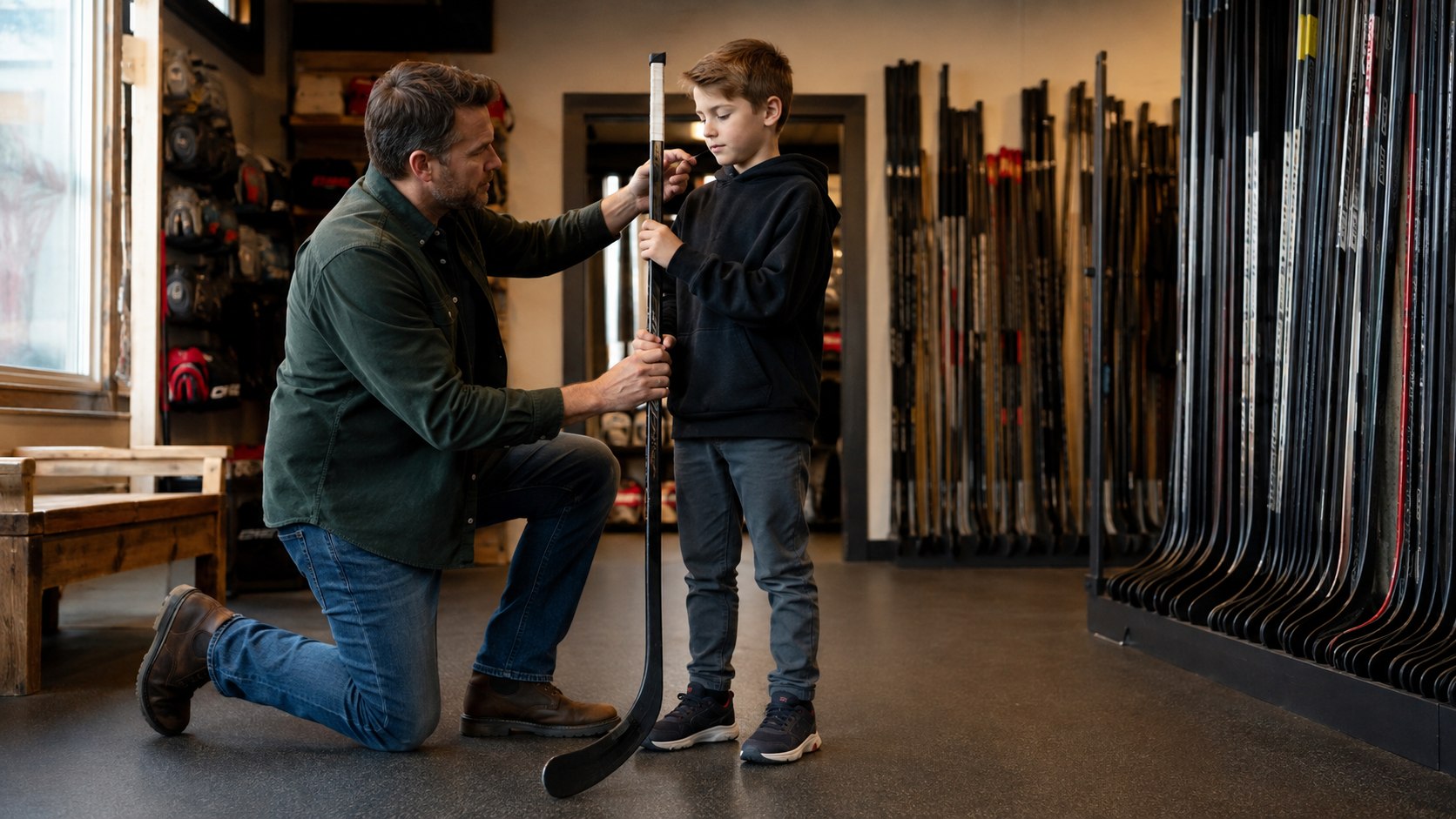
Bauer and Warrior both use chin-to-nose height as a practical starting range when a player stands upright. Try to fit the stick while the child is wearing skates because the added height changes the measurement. From there, posture and preference matter: a slightly shorter stick can feel easier to handle, while a slightly longer stick adds reach.
Do not buy a telephone pole because the player may grow. A stick that is far too long encourages awkward upright posture and makes puck control harder. A little growth room is reasonable; a full season of wrestling the wrong length is not.
If a shop cuts a composite stick, ask how the cut changes the feel. Removing shaft length generally makes the stick play stiffer. Cut once the size and flex have been considered together—not in the parking lot with a saw and a surge of confidence.
Flex: choose the stick your child can actually bend
Flex is a stiffness rating. A lower number bends more easily; a higher number is stiffer. The familiar half-the-player's-weight rule is a starting estimate, not a commandment. Warrior presents it as a quick checklist guideline, while Bauer uses a calculator based on height and weight. Strength, technique and the amount cut from the shaft all change how the stick feels.
For younger players, too stiff is the more common mistake. If the child cannot load the shaft during a controlled shooting motion, the expensive carbon is mostly along for the ride. A softer youth-specific shaft and smaller grip can help them learn to pass, receive and shoot without fighting the equipment.
Ask the child to wear hockey gloves and gently test the stick under a fitter's guidance. The goal is not to make it fold like a pool noodle. The goal is a controlled bend without losing balance, dropping the lower hand too far or turning every wrist shot into a full-body construction project.
Keep the curve friendly and the kick-point debate short
Blade patterns affect how the puck sits, passes and comes off the blade. For a newer player, a moderate, widely available curve is easier to replace and learn than an aggressive open toe curve. Bauer's P92-style pattern is a common mid curve; equivalent names vary by brand, so compare shape rather than assuming the codes match perfectly.
Kick point is where the shaft is designed to bend. Low-kick sticks favour a quick release, mid-kick sticks aim for a more balanced power profile, and hybrid designs split the difference. This is useful information, but it should not outrank correct length and flex for a young player. If two sticks fit equally well, let feel and budget break the tie.
How much stick does a young player need?
Entry-level wood and composite sticks can both work. Wood is inexpensive and durable but heavier. Composite sticks are lighter and come in youth-specific flexes and shaft shapes, but price climbs quickly and light weight does not make the player taller, stronger or magically early for practice.
For a first season or a fast-growing player, look at entry and mid-level sticks in the correct size before premium models. Spend more only when the player can explain what they prefer and the upgrade solves a real issue—weight, release, balance or feel—not because another child arrived with this week's flagship graphics.
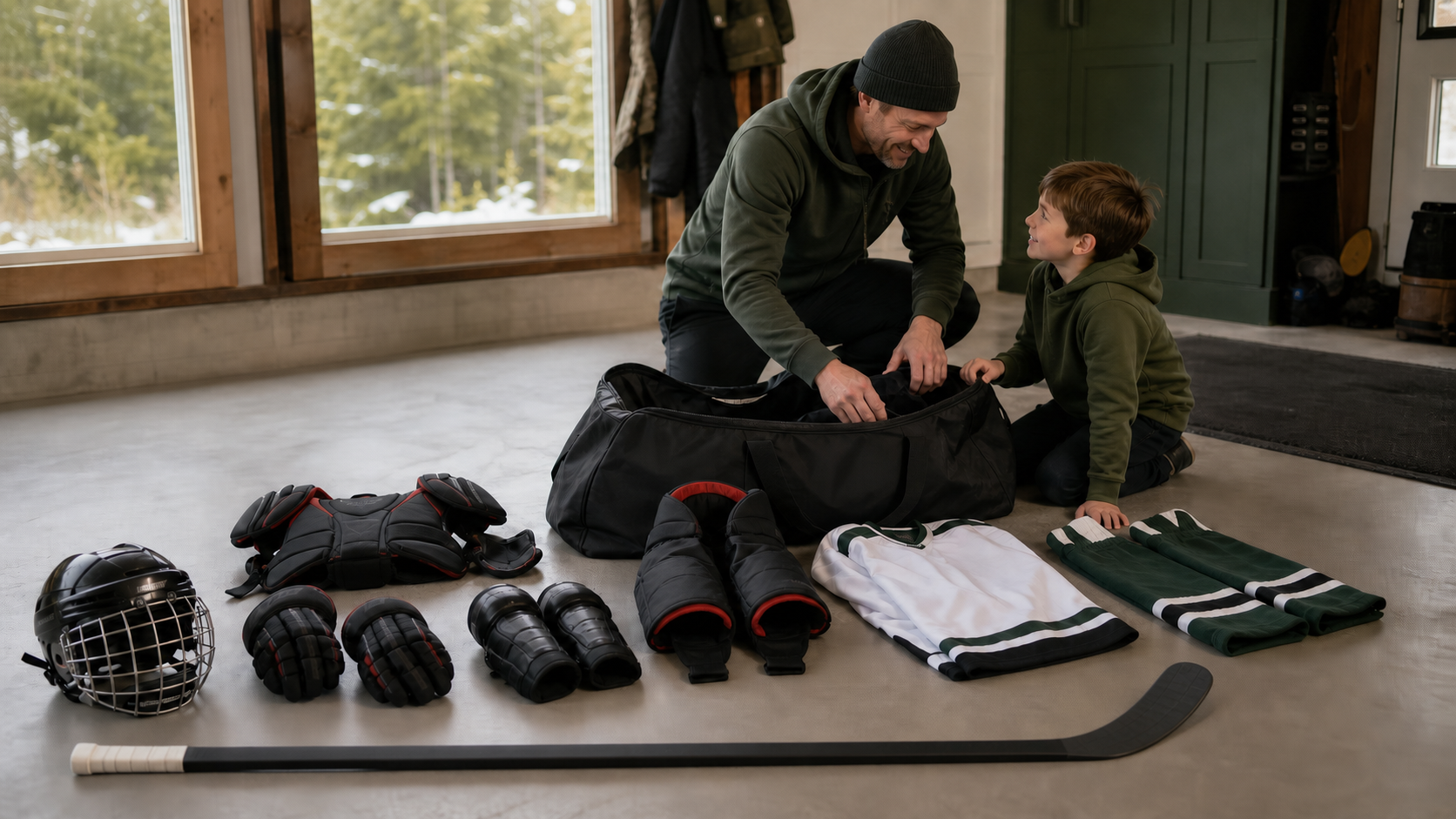
If this is the player's first full setup, use our youth hockey equipment checklist before the shopping trip. It helps separate the gear that must fit now from the extras that can wait. Our breakdown of the cost of youth hockey in Canada also puts the stick purchase inside the real season budget.
Where to compare youth hockey sticks in Canada
For an in-person fit, start with a local hockey shop where the child can hold several shaft sizes and the staff can check length before cutting. You can compare current kids' and youth options at Source for Sports, including local-store availability.
Sport Chek separates youth and tyke hockey sticks from its junior hockey-stick selection, which is useful when a growing child sits between labels. Filters are good for narrowing the wall, but try the shaft in gloves and confirm the exact length and flex before ordering.
Prices and stock change constantly, so this guide does not crown one current model as the universal winner. Use the retailer links to compare what is available, then buy the least expensive stick that fits properly and feels good in the player's hands. North Peak Life is not paid by Source for Sports or Sport Chek for these links.
After you buy it: cut carefully, tape lightly, label immediately
Have the shop make the final cut if you are unsure. Add a small taped knob the child can grip without crowding the top hand, then use enough blade tape for protection and feel without turning the blade into a winter boot.
Write the player's name and a parent phone number on the shaft with a durable label. Hockey sticks are long, obvious objects that still manage to leave the rink with the wrong family. Check the blade and shaft for cracks, chips or soft spots, especially after hard contact or getting trapped near the boards.
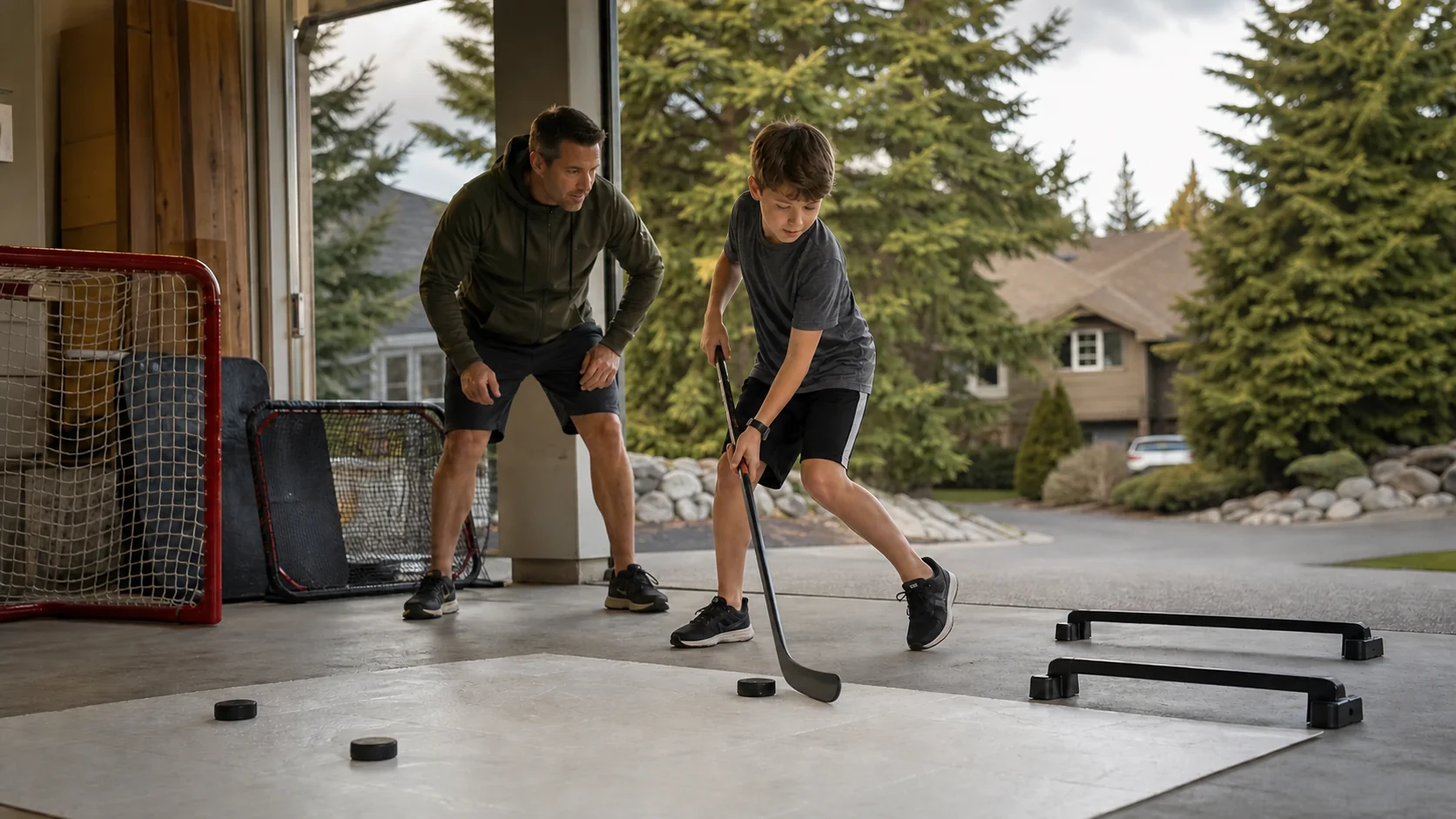
Once the fit is right, consistent shooting practice matters far more than a logo upgrade. Our off-ice hockey training guide for kids keeps practice short, repeatable and fun. If the child is not enjoying it, put the pucks away and find a version of movement they do enjoy.
When the stick has reached the end of its shift
Replace the stick when the blade is split, the shaft is cracked or soft, the connection at the heel looks damaged, or the player has clearly outgrown it. A taped-over structural crack is not a repair plan.
Check size during the season because kids have a habit of growing immediately after you finish paying for their equipment. If the stick still fits and remains sound, there is no rule saying last year's model must be replaced because the graphics changed.
Save or print
Youth hockey stick fitting checklist
- Let the child choose their natural left- or right-handed grip
- Bring the child's hockey gloves and skates to the fitting when possible
- Choose a youth or junior shaft size that fits comfortably in gloved hands
- Start with the top of the stick between the chin and nose while standing upright
- Confirm length and flex together before cutting
- Choose a flex the player can load with controlled technique
- Start with a common, moderate blade curve
- Treat kick point as a preference—not the first decision
- Compare entry and mid-level sticks before premium models
- Ask the shop to make the final cut if you are unsure
- Add a small knob, tape the blade and label the shaft
- Inspect the blade, heel and shaft regularly for damage