From a dad's point of view, family fitness can get overcomplicated fast. We picture a proper workout, matching water bottles and perhaps a whistle we should never have been allowed to own. The kids picture being told to do something hard while Dad stands nearby counting. A better plan is much simpler: join them, make it a game and give them a genuine chance to beat you.
The first rule is that Dad has to participate
It is difficult to sell movement as fun while holding a coffee and issuing instructions from the patio. If I suggest push-ups, I am doing push-ups. If we ride, I am on the bike. If the hill is steeper than I remembered, the kids are absolutely allowed to enjoy that fact.
Joining in changes the whole tone. You stop being the fitness supervisor and become part of the challenge. The children see effort, missed attempts and the occasional reminder that Dad's confidence is not always matched by Dad's hamstrings. That is useful. Fitness starts to look like something a family does together, not another job adults assign to kids.
The Canadian 24-Hour Movement Guidelines encourage children and youth to build movement throughout the day through a mix of active play, aerobic activity and muscle- and bone-strengthening activity. A family game does not have to cover every category at once. It just needs to add another enjoyable reason to move.
Push-ups are more fun when nobody calls them a workout
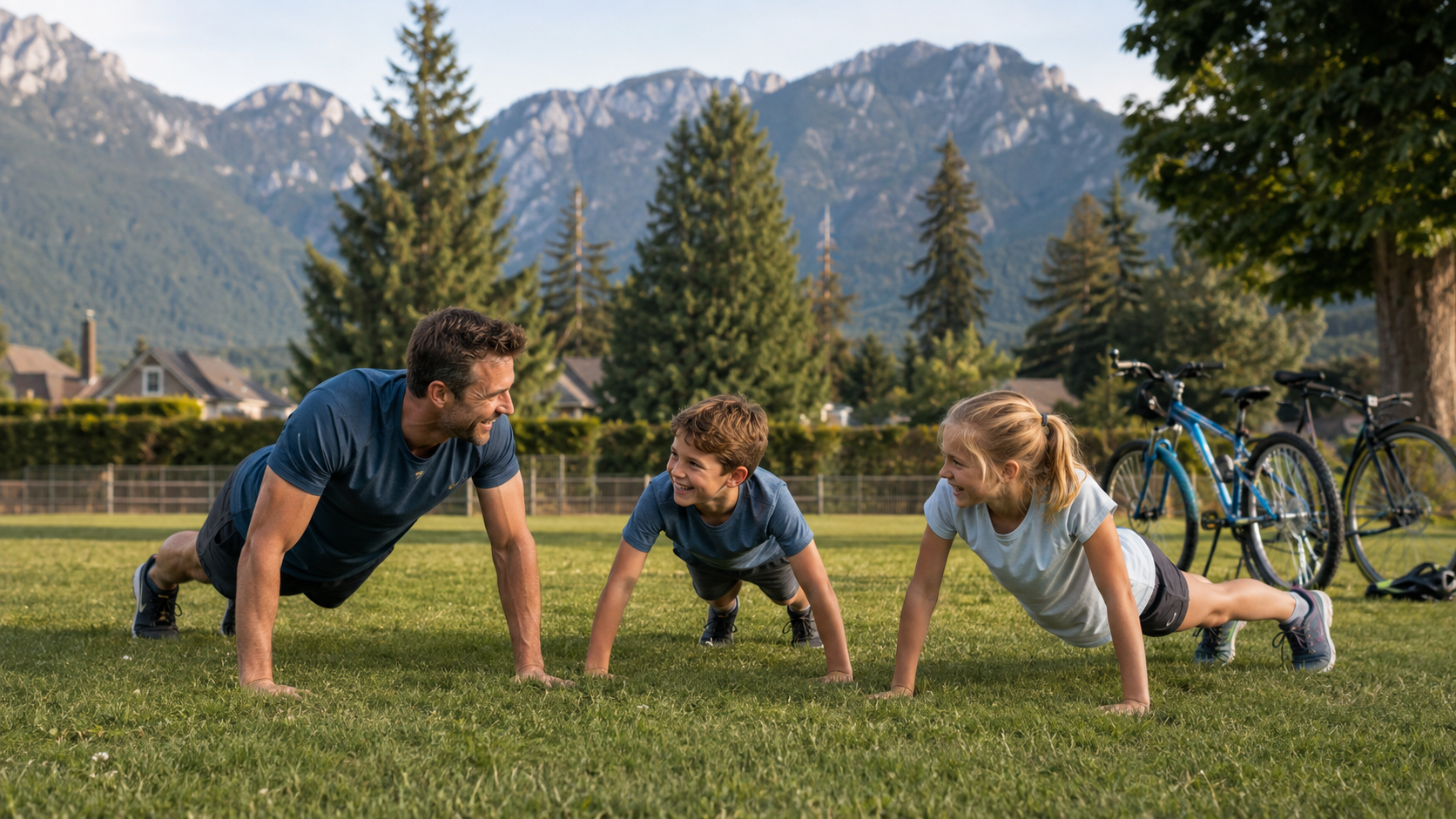
Push-ups are perfect family-challenge material because they need almost no setup and there is a version for nearly everyone. A younger child might use a wall or a sturdy bench. Someone learning the movement might work from their knees. An older child or parent can use a standard push-up. The point is controlled effort, not forcing everybody into the same version.
Start with a tiny target. See if everyone can do three good repetitions, rest, then try another three. Build a deck-of-cards game where the number sets the repetitions, roll a die or place two markers a few metres apart and add a short run between rounds. Kids are often far more interested in beating a number than completing three sets of eight because an adult said so.
You can also create the highly scientific Beat Dad handicap system. Dad does a harder variation, starts two repetitions behind or has to pause at the bottom. Adjust it until the contest is close. Do not suddenly discover perfect form only after a nine-year-old takes the lead. Take the loss with dignity and demand a rematch next week.
- Wall push-ups for an easy starting point
- Bench or picnic-table push-ups for a middle option on a stable surface
- Knee or standard push-ups when they suit the person's ability
- Dice, cards or a short relay to turn repetitions into a game
- One family rule: stop a set when control disappears or something hurts
Challenge them to athletic feats—not a miniature combine
Kids love discovering what their bodies can do. How far can they jump from a standing start? How long can they balance on one leg? Can they bear-crawl to the fence and back without touching a knee? Can they throw a soft ball into a bucket from one step farther away than last time? These feel like feats, dares and games rather than exercise assignments.
Choose challenges that fit the space and the child. A younger kid may be thrilled to hop over three chalk lines. An older child may want to time a short shuttle run or hold a plank. The best contest is close enough to be exciting and flexible enough that everyone has a version they can attempt safely.
Keep the scoreboard friendly. Record personal bests, team totals or the number of family challenges completed. Avoid turning one sibling into the permanent athlete and another into the funny one who never wins. Children grow at different speeds and bring different strengths. Today may belong to the fastest runner; tomorrow may belong to the kid who can balance forever.
- Standing broad jump onto a clear, level surface
- Ten-metre shuttle between two safe markers
- Single-leg balance while passing a soft ball
- Bear crawl, crab walk or skipping relay
- Target throw into a bucket or at a chalk circle
- Family total: combine everyone's repetitions to beat last week's score
Walking, hiking and riding bikes all count
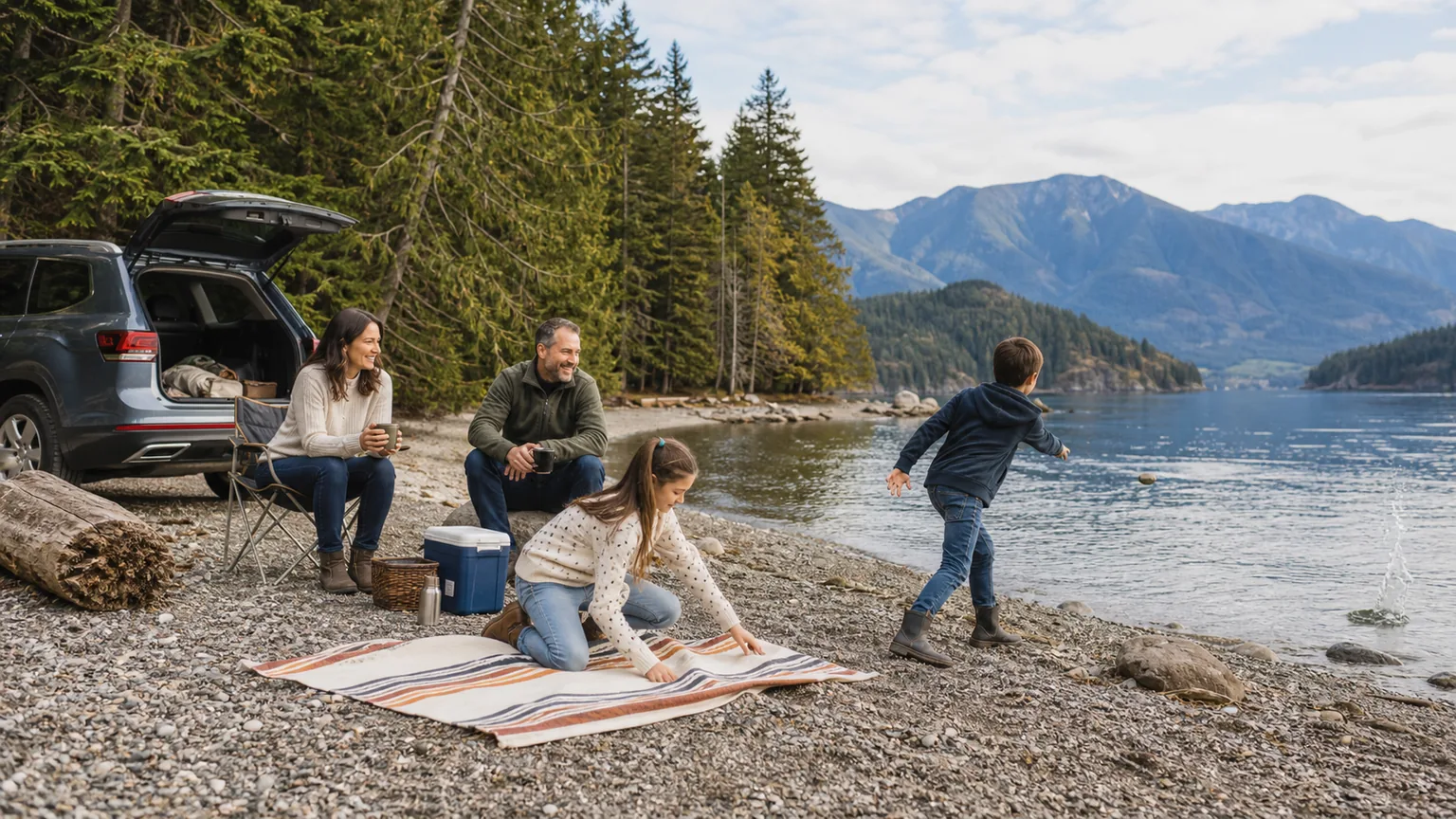
Not every family-fitness day needs a stopwatch. An evening walk, a local hike or a bike ride to the park can do more for the family routine than a complicated plan that only happens twice. Outside time gives the movement a destination and gives everyone something else to talk about besides the movement.
For walks, give the outing a job: find the best hill, choose a new street, walk to get a small treat or let the kids take turns setting the route. On a hike, keep the distance suited to the group's real energy and make the viewpoint, creek or snack stop part of the story. On bikes, choose a safe route, wear properly fitted helmets and let the slowest rider set the overall pace.
If getting out the door is the hard part, use the same low-pressure approach in our guide to planning a family day trip in BC. A park loop, beach walk or short trail still counts as an adventure.
Borrow from their sport without making everything training
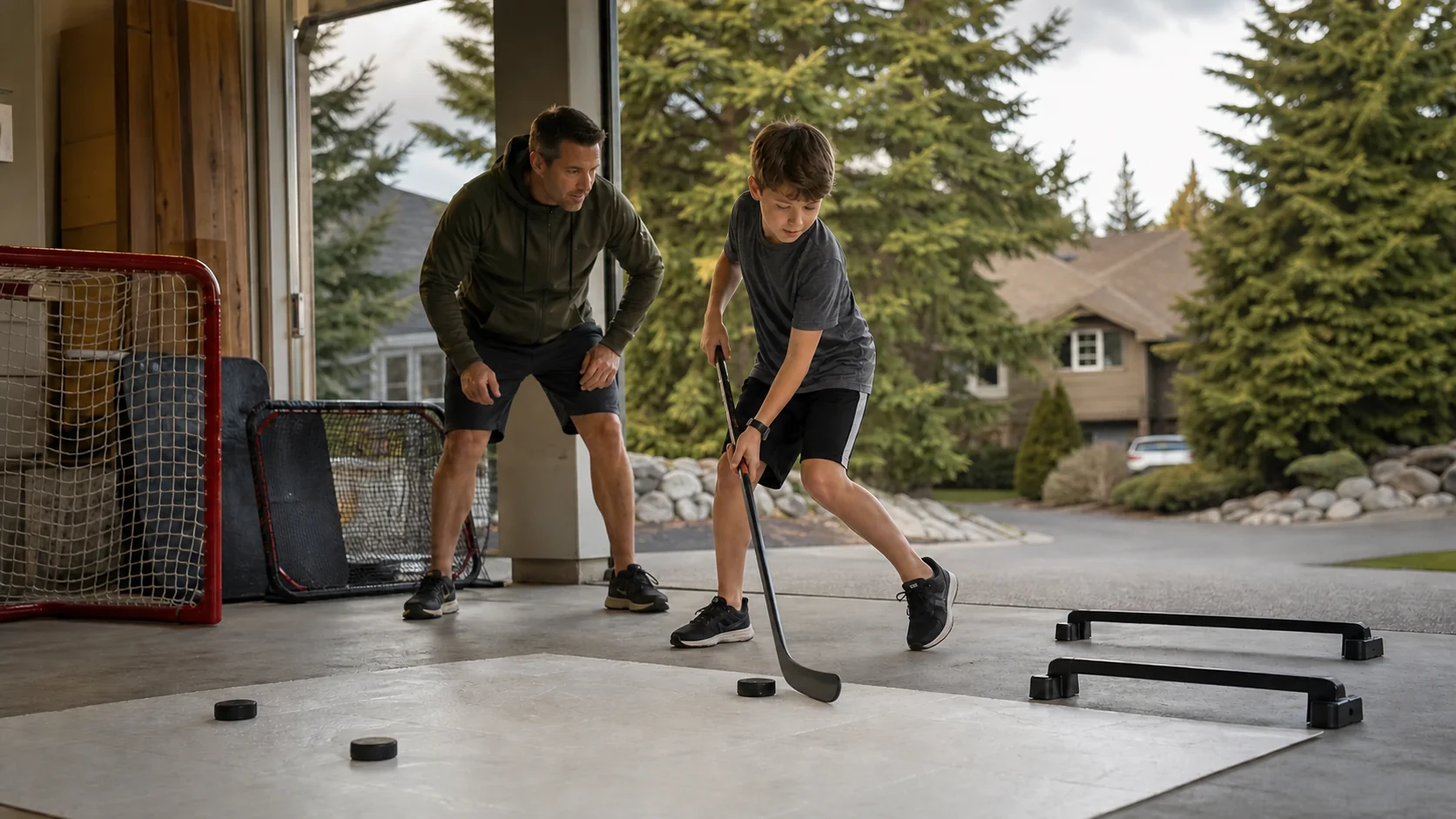
If your kids play hockey, soccer, baseball or another sport, you already have easy ideas: quick feet, balance, short sprints, throwing, catching and changes of direction. Borrow one skill, turn it into a family game and then move on. Not every walk needs to become conditioning and not every driveway minute needs a development objective.
For hockey families, our off-ice hockey guide for kids uses the same principle: consistency matters, but fun is what makes the next session possible.
Sometimes the best athletic challenge has nothing to do with the child's main sport. A hockey player may love riding trails. A soccer player may enjoy climbing, paddling or shooting baskets with Dad. Variety keeps movement from feeling like extra homework and helps kids discover activities they might keep long after the current season ends.
Keep the competition high and the pressure low
There is a useful difference between challenge and pressure. Challenge sounds like, 'Think you can make it to that tree before me?' Pressure sounds like a post-event analysis nobody requested. Celebrate effort, courage and improvement. Leave body weight, appearance and calorie talk out of the family scoreboard.
Give kids some control. Offer two choices instead of delivering one plan: bikes or a walk, push-up dice or a relay, park loop or neighbourhood hill. If everyone is tired, shorten the activity. If one child is excited, let them create the final challenge. If nobody is enjoying it, call it early and try something different next time.
The goal is not to win Tuesday night. The goal is to raise kids who see movement as a normal, enjoyable part of family life—and who might still invite Dad along once they are fast enough to make the outcome embarrassing.
Consistency wins, but fun earns consistency
A repeatable family routine beats one heroic Saturday. Walk after dinner twice a week. Keep the bikes ready for a weekend ride. Drop a deck of cards beside the exercise mat. Make the starting point so easy that nobody needs forty minutes of preparation or a weather window approved by three government agencies.
Canadian guidance for children and youth considers the whole day, including active play, more energetic movement and sleep. That is a helpful way to think about family fitness too. You do not have to cram everything into a formal session. A walk to school, ten minutes in the yard and a bike ride later in the week all become part of an active life.
And if the children hate the activity, change it. The answer is not always more discipline. Try music, a friend, a new route, a ball, a different sport or an adventure with an actual destination. We want kids to build capable bodies, but we also want them to find something active they genuinely enjoy. That is the part they may carry into adulthood.
Save or print
The no-whistle family fitness checklist
- Choose one short challenge and one fun finish
- Give every person an age- and ability-appropriate version
- Join the activity instead of coaching from the side
- Use dice, cards, markers or a destination to make movement feel like a game
- Track personal bests or a family total instead of ranking siblings
- Offer two activity choices when enthusiasm is low
- Use walks, hikes and bike rides as part of the routine
- Check the route, weather and equipment before outdoor activities
- Wear properly fitted helmets for bike rides
- Stop when form fades, pain appears or the fun is clearly over
- Leave body weight, appearance and calorie talk off the scoreboard
- Put the next family movement day on the calendar